Plano-based Siemens Digital Industries Software this week announced that it has agreed to acquire two companies to expand its electronic design automation portfolio for advanced computer chips: San Diego-based Precision Innovations Inc. and Defacto Technologies, headquartered in Grenoble, France. The companies didn’t disclose terms of the deals.
The why behind the Precision Innovations deal
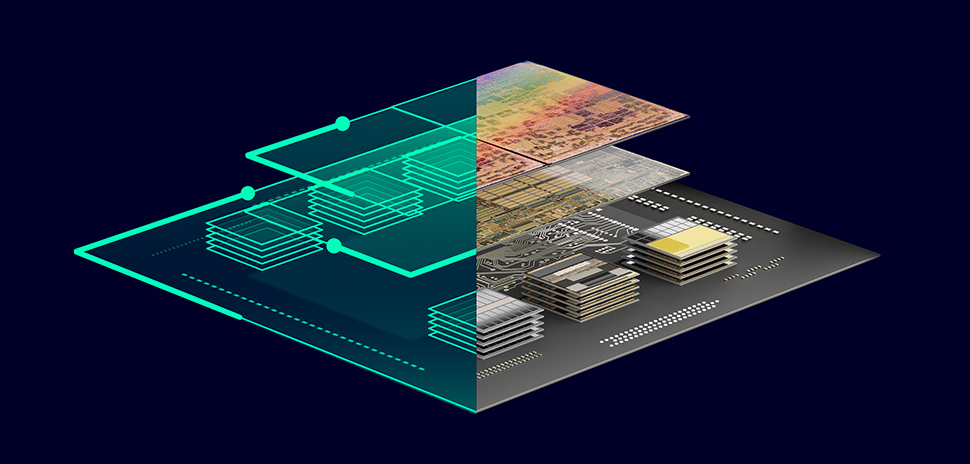
Precision Innovations is a privately held electronic design automation (EDA) software company. The acquisition will expand Siemens’ EDA portfolio with AI-powered chip planning capabilities that help optimize and accelerate the system-on-chip design process.
“With Precision Innovations joining Siemens, we will expand our ability to support customers as they face rapidly increasing SoC complexity and the need to explore new architectures faster and more efficiently,” Ankur Gupta, executive vice president, IC Portfolio, Siemens EDA, Siemens Digital Industries Software, said in a statement. “Integrating Precision Innovations’ AI-powered early design exploration into our EDA portfolio can significantly accelerate time to silicon and improves power, performance and area.”
The companies said they expect the Precision Innovations deal to close in the third quarter.
What Defacto Technologies brings to the table
Defacto Technologies is a privately held EDA software company active in register-transfer level (RTL) design. It will enhance Siemens’ existing EDA solutions by extending end-to-end continuity across the SoC design lifecycle, from early design to completion. The combined offering supports advanced design workflows, unlocking automation in connectivity, timing and power intent process flows, the company said.
RTL design is like a functional blueprint for designing computer chips, describing the flow of data and logical operations to be performed on the data.
“With Defacto Technologies, we strengthen our ability to help customers automate SoC design creation and establish trusted design flows earlier in the development cycle,” Gupta said. “By extending end-to-end continuity across the SoC design lifecycle, we help semiconductor teams manage complexity, improve productivity and make informed design decisions earlier, supporting faster innovation and higher-quality outcomes.”
More on Precision Innovations
Siemens said that Precision Innovations will be an important addition to its Digital Design Creation software.
Precision Innovations’ solutions are used by leading semiconductor and technology companies. By combining the technologies with its broader EDA portfolio, Siemens said it will be better-equipped to support customers through growing design complexity, shorter development cycles and enhanced engineering productivity.
“Becoming part of Siemens allows us to scale our technology and bring AI-driven chip planning to a much broader set of semiconductor teams,” said Precision Innovations CEO Tom Spyrou. “Together, we can help designers leverage AI to evaluate thousands of design options earlier in the process and focus innovation where it matters most.”
Precision Innovations was founded in San Diego in 2019. Its mission is to democratize the hardware design landscape by addressing barriers related to cost, expertise and uncertainty that have historically limited access to advanced semiconductor technologies. To accomplish that goal, the company focuses on OpenROAD technology.
OpenROAD began in 2018 as a UC San Diego-led effort backed by $17.2 million in DARPA funding. Its aim was to automate chip layout design with little to no human involvement. Precision Innovations has been a core industry partner in the open-source project, according to the university. Since 2019, the company has provided the bulk of software engineering and user support for OpenROAD.
More on Defacto Technologies
Founded in 2003, Defacto Technologies focuses on RTL design to help automate SoC design creation.
As chipmakers move from single‑piece designs to chiplet‑based, tailored SoCs, the number of IP blocks and connections is exploding. Building these systems by hand can be a slow, error-prone process, so companies need automation much earlier in the RTL stage, Siemens said. Defacto Technologies helps designers automatically assemble SoCs, restructure designs and manage power intent through an integrated, always‑up‑to‑date design database.
“Joining Siemens represents an important next step for our organization and our customers,” Defacto Technologies CEO Chouki Aktouf said. “This next chapter opens significant opportunities for our customers by combining our deep expertise in SoC design automation with the breadth of Siemens’ EDA portfolio.”
Don’t miss what’s next. Subscribe to Dallas Innovates.
Track Dallas-Fort Worth’s business and innovation landscape with our curated news in your inbox Tuesday-Thursday.
R E A D N E X T
-
The Dallas-based architecture and design firm, backed by a $30,000 ASID Foundation grant, translates educators’ lived experiences into a design guidebook aimed at closing the field’s “empathy gap.”
-

The Dallas-based digital marketing agency said it plans to extend its “Content Everywhere” framework to Plano Website Design’s clients as more people turn to ChatGPT, Gemini, Perplexity, and other AI tools before using traditional search engines.
-

Teladoc co-founder Michael Gorton wants people to be able to watch their favorite book. His latest startup turns novels into cinematic, episodic video—a "fourth book format" after print, ebook, and audiobook. It begins streaming its first title July 14, backed by a $2 million raise and an Emmy-winning "Band of Brothers" producer who's relocating to Dallas.
-

Bottle Rocket founder and serial entrepreneur Calvin Carter and AI programmer-turned-medical-doctor Alex Sheppert developed Matic's agentic AI to take care of the busywork—"so physicians can focus on the patient and practices can optimize care."
-

After 18 months of working with select enterprise customers, founder and CEO Kalyan Kommineni says its agents are helping supply chain teams recover margin, cut costs and respond to customers faster.
-

The advanced manufacturing facility will assemble and test NVIDIA AI systems. It represents a $761 million investment and will employ close to 1,000 people by the end of the year.
-
Because of the explosion in the use of artificial intelligence throughout society, the legal industry is undergoing seismic change, and the profession needs ways to build the judgment, confidence, and fluency to use AI effectively, BARBRI said.
-
 Irving-Based Caterpillar Acquires Skycatch to Deploy AI Solutions That Transform the Mining Industry
Skycatch’s technology combines drone-generated high-frequency, precise, geospatial data with a suite of AI-powered solutions, opening up ‘a fundamentally different way of operating.’
-
“The newly created roles of chief artificial intelligence officer and chief transactions officer underscore our commitment to advancing two key growth areas for Tyler—AI and payments,” Tyler CEO Lynn Moore said.
-

Slated to open by the end of 2026, the Dallas facility will serve as a hub for advanced research, design engineering, and small‑scale manufacturing, Kopin said. The center will include new optics and photonics lab space; a dedicated design and engineering center; advanced R&D capabilities focused on Neural I/o; and manufacturing capacity for Kopin's Neural I/o and ASOS systems.