A University of Texas at Arlington researcher will lead a new, federally funded effort to keep AI systems honest and secure in some of the nation’s most sensitive scientific work.
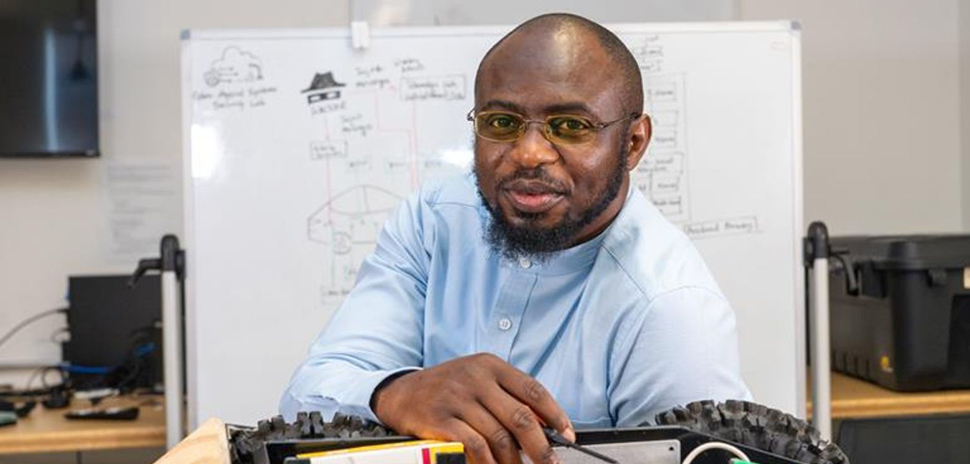
Habeeb Olufowobi, a faculty member in UTA’s computer science and engineering department, will head the project, the school announced. The U.S. Department of Energy is putting $750,000 toward the work.
Adding a layer of trust
The project is titled “Real-Time Trust and Resilience for AI-Driven EPICS Scientific Workflows.” It centers on the Experimental Physics and Industrial Control System, or EPICS, an open-source software platform used at many DOE facilities, such as particle accelerators.
Those facilities increasingly use AI models to help interpret data, and those models have to be reliable.
That’s where Olufowobi’s team comes in. It is a multidisciplinary group that includes collaborators from Los Alamos National Laboratory, the University of Colorado–Colorado Springs, Washington State University and Metro State University, along with two UTA graduate students. Together, they will build a “trust layer” to monitor the AI models’ behavior and block any suspicious AI outputs before they have an impact on operations.
“Artificial intelligence is transforming how scientific discoveries are made, but researchers must be able to trust the recommendations these systems produce,” he said in a statement. “Our goal is to develop practical technologies that help scientists confidently use AI in some of the world’s most advanced research facilities without compromising the integrity of experiments or the reliability of scientific results.”
Part of a national effort
Olufowobi’s project is one of 278 projects across the country that will be part of the Trump administration’s Genesis Mission. The project starts Sept. 1 and is set to run through May 31.
“This project addresses a national priority by helping ensure that AI can be deployed safely and reliably in some of the world’s most advanced scientific facilities,” Hong Jiang, chair of UTA’s Department of Computer Science and Engineering, said in a statement.
Genesis is an initiative led by the Department of Energy aimed at using AI to advance scientific research. It “will build an integrated AI platform to harness federal scientific datasets — the world’s largest collection of such datasets, developed over decades of federal investments — to train scientific foundation models and create AI agents to test new hypotheses, automate research workflows, and accelerate scientific breakthroughs,” according to an executive order signed by President Trump in November.
What’s next for Genesis
Phase 1 of Genesis includes awards of between $500,000 and $750,000. Its projects “identify promising pathways toward transformative scientific capabilities and establish a foundation for future investment and scale” over a nine-month period. Projects selected for phase 2 will then receive additional larger awards and run for three years.
“The extraordinary response to this Genesis Mission application process demonstrates that America’s scientific community is ready to reimagine how discovery happens,” DOE Under Secretary for Science Dario Gil said in a release announcing the Genesis Mission projects. “Through the Genesis Mission, we are bringing together the nation’s leading researchers, institutions, and technology partners to build the next generation of scientific capability.”
Don’t miss what’s next. Subscribe to Dallas Innovates.
Track Dallas-Fort Worth’s business and innovation landscape with our curated news in your inbox Tuesday-Thursday.
R E A D N E X T
-
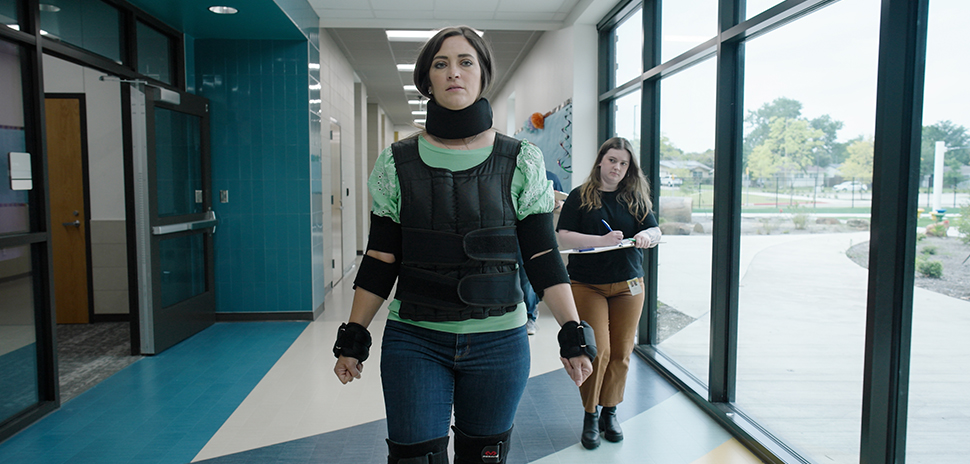
The Dallas-based architecture and design firm, backed by a $30,000 ASID Foundation grant, translates educators’ lived experiences into a design guidebook aimed at closing the field’s “empathy gap.”
-

Teladoc co-founder Michael Gorton wants people to be able to watch their favorite book. His latest startup turns novels into cinematic, episodic video—a "fourth book format" after print, ebook, and audiobook. It begins streaming its first title July 14, backed by a $2 million raise and an Emmy-winning "Band of Brothers" producer who's relocating to Dallas.
-
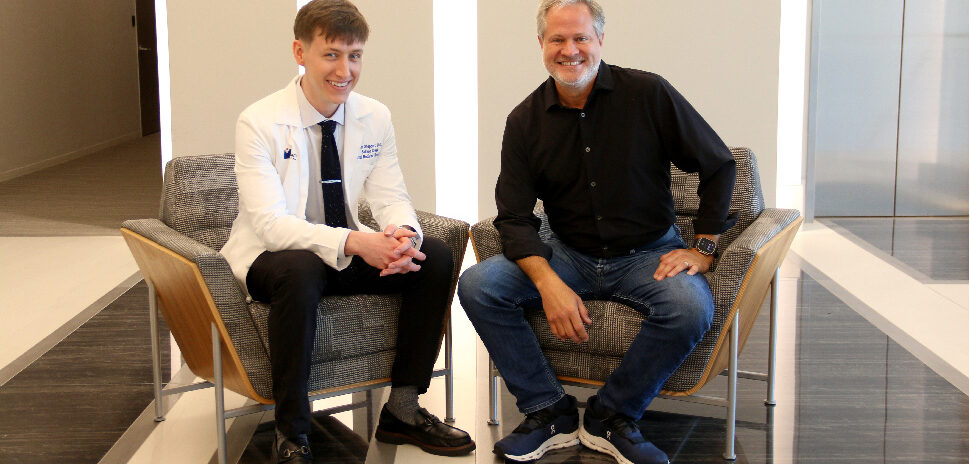
Bottle Rocket founder and serial entrepreneur Calvin Carter and AI programmer-turned-medical-doctor Alex Sheppert developed Matic's agentic AI to take care of the busywork—"so physicians can focus on the patient and practices can optimize care."
-
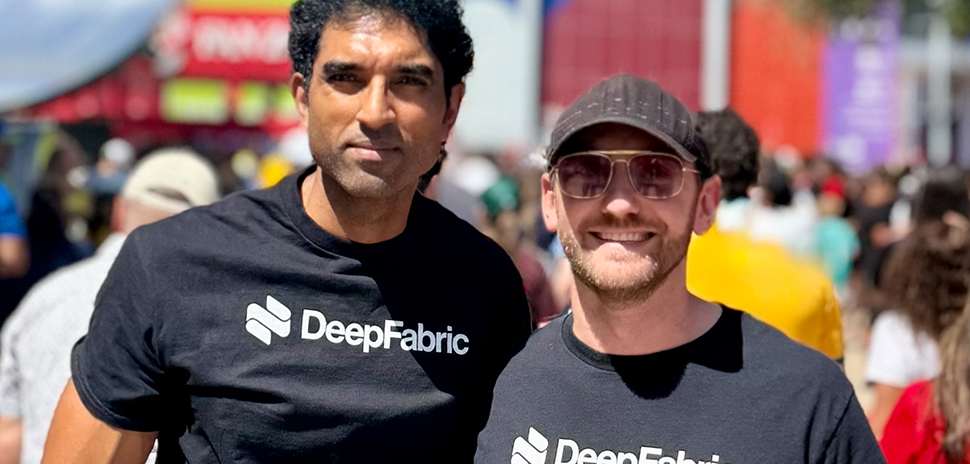
After 18 months of working with select enterprise customers, founder and CEO Kalyan Kommineni says its agents are helping supply chain teams recover margin, cut costs and respond to customers faster.
-
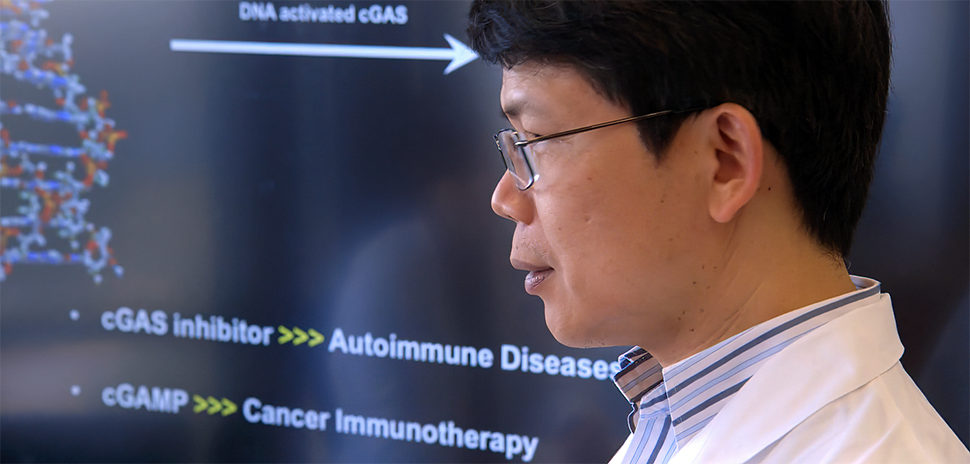
The ranking came from Nature Index, which tracks health care research articles published in top science journals, offering a snapshot of landmark discoveries from 6,545 institutions around the world.
-
The advanced manufacturing facility will assemble and test NVIDIA AI systems. It represents a $761 million investment and will employ close to 1,000 people by the end of the year.
-
Because of the explosion in the use of artificial intelligence throughout society, the legal industry is undergoing seismic change, and the profession needs ways to build the judgment, confidence, and fluency to use AI effectively, BARBRI said.
-
 Irving-Based Caterpillar Acquires Skycatch to Deploy AI Solutions That Transform the Mining Industry
Skycatch’s technology combines drone-generated high-frequency, precise, geospatial data with a suite of AI-powered solutions, opening up ‘a fundamentally different way of operating.’
-
“The newly created roles of chief artificial intelligence officer and chief transactions officer underscore our commitment to advancing two key growth areas for Tyler—AI and payments,” Tyler CEO Lynn Moore said.
-

A new LinkedIn workforce report shows a month-over-month rise in hiring. We dug into LinkedIn's 2026 Jobs on the Rise ranking for a top-10 look at what roles are expanding in DFW. In an unusual twist, "Founder" landed at No. 8.