MORE►
UTA
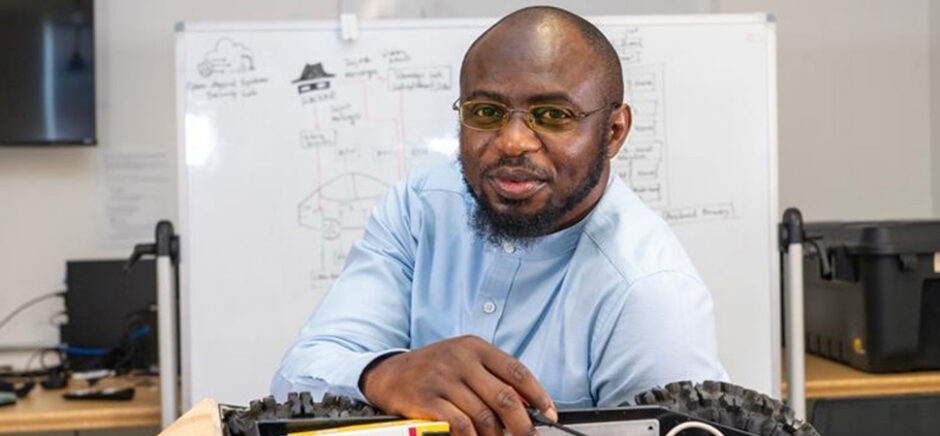
University of Texas at Arlington researcher Habeeb Olufowobi is leading a new U.S. Department of Energy project to ensure the security and trust of artificial intelligence systems used in scientific work. [Photo: University of Texas at Arlington]
UTA Lands DOE Genesis Mission Award to Keep AI Honest in Scientific Research
by Kim Lyons | Jul 23, 2026
Researcher Habeeb Olufowobi will lead a project to build a safety layer to ‘help scientists confidently use AI in some of the world’s most advanced research facilities.’ It is one of 278 projects in a new federal effort.

by Sandra Engelland |
May 5, 2026
Partnering with Rice University, UTA’s Water Engineering Research Center will provide a high-resolution, Texas-focused weather monitoring and modeling network to deliver faster, more precise flood warnings in flood-prone areas of the Texas Hill Country.
MORE►
by Maddie Preston |
Feb 10, 2026
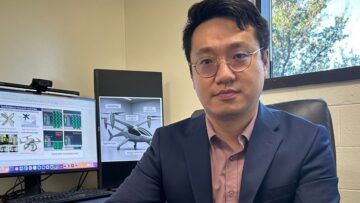
The grant supports development of reusable, impact-resistant materials designed to withstand frequent landings and collision events in next-generation aircraft—everything from air taxis to the flying cars of the future.
MORE►
by Maddie Preston |
Jan 3, 2026
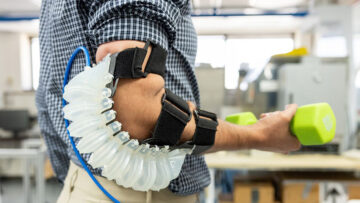
A study found the air-powered wearable reduced muscle activity by as much as 22% during lifting tasks, pointing to a potential way to ease strain in industrial settings.
MORE►


[Image: Rawpixel/istockphoto]
HF Controls’ $450K Gift Backs Nuclear and AI Research at UTA
by Maddie Preston | Dec 5, 2025
The investment strengthens UTA’s pipeline for high-demand engineering talent and supports research on AI-enabled safety systems for nuclear plants.
MORE►
by Maddie Preston |
Oct 10, 2025
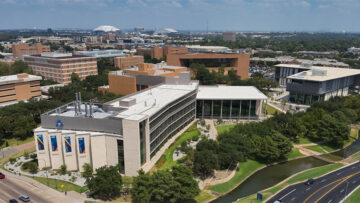
The funding comes as DFW’s tech workforce nears 379,000, making it the nation’s second-largest. With a $28.8 billion annual economic impact in Texas and Carnegie R1 status, UTA is focused on fostering innovation and developing talent to meet statewide workforce needs.
MORE►
by Maddie Preston |
Sep 29, 2025
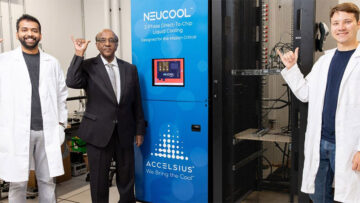
UTA is part of a DOE-backed "moonshot" to cool the world’s AI infrastructure more sustainably—aiming to cut data center cooling energy from 40% to under 5% and slash the massive water use demanded by AI systems. The project includes partnering with next-gen liquid cooling tech startup, Austin-based Accelsius.
MORE►
by Lance Murray |
Aug 29, 2025
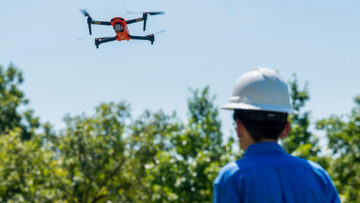
UTA’s Dianqi Han has developed a remote system that uses millimeter-wave radar to spot signs of hardware trouble—like damaged propellers—without modifying the drone itself.
MORE►


[Image: Tetiana Mykhailenko/istockphoto; DI Studio]
UTA Engineer Uses 3D Printing and Nature-Inspired Design to Build Stronger Composites
by Lance Murray | Jul 17, 2025
Current materials crack under stress. Shiyao Lin's nature-inspired composites could make aircraft parts and car components significantly tougher.
MORE►

by Lance Murray |
Jul 7, 2025
A new deep-learning system accurately distinguishes between nearly identical pollen grains from fir, spruce, and pine trees. The goal is to develop a comprehensive pollen identification system that can be applied across regions in the United States.
MORE►

by Lance Murray |
Jul 2, 2025
UTA and UT Southwestern researchers have built BIT, a new computational framework that helps scientists identify the proteins that switch genes on and off in cancer and other diseases. The work could pave the way to more targeted treatments and boost gene research accuracy.
MORE►
by Lance Murray |
Jun 30, 2025
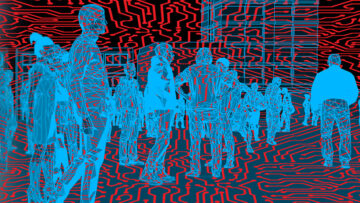
With support from UTA’s Research Enhancement Program, assistant professor Mahmoud Bayat is developing a digital twin platform to help officials adjust evacuation routes on the fly. The platform could inform future systems across cities, counties, and states for what he calls “truly resilient communities.”
MORE►
iStock Photo: Yang Lu
NASA Taps UT Arlington Researcher for Wildfire Smoke Warning System
by David Seeley | May 21, 2025
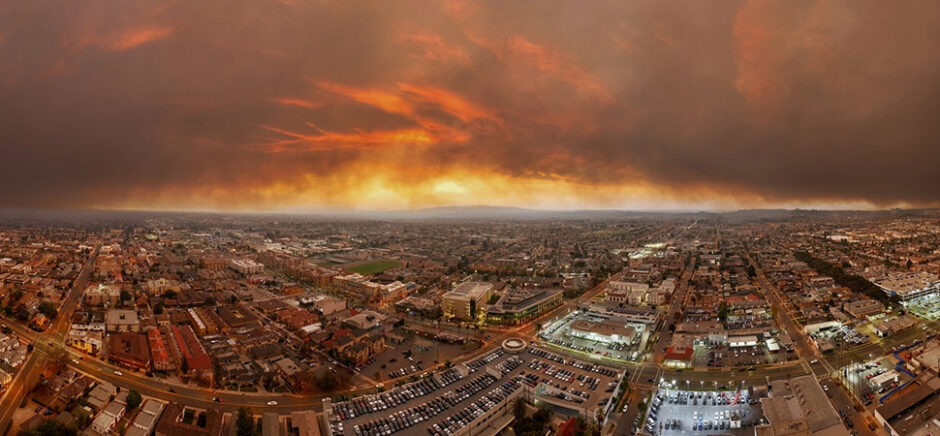
In 2025, wildfires across Texas have burned over 1 million acres as of May 16. With support from a NASA grant, a UTA professor is working to develop an early-warning system that can alert the public to wildfire smoke dangers—even hundreds of miles away from a fire.
MORE►

by Lance Murray |
Feb 20, 2025
According to research by UTA's Philip Baiden, Americans aged 65 and older who experienced their parents divorcing as children were more likely to suffer a stroke compared to their peers—one in nine as compared to one in 15 for those whose parents did not divorce.
MORE►

by Quincy Preston and David Seeley |
Jan 21, 2025
D CEO and Dallas Innovates' Innovation Award winners are working to resurrect extinct species, launching autonomous trucks, reinventing military aircraft, and bringing AI into the physical world—and that's just the beginning. The 2025 awards showcase game-changing achievements—including Texas' first newly minted decacorn—across 17 categories of innovation. Here’s a look at the innovators leading the way.
MORE►
by David Seeley |
Jun 4, 2024
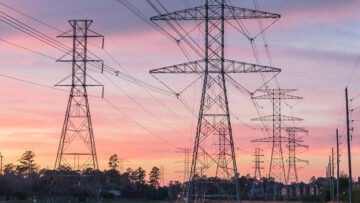
Lee is one of three UT Arlington faculty members who've been awarded $1.6 million from the Department of Energy to help boost the reliability of Texas's electric grid. The team is exploring the use of "behind-the-meter" energy devices that may help cut down on electricity consumption—and even upload energy to the grid itself, writes Fort Worth Report's Shomial Ahmad.
MORE►