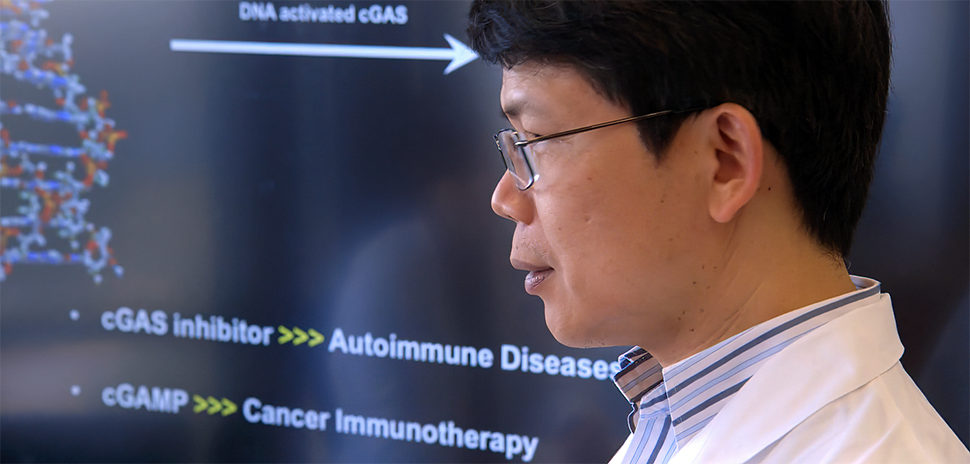
UT Southwestern Medical Center just ranked No. 1 among healthcare institutions worldwide in the most recent Nature Index rankings for publishing high-quality research across all subjects for the 12-month period that ended Feb. 28, 2026. UTSW also ranked No. 1 among health care institutions globally for research in the natural sciences and biological sciences.
Nature Index tracks health care research articles published in top science journals, offering a snapshot of landmark discoveries from 6,545 institutions around the world.
For UTSW during the ranking period, that included more than 500 research papers published in nearly 100 journals, ranging from Nature and Science to Circulation and The Journal of the American Medical Association. The work includes research on the effects of GLP-1 medications, reprogramming heart cells to restore function after a heart attack, identifying fibroblast populations that fuel the spread of cancer, studying how different parts of the hippocampus in the brain impact memory and more, UTSW said.
“This ranking reflects the depth and excellence of our research enterprise,” said Joan Conaway, Ph.D., vice provost and dean of basic research at UT Southwestern, who holds the Cecil H. Green Distinguished Chair in Cellular and Molecular Biology. “Our scientists are working at the highest level to advance knowledge across disciplines to better understand diseases and translate those insights into meaningful progress for patients.”
In the healthcare category, UT Southwestern also ranked first during the same period among 1,192 healthcare institutions in North America and 995 entities in the United States.
“This recognition highlights the sustained efforts of our faculty and trainees,” said Dr. W.P. Andrew Lee, executive vice president for academic affairs, provost and dean of UT Southwestern Medical School, who holds the Atticus James Gill, M.D. Chair in Medical Science. “By supporting rigorous research and collaboration, we’re able to translate discoveries into real-world impact.”
Recent breakthroughs
The award is another win for an organization with significant research credentials. Six UTSW faculty members are Nobel laureates. Five faculty members have received the Albert Lasker Basic Medical Research Award. That award is considered the nation’s top biomedical research award, including Steven McKnight, Ph.D., professor of biochemistry, in 2025; and Zhijian “James” Chen, Ph.D., professor of molecular biology in the Center for the Genetics of Host Defense, in 2024.
Earlier this year, Chen won the Japan Prize in Life Sciences in recognition of his groundbreaking research on how the body’s immune system protects against such threats as bacteria and viruses.
In the last few years, UTSW researchers reported discoveries spanning a broad range of health concerns.
They identified a protein that causes human cell membranes to burst during necroptosis, a form of programmed cell death. The discovery could lead to new treatments for severe infections, inflammatory diseases, neurodegeneration and cancer — including conditions such as Crohn’s disease, Alzheimer’s, ALS and several tumor types.
UTSW researchers also found a link between blindness in animal models and a brain-wide cellular stress response that’s a common risk factor for dementia. Their findings could help explain the connection between vision or hearing loss and dementia.
A research enterprise at scale
UT Southwestern has more than 1 million square feet of research space supporting an estimated 6,200 research projects a year. The medical school receives more than $816 million in annual funding from state and federal agencies, individuals, and corporations.
UTSW’s research centers include the Harold C. Simmons Comprehensive Cancer Center, the Peter O’Donnell Jr. Brain Institute, one of 11 U.S. Nutrition Obesity Research Centers and a National Organization for Rare Disorders (NORD) Rare Disease Center of Excellence. UTSW also is designated as a National Cancer Institute Specialized Program of Research Excellence (SPORE) site in liver, lung and kidney cancers.
Don’t miss what’s next. Subscribe to Dallas Innovates.
Track Dallas-Fort Worth’s business and innovation landscape with our curated news in your inbox Tuesday-Thursday.
R E A D N E X T
-
Studies show the lifetime incidence of Alzheimer’s disease among adults with Down syndrome is 90%. Researchers called the national ABC-DS study "especially timely" as more treatment options for Alzheimer’s disease are found and more clinical trials are launched for adults with Down syndrome.
-

For more than 85 years, Southwestern Medical Foundation has been an impact-driven public charity focused on building a sustainable funding source for innovative research, best-in-class medical education, and the highest standard of care at UT Southwestern Medical Center and its related institutions, the nonprofit said.
-
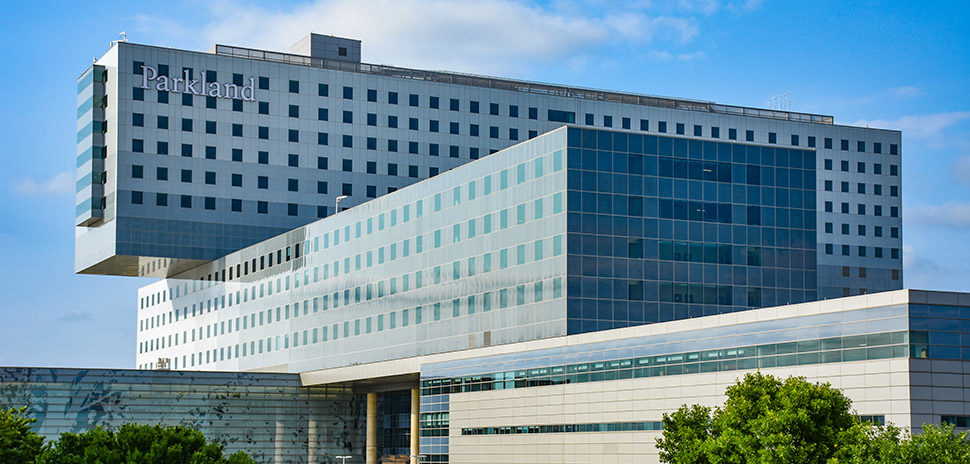
PCCI has spent more than a decade designing, developing, implementing, and "rigorously monitoring" AI in the complex clinical environment of Dallas' Parkland Health. Now it's partnering with North Carolina-based Vega Health to make five of PCCI’s clinically validated AI models available to health systems nationwide.
-
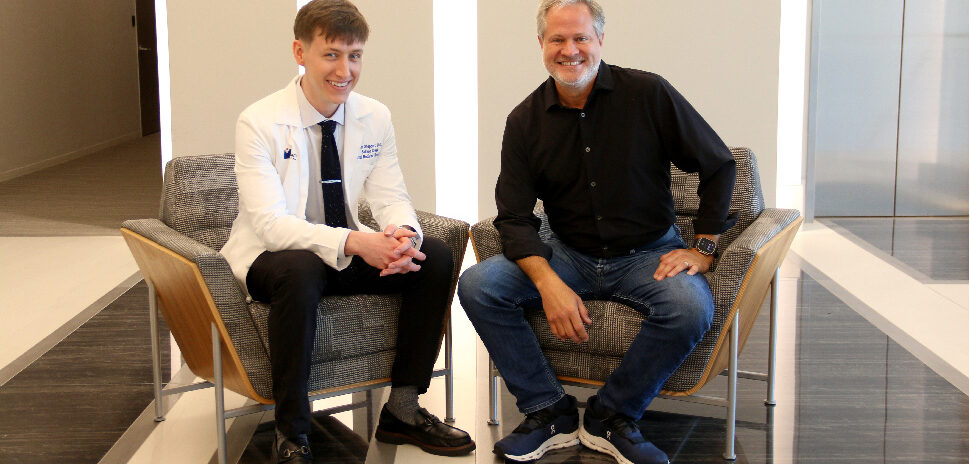
Bottle Rocket founder and serial entrepreneur Calvin Carter and AI programmer-turned-medical-doctor Alex Sheppert developed Matic's agentic AI to take care of the busywork—"so physicians can focus on the patient and practices can optimize care."
-
The acquisition expands AMN Language Services’ ability to support patients with limited English proficiency during both human clinical interactions and in before and after care—while reinforcing the critical role of medically qualified human interpreters for clinical, complex, and sensitive conversations.
-
Studies show the lifetime incidence of Alzheimer’s disease among adults with Down syndrome is 90%. Researchers called the national ABC-DS study "especially timely" as more treatment options for Alzheimer’s disease are found and more clinical trials are launched for adults with Down syndrome.