Augustus doesn’t have a bank yet. But it has already cleared one of banking’s toughest hurdles: preliminary approval for a national charter.
The Thiel-backed fintech is building what it calls the first clearing bank for the AI era—a bank organized around stablecoins, round-the-clock payments, and a future of machine-to-machine transactions. That prospect was enough to pull Greg Quarles out of the top job at another bank last October. As president of Augustus National Bank, the Texas banker and former federal regulator is now leading the company’s launch from Dallas.
“It is incredibly hard to rethink banking from the inside,” Quarles said, noting that the financial crisis had “essentially paused American new bank creation.” Now, he said, “It’s time to build new banks again.”
Augustus is using technology to build a bank for “how money actually needs to move,” according to Quarles.
Augustus National Bank filed its charter application in December and received preliminary, conditional approval from the OCC on May 8—less than five months later. More regulatory steps remain, but if those requirements are met, Quarles said the bank could open as soon as September.
The veteran and the founder
Quarles didn’t go looking for the job. It came through a Dallas headhunter he’d known for years, while Quarles was running United Texas Bank with his “head down,” he said in an interview with Dallas Innovates.
Advisers had told Augustus’ founders that pursuing an OCC charter—“the hardest thing to do” in banking—would require a strong banker who understood both regulation and innovation, Quarles said.
He fit that profile. Quarles spent 18 years at the OCC as a commissioned national bank examiner and assistant deputy comptroller. He then ran three banks: H&R Block Bank, which he launched as a de novo himself; Green Dot Bank; and United Texas Bank. At United Texas, which moved large volumes for digital-asset companies, Quarles led a compliance, governance, and risk-management remediation.
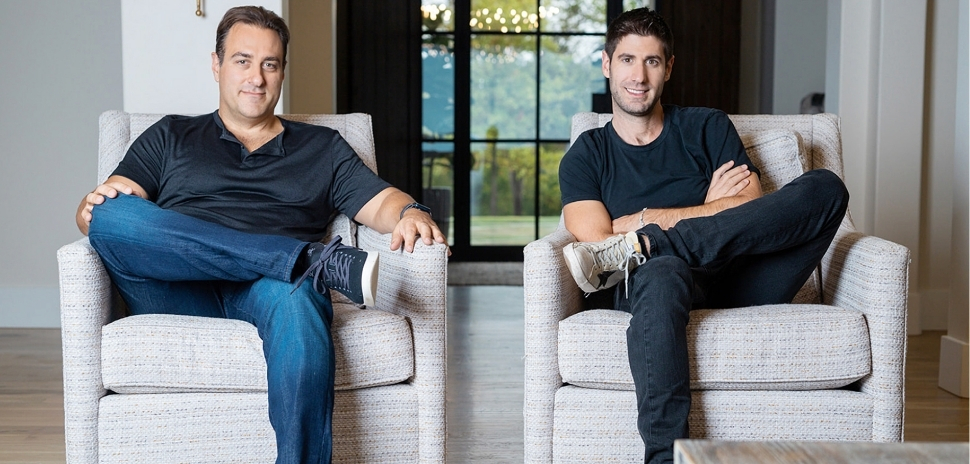
The founder who brought him to Augustus is Ferdinand Dabitz, a 25-year-old German entrepreneur who goes by Ferdi. He is a Thiel Fellow, a program that backs young entrepreneurs with a $250,000 grant to skip or leave college and build new things. The company says Dabitz would be the youngest CEO of a federally chartered U.S. bank in modern history.

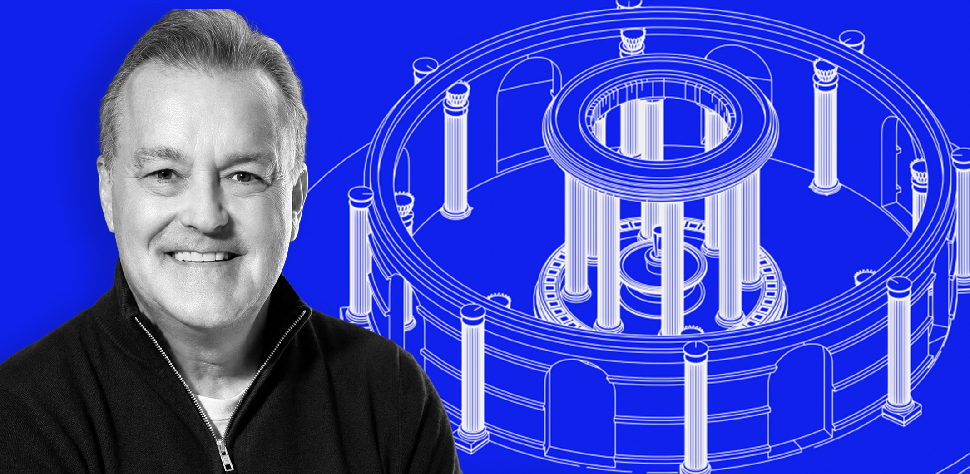
Ferdinand Dabitz, 25, who goes by Ferdi, would become the youngest CEO of a federally chartered U.S. bank in roughly 140 years, by the company’s count, if Augustus completes the charter process. [Photo and Illustration courtesy of Augustus; composite image DI Studio]
Quarles said he found a founder who led with the regulated part of the business, not just the technology. Over the years, he’s been approached by fintech CEOs who “underestimate the regulatory compliance and how you have to operate in a safe and sound manner,” he said. “But not Ferdi. That’s the thing he led with.” Dabitz, Quarles said, is “the brightest guy I’ve ever met.”
The two worked together for eight months, he said, before either learned the other’s age. “I didn’t ask his age,” Quarles said, “but he didn’t ask my age either.”
The job requires being willing to “stretch and not do it the way we always have done it, but do it a new way,” he said, while adding, “With gray hair comes wisdom and risk management.”
Augustus could have built its U.S. stablecoin and payments business without a bank charter, as many crypto and fintech firms do, Quarles said. It chose the harder, more heavily supervised path of a national bank instead. “Banking is all about trust,” he said.
A bank built for machines
Augustus has a mission, in its own words, “to secure and advance Western currency dominance by upgrading clearing to the AI era.”
In the plumbing of finance, clearing banks sit between institutions, holding deposits and settling payments. Augustus’ pitch is that much of that system still moves at bank speed, across business hours, holidays, time zones, and multiple correspondent banks. As Dabitz has put it, that adds up to “115 bank holidays a year.”
Moving a dollar across borders today, Quarles said, can involve “three to four banks and business hours in two different time zones.” Augustus intends to run “24/7, 365 days of the year.”
Augustus Bank is being built as a wholesale, business-to-business clearing bank for global institutions, not as a consumer bank. Its customers, Quarles said, are treasury departments, digital asset firms, and other entities that need to move money at scale.
In Europe, Augustus already serves digital-asset firms such as the crypto exchange Kraken. Quarles said those kinds of institutions “need access to the U.S. rails.”
The convergence of digital assets, payments, AI, and traditional banking “isn’t a passing trend—it’s a generational shift in how institutions will operate, compete, and create value in the decades ahead,” according to Quarles.
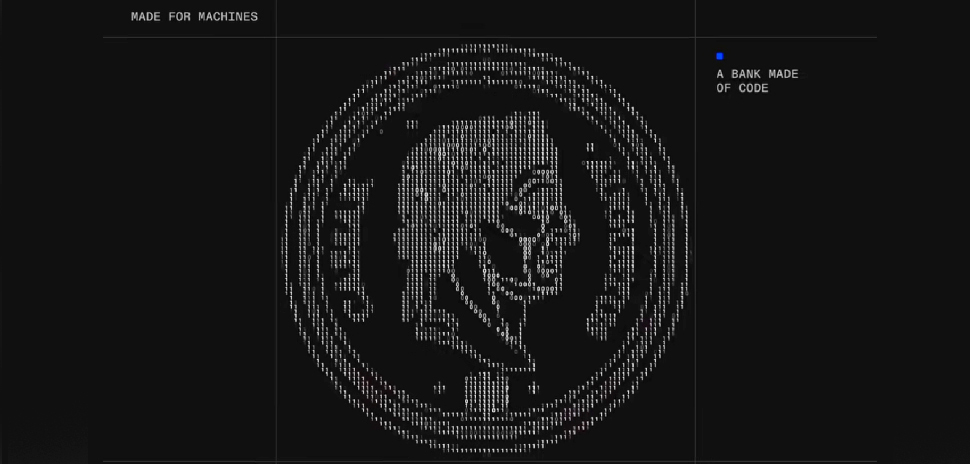
Augustus calls itself “the clearing bank for the AI era” and builds its branding to suggest code — its namesake emperor’s coin in dot-matrix, Roman monuments in wireframe. The bank would run without a single physical branch, “always open,” in the company’s words, and “at the speed of compute.” [Screenshot/Augustus video]
A bank made of code
“Legacy banks are made of paper, Augustus is made of code,” Dabitz said in Banking Dive.
On CNBC, holding up a $100 bill, he called it “the best product” in history, citing “quasi infinite global demand for hard currencies, especially the dollar.” Today, Augustus thinks distribution is broken. “We want to rethink the clearing bank as an AI application,” Dabitz said.
“Money never was upgraded to the internet era,” he said in a launch video.
Augustus CFO Joe Schenone sees the next wave of GDP generated by agents executing autonomously, not humans clicking buttons. “AI agents made of code will need a bank made of code.”
Augustus has also made a geopolitical case for its approach. In its May announcement, the company noted that roughly 90% of global trade is invoiced in dollars or euros and called Western currency dominance “an essential instrument of soft power” now under pressure.
The company pointed to China’s CIPS network, which it said links some 4,800 banks, and to a Russia-backed BRICS Pay system set to launch in 2026 to route cross-border payments around SWIFT and the dollar.
Stablecoins, fully reserved
Stablecoins are a pillar of the Augustus model. But “we’re not a crypto company,” Quarles said. The model, as he described it, would have the bank hold U.S. dollar deposits, issue stablecoins against them, and process those payments continuously, with reserves kept “100% reserved” in line with the GENIUS Act (the Guiding and Establishing National Innovation for U.S. Stablecoins Act), a federal law that sets rules for how digital tokens pegged to a fiat currency can be issued and backed.
The OCC decision says a wholly owned stablecoin subsidiary, identified in the Dallas Business Journal’s reporting as Juno Moneta LLC, would handle the “issuance, custody, conversion, and payment of U.S. dollar-denominated reserve-backed stablecoins.”
The OCC noted in May that an application for the subsidiary hasn’t yet been filed.
Choosing Dallas as a ‘forward bet’
Quarles said the company’s choice of Dallas was a “forward bet.” “The center of gravity in the U.S. financial services is really shifting south, down to Dallas,” he said. “We want to be the flagship of that.”
The founders had planned to locate the bank somewhere in Texas, Quarles said. He pushed for Dallas.
Quarles grew up in the Texas Panhandle and has banked around the country. “I’m a Texan, but lived all over the country, but there’s just something about Texas if you want to be successful, be an entrepreneur,” he said.
A newly chartered bank, Quarles said, has “got to have access to talent, and we think that’s really critical for us.” Dallas, he said, has deep benches in banking, payments, risk, and compliance. He pointed to the cluster around Preston Center, where Augustus has been working out of a temporary WeWork space. “There’s probably 15 banks in that area right there,” he said.
The company has narrowed its permanent office search to three Uptown locations, Quarles said in late May.
He also credited the state’s posture toward financial technology and digital assets. Texas, Quarles said, “has positioned itself as a destination for FinTech, digital asset firms,” and he pointed to Gov. Greg Abbott and Dallas Mayor Eric Johnson for promoting the message that “Dallas is open for business.”
“Y’all Street,” he acknowledged, has become shorthand for Dallas-Fort Worth’s status as a national financial hub with the planned Texas Stock Exchange and a growing number of capital-markets firms adding to the region’s roster.
While the official headquarters and regulatory home base of Augustus Bank will be anchored in Dallas—run by Quarles—an additional office in New York will maintain staff to interact with major financial institutions and crypto firms. Augustus also has regulatory subsidiaries across Europe, where its digital foundation and early business roots started.
Dabitz, the CEO and public face of Augustus, is running strategy and vision from New York, Quarles said.
Augustus revealed its name and brand in May, alongside the OCC news, after years operating as Ivy, a European payments startup. “Today, Ivy becomes Augustus,” the company announced. “Same team. Same vision. New brand.” [Image courtesy of Augustus]
From Berlin fintech to Dallas bank
Augustus grew out of Ivy, a payments company four founders started in Berlin. “They’re all brilliant,” Quarles said. Besides Dabitz, there is chief technology officer Simon Wimmer, who’s building the core banking stack; chief operating officer Joshua Becker, whom Quarles calls “a great leader of people”; and chief revenue officer Peter Lieck, who leads Augustus’ work with partners.
Ivy built payment rails in Europe starting in 2022. Quarles called it a Berlin payments company that had grown “very successful in Europe,” moving money for digital-asset firms and holding licenses in Finland and Poland.
Ivy’s software lets merchants accept instant bank payments and “skip intermediaries and any associated transaction fees,” according to FinTech Futures, which reported a $20 million Series A in 2023. By 2025, Ivy had added stablecoin settlement in Circle’s USDC and EURC, layering crypto rails onto its bank-payment network.
The decision to pursue a U.S. bank charter came at a leadership offsite last July, Quarles said. The company had grown 10x a year while processing billions in euro clearing, and it was seeing “a lot of demand for access to the U.S. payment rails.”
The rebrand of the Ivy name and the bank-charter plan were made public in May, alongside the OCC news.
The Roman emperor Augustus “was the inventor of modern currency,” Dabitz explained on LinkedIn. “When he came into power every province had their own coin. He centralized the mint, the coinage, and invented what we still know today: The national currency system.”
He was also “the original underdog,” Dabitz wrote. Augustus was named Julius Caesar’s heir when “there were easily 10 people who were objectively more likely than him to win.” He added, “I’m proud of a team that also succeeded, against all odds.”
“The work ethic on this team is tremendous,” Quarles said. When regulators sent questions, the four founders “would work long hours” with his bank team to answer them. Around Dabitz, the company has stacked an executive bench with banking veterans.
Joe Schenone, the chief financial officer, came up through JPMorgan Chase and Japan’s MUFG and has turned two technology companies into chartered banks. Kyle Steed, the chief risk officer, is a former bank regulator who was most recently interim chief risk officer at United Texas Bank. Andy Riggs is the chief credit officer. In May, the company named Benjamin Alexander, from Column, as chief compliance officer.
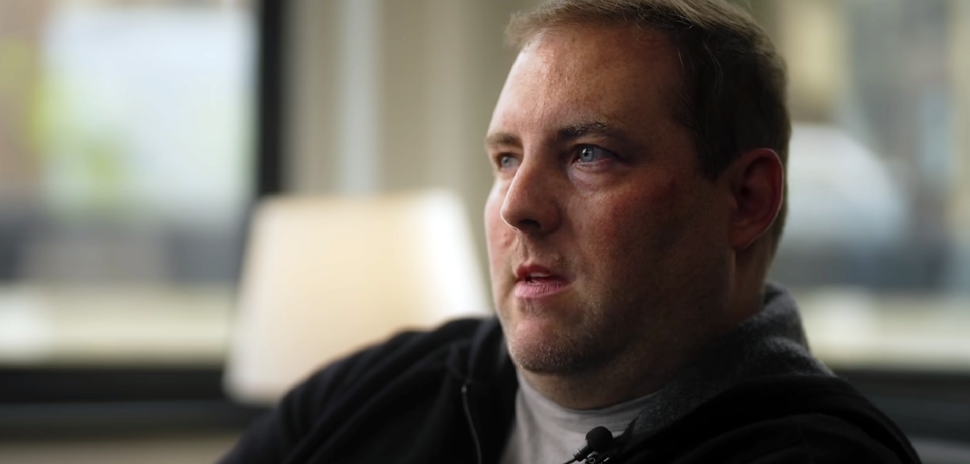
Benjamin Alexander, Augustus’ chief compliance officer, joined from Column with 15 years in compliance, including at JPMorgan Chase and HSBC. In a company video, he said that banks have “drained” global access by reflexively “de-risking” — exiting whole categories of customers — and recalled regulators keeping a “scorecard” of how many a bank had cut off. [Photo/Augustus video]
A rare approval, and a narrow window
Full national bank charters are hard to come by. Fortune reported that Augustus is only the eighth full national bank charter the OCC has granted since 2010. Other recent approvals for firms such as Ripple were narrower trust licenses with significant restrictions.
Closer to home, Dallas Innovates reported in 2020 that North Texas had not seen a de novo bank since 2009. TYME Bank filed in 2020 but later withdrew its application. Augustus also arrives as parts of the region’s banking scene have consolidated, with Comerica Bank, Veritex Community Bank, and Vista Bank all acquired by larger out-of-state buyers in the past year.
“The window of opportunity opened up after the election,” Quarles said. He pointed to a shift in the administration and new leadership at the OCC, including Comptroller Jonathan Gould, whom he called “open to innovation.”
The aforementioned GENIUS Act, the stablecoin law passed in July 2025, was “very, very critical,” because it allowed banks to participate in stablecoin and digital-asset activity within a regulated framework. He also credited the Clarity Act as adding “more framework that is much needed.”
James Fitzgerald, founder and managing partner of Valar Ventures, a Peter Thiel–co‑founded venture fund, speaking from the investor side in a video conversation, said it has become possible to get a new U.S. banking license only in the last year.
“These windows, when they open,” he said, “they sometimes aren’t open for very long.”
The Augustus team first met with the OCC’s licensing staff for a pre-filing meeting around October, Quarles said. The company filed its formal application on Dec. 18, 2025, according to the OCC decision. It received preliminary approval less than five months later.
Quarles first called the pace “impressive,” then upgraded it to “miraculous”—especially for “a novel bank like this.” He credited OCC staff for aiming at a roughly 120‑day turnaround and Augustus executives for responding around the clock.
Fortune reported that OCC officials “may have been reassured by Dabitz’s team at Augustus,” which includes longtime veterans like Quarles.
But the pace wasn’t guaranteed. If regulators had soured on the business plan or the management team, Quarles said, approval “could take years … to get across the finish line.”
Davis Wright Tremaine, a law firm that tracks new bank charters, wrote that the decision “may provide an early indication of how the OCC intends to handle novel payments, tokenization, and stablecoin-related banking models.”
The company has raised $40 million from Valar Ventures and Creandum, whose portfolio includes Spotify and Klarna, along with the founders of Ramp, Deel, and Circle, according to its announcement and Fortune.
Valar backed the company during its initial fundraising rounds when it was still operating under its former name, Ivy. Fitzgerald said the team has “been really smart about understanding how the ecosystem is changing and evolving and making sure that they’re always on the front end of that evolution.”
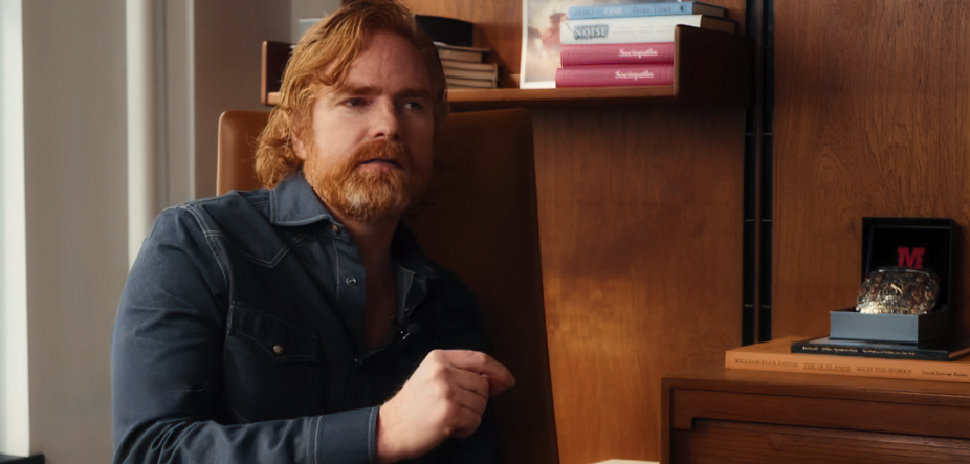
James Fitzgerald, founder and managing partner of Peter Thiel’s Valar Ventures, an early Augustus backer. In the company’s launch video, he said banks are running on “technology that’s not boomer technology, it’s not even built by the parents of the boomers, it’s built by the grandparents of the boomers.” [Screenshot/Augustus video]
What’s next
Before Augustus Bank can open its digital doors, it still has to clear a pre‑opening exam from the OCC this summer, secure FDIC deposit insurance, and win Federal Reserve approval for its holding company, Quarles said. The OCC decision requires the bank to hold initial paid-in capital, net of organizational and pre-opening expenses, of no less than $52.5 million.
The stablecoin subsidiary is a separate step; its application hasn’t been filed yet.
And not all observers are sold on the model. William Chittenden, who leads the Southwestern Graduate School of Banking Foundation at SMU’s Cox School of Business, told the Dallas Business Journal he had not seen a successful payments-only, stablecoin-centric bank before. “I think it’s an interesting model,” he said. “I don’t know how plausible it really is.”
Campbell Harvey, a Duke University finance professor, told the New York Post that round-the-clock access is needed but that “any new code, like the Augustus ‘proprietary code’ is untested, and as such, subject to attack.”
Quarles isn’t taking a victory lap just yet. “Conditional approval is just that,” he said. “It’s conditional. …There is a lot of work still to do.” What the OCC decision is, he said, is “a big hurdle and milestone.”
If the remaining approvals fall into place, Augustus expects to employ between 26 and 30 people in its first year, the majority in Dallas, and grow to just under 100 over three years, according to Quarles.
“We have important work ahead,” he said.
Don’t miss what’s next. Subscribe to Dallas Innovates.
Track Dallas-Fort Worth’s business and innovation landscape with our curated news in your inbox Tuesday-Thursday.
R E A D N E X T
-

North Texas has plenty to see, hear, and watch. Here are our editors' picks. Plus, you'll find more selections to "save the date."
-
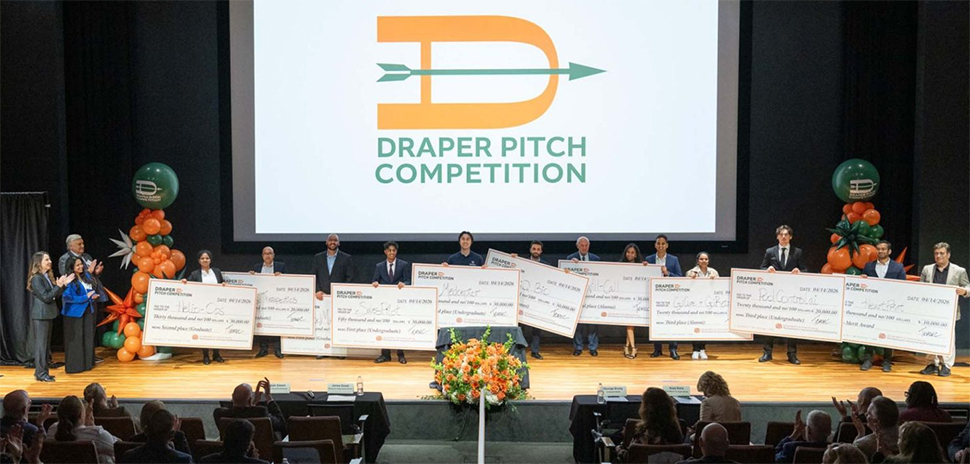
Nine student and alumni teams made the finals in three tracks: undergraduate, graduate student, and alumni. Winning ideas ranged from AI sales coaching to radiation mapping and noninvasive brain drug delivery as the university’s entrepreneurship push continues to scale.
-

With its proposed acquisition of Dallas Capital Bank, MidFirst—the nation's largest privately owned bank—is adding to a growing Texas footprint which already includes banking locations in Dallas, San Antonio, and Houston.
-
Travis Machen, CEO and group head of global banking and markets at Scotiabank, said the acquisition "further supports our strategic focus within the North American corridor."
-
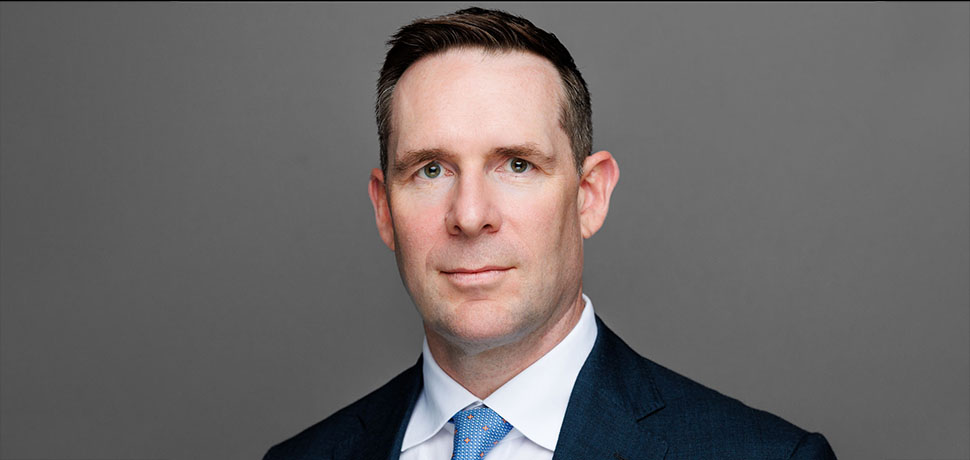
The Preston Center building is currently under construction, with Fifth Third’s space slated for completion in the fourth quarter of 2028. The bank said it intends to exit Comerica’s prior leased space at Comerica Bank Tower in Dallas. A branch in North Park at 8850 Boedeker Street in Dallas will serve as temporary headquarters until the 2028 Preston Center move.
-
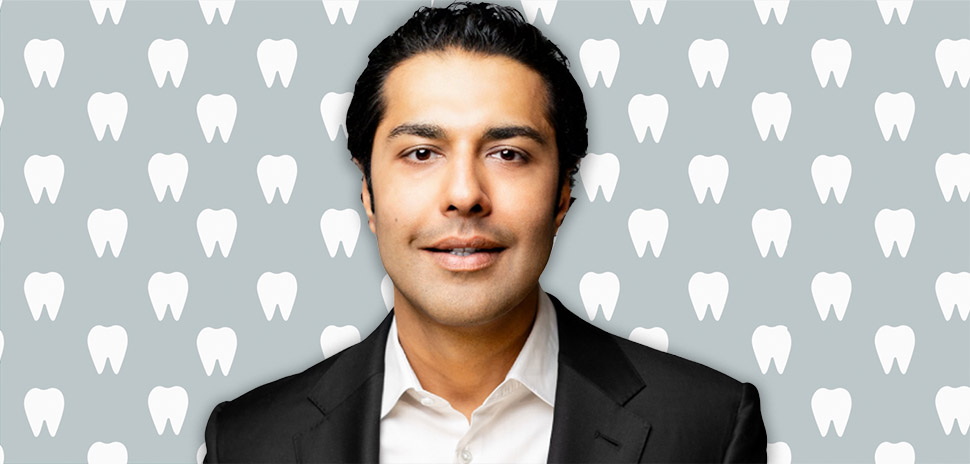
The DECA Dental founder returned to his alma mater to keynote UT Dallas' record-breaking Draper Pitch Competition. He told student founders what it really takes.
-

The Dallas-based reproductive health platform offers a cycle-tracking app for logging cycles and managing conditions like endometriosis and PCOS. It was one of five finalists taking part in North Texas' premier social innovation competition.
-
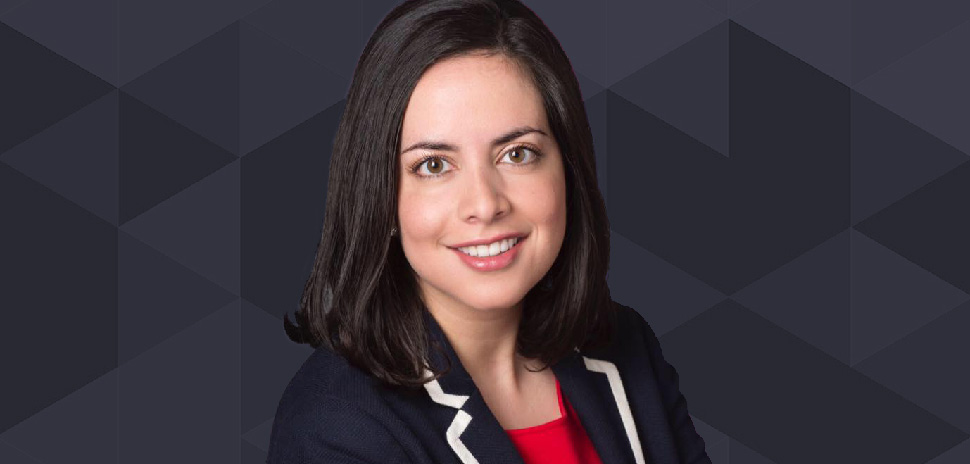
“Dallas is a city on the rise—a magnet for capital, talent, and ideas," Luisa del Rosal said. "I look forward to working with the board, our members, and partners to amplify ECD’s role as a premier forum for the conversations that will define our economic future."
-

An 11-place climb in the 2026 Global Startup Ecosystem Report puts the Dallas ecosystem among North America’s fastest risers, alongside fellow Texas hub Austin.
-

Using a digital twin of Parkland Memorial Hospital for its blocky hospital, UTD's MCAT prep course playbook was designed by IvyBee, a Plano-based startup founded and led by Dr. Walter Voit, founder of UTD's Center for Engineering Innovation.