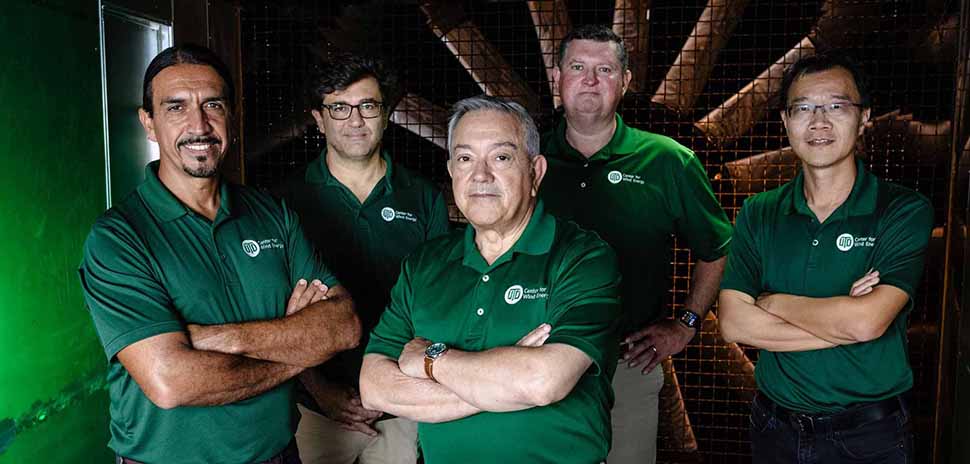
UT Dallas has secured renewed federal funding for WindSTAR, its long-running research center focused on improving the reliability, performance, and resilience of wind energy systems.
The National Science Foundation has awarded a five-year, $500,000 grant to the Center for Wind Energy Science, Technology, and Research, which UT Dallas operates jointly with the University of Massachusetts Lowell. The funding provides $250,000 to each institution.
The new federal support will back a series of research projects that apply artificial intelligence to some of the wind industry’s most pressing challenges. Those efforts include using AI to reduce manufacturing defects, monitor turbine component health, forecast wind conditions, and develop more resilient energy systems.
“This support from the National Science Foundation enables us to continue our work to strengthen the resiliency of the energy grid,” said UTD Wind director Mario Rotea in a statement.
Rotea, who is also WindSTAR site director and a professor of mechanical engineering in the Erik Jonsson School of Engineering and Computer Science, added that “investments in WindSTAR enhance our ability to innovate new technologies to ensure greater reliability of our energy systems.”
NSF Industry–University Cooperative Research Center focuses on real-world needs
WindSTAR operates within UTD Wind, the university’s wind energy research center, which advances work across aerodynamics, materials, controls, and system reliability. As an NSF Industry–University Cooperative Research Center, the center is designed to connect university research with real-world industry needs through partnerships with companies and government agencies.
According to UT Dallas, WindSTAR has completed 79 projects since 2014 for its industrial members, spanning digital modeling, measurement campaigns, manufacturing processes, and control systems.
“WindSTAR has created a direct pipeline between our graduate research and industry needs,” said Edward White, professor and department head of mechanical engineering and Jonsson School Chair. “More than 25 graduate students have gained invaluable experience working with industrial partners, and many have secured positions with WindSTAR member companies after graduation.”
White said the center’s model demonstrates how academic research can also function as workforce development for the energy sector. WindSTAR alumni have also gone on to careers in national laboratories and academia.
Umberto Ciri, now an associate professor of mechanical engineering at the University of Puerto Rico at Mayagüez and a 2025 NSF CAREER award recipient, credits WindSTAR with shaping his early research.
“The dialogue and feedback that went on over the years truly helped make my research more impactful in the field, which was a key goal for me, especially being a student at the early stages of my career,” Ciri said. “Participating in WindSTAR’s activities and meetings really helped me get to know the industry and was a unique advantage during my PhD studies.”
UT Dallas will also co-host NAWEA/WindTech 2025 with Sandia National Laboratories from Oct. 13–17. The conference is expected to bring together researchers, industry leaders, and government agencies to advance collaboration in wind energy science and innovation.
Don’t miss what’s next. Subscribe to Dallas Innovates.
Track Dallas-Fort Worth’s business and innovation landscape with our curated news in your inbox Tuesday-Thursday.
R E A D N E X T
-
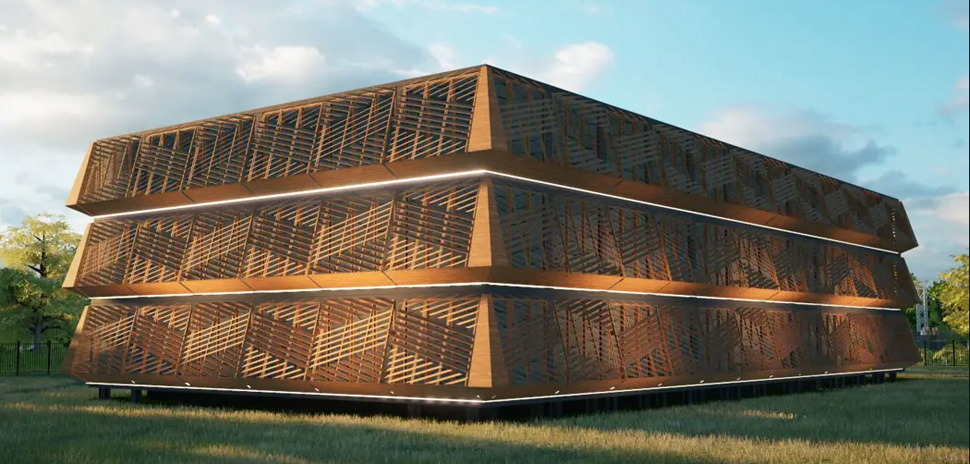
The pilot will test Last Energy’s 5-megawatt PWR-5 design at Texas A&M–RELLIS while the company advances a plan for 30 commercial microreactors in Haskell County northwest of Dallas-Fort Worth to serve data center growth.
-

The investment strengthens UTA’s pipeline for high-demand engineering talent and supports research on AI-enabled safety systems for nuclear plants.
-
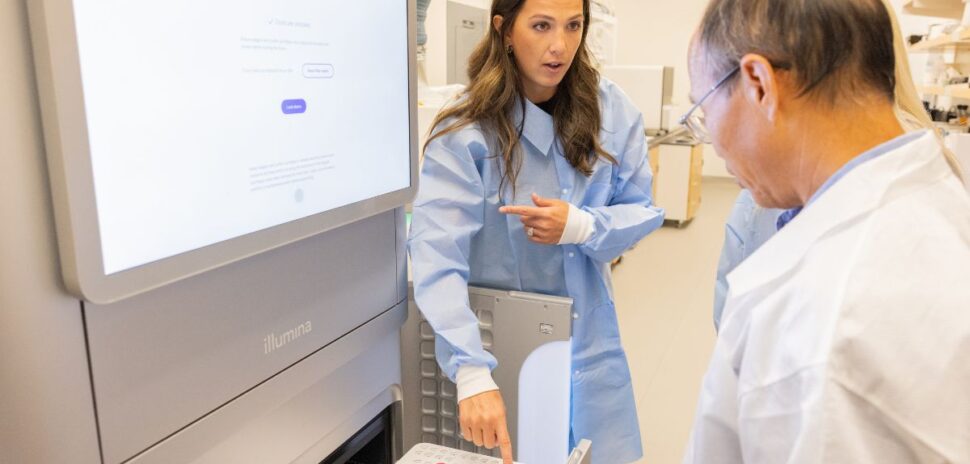
University of Texas at Arlington reported its projects contributed $59 million to the national economy last year, an increase of 39% from 2023, according to a new report from the Institute for Research on Innovation and Science (IRIS).
-

DirectH2 said the funding will accelerate the development and commercialization of its cutting-edge hydrogen solutions in collaboration with Houston-based Rice University—addressing critical challenges in the clean energy sector.
-

TAMEST — the Texas Academy of Medicine, Engineering, Science & Technology — named five statewide recipients for its 2026 Edith and Peter O’Donnell Awards, including three from Dallas-Fort Worth institutions. The honorees will be recognized in February, with nominations for 2027 opening in January.