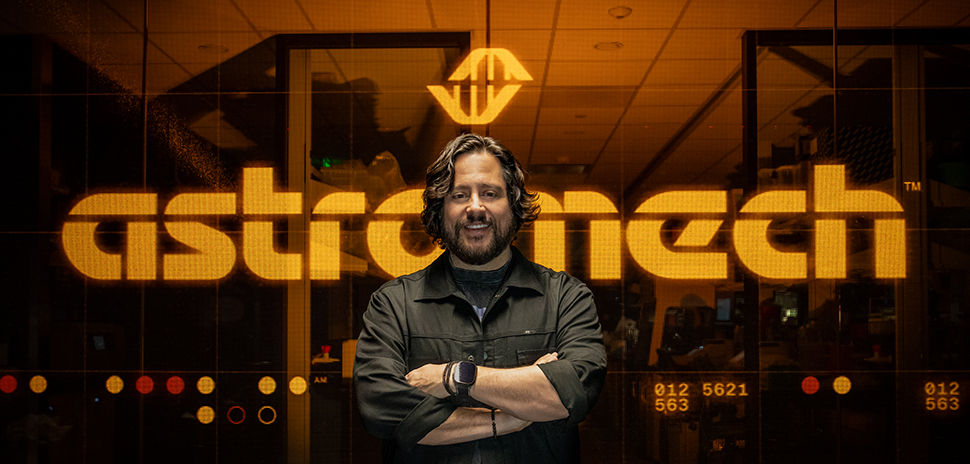
Astromech, the evolutionary biology AI company that spun out of Colossal Biosciences, has closed an additional $20 million in funding. To date, the company has raised $60 million and reports its valuation at $3.8 billion.
Bob Nelsen, co-founder and managing director of ARCH Venture Partners and an investor in Colossal, led the round. PEAK6, NeoGenesis Capital, Builders VC and CAZ Investments also participated.
Inside the science
Co-founded by Ben Lamm and Harvard geneticist George Church, Astromech focuses on developing predictive models that help researchers anticipate changes in living systems. The company compares the process to the way weather forecasters use a combination of current conditions and historical patterns to predict future events. Instead of helping people prepare for severe storms or dry summers, it aims to help scientists get ahead of issues such as genetic bottlenecks, responses to changing environments, drug resistance and disease progression.
“Biology runs the world and historically, we have only reacted to it,” Lamm said in a statement. “We can describe biology in extraordinary detail, yet we still struggle to anticipate what comes next.”
With the new funds, the company plans to expand its research team, increase the number of species represented in its functional genomic datasets and scale the infrastructure used to train its models. It describes its work as being in a deep research and development phase. Its platform and initial research pipelines are operational.
“Astromech is building the AI system predicting how living systems will change and where they are most likely to break,” Lamm said. “Every genome carries a record of what changed, when it changed and the tradeoffs that followed — but almost none of that history is readable at scale today. Astromech was built to close that gap, and this funding allows us to further expand that work far more across the tree of life.”
Connection to Colossal
When Lamm and Church teamed up in 2021 to start Colossal Biosciences, they made headlines for the company’s mission to bring back the woolly mammoth and other species from extinction. Since then, that effort has attracted investor interest alongside its scientific achievements.
In January 2025, it became the first “decacorn” startup in Texas with a valuation of more than $10 billion. In March of that year, it announced the birth of the Colossal Woolly Mouse, a significant step toward the precise genome engineering needed for de-extinction. A little over a year later, in May 2026, the company said it hatched live chicks using a 3D-printed shell. The technique addresses the challenge of bringing back extinct birds too large for living bird surrogates.
The co-founders launched Astromech in 2025, and details of its work became public this spring. It draws on Colossal’s genomic data resources, including a broad genome bank of extinct and living species, as well as other proprietary datasets. This allows it to use computational biology models to study how biological traits developed over time. The goal is to create a platform that can predict where a genome, pathogen or population may be headed, where a biological system may be most vulnerable and what may be driving those changes.
What’s next

Elephants have 20 copies of the TP53 gene and humans have only one. Astromech traces when that expansion happened and what the implications of that are for cancer incidence in across mammals including humans. [Image: Astromech]
Astromech described the first demonstration of its core model as a map of 46 longevity-associated genes across a time-calibrated tree of life — a species family tree scaled to when each lineage split off. Instead of testing one gene or one species, researchers can trace how genes tied to longevity, cancer resistance and cellular repair have stayed the same or changed across millions of years. Plus, they can look at these trends across entire groups of species.
Asian elephants, for example, have evolved notable cancer-suppression mechanisms despite their size and long lifespans. Yet, Tasmanian devils remain vulnerable to a transmissible cancer that has devastated wild populations. Colossal backs research into such areas, and Astromech’s work seeks to better understand these divergent outcomes.
Church said the approach depends on tools that didn’t exist a decade ago.
“Most of the variations that matter for complex traits … are regulatory rather than coding, so reconstructing the ancestral regulatory state, not just the ancestral protein, has the crucial explanatory power,” he said in a statement. “That takes functional data across many species rather than sequence alone, and AI reconstruction cheap enough to run genome-wide.”
The next phase of the company includes running forecasting pilots with partners in health and biosecurity. It is currently hiring for roles across ancestral modeling, regulatory genomics, genomic inference, sequence reconstruction, metabolic modeling and protein folding. Over time, Astromech plans to turn its work into early-warning systems and therapeutic research programs, ultimately building a global platform that can anticipate biological change.
Don’t miss what’s next. Subscribe to Dallas Innovates.
Track Dallas-Fort Worth’s business and innovation landscape with our curated news in your inbox Tuesday-Thursday.
R E A D N E X T
-

As the publication marks its 10th anniversary, the Dallas Regional Chamber is expanding its role in Dallas Innovates, and Lawley Head Media assumes leadership of newsroom and editorial operations.
-
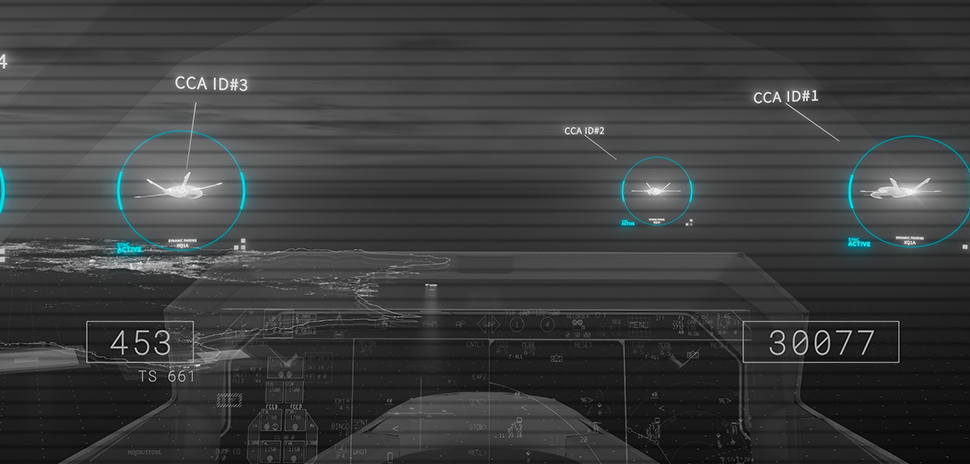
The Frisco-built V-BAT maker put its Hivemind software in charge of three National Chung-Shan Institute of Science and Technology Mighty Hornet III unmanned aerial vehicles for a field demonstration.
-
The Dallas-based foundation is partnering with New York City worker advocacy nonprofit Lift Our Voices on the free Agentic AI Academy, a five-day pilot for community college learners.
-

Teladoc co-founder Michael Gorton wants people to be able to watch their favorite book. His latest startup turns novels into cinematic, episodic video—a "fourth book format" after print, ebook, and audiobook. It begins streaming its first title July 14, backed by a $2 million raise and an Emmy-winning "Band of Brothers" producer who's relocating to Dallas.
-
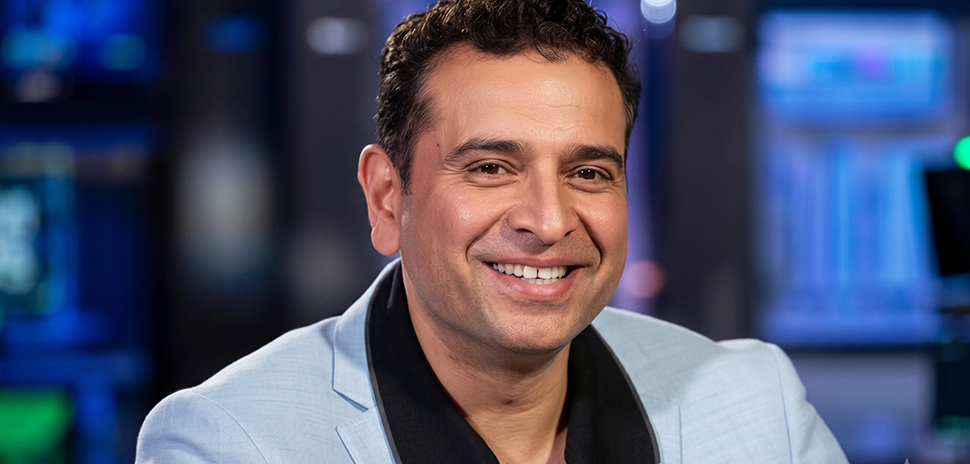
Jitin Bhandari will lead the Richardson company’s move into a new class of cloud providers that rent out the specialized chips powering artificial intelligence.
-
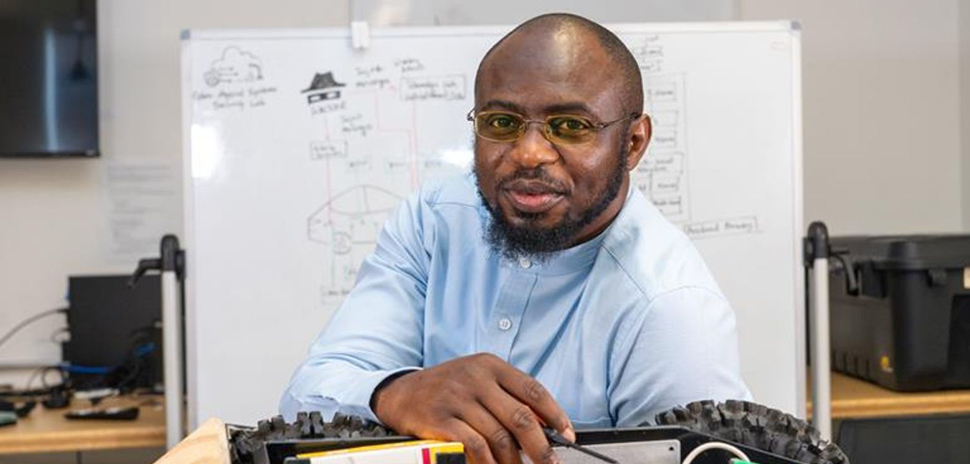
Researcher Habeeb Olufowobi will lead a project to build a safety layer to ‘help scientists confidently use AI in some of the world’s most advanced research facilities.’ It is one of 278 projects in a new federal effort.
-
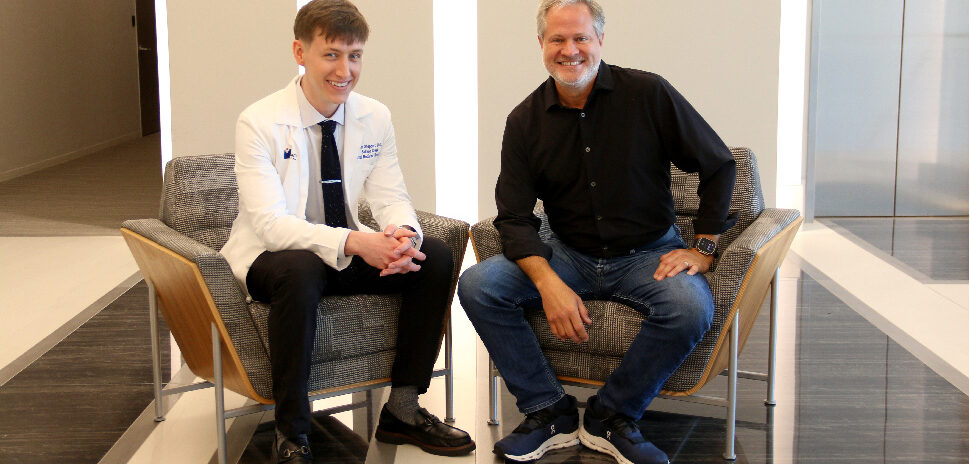
Bottle Rocket founder and serial entrepreneur Calvin Carter and AI programmer-turned-medical-doctor Alex Sheppert developed Matic's agentic AI to take care of the busywork—"so physicians can focus on the patient and practices can optimize care."
-
After 18 months of working with select enterprise customers, founder and CEO Kalyan Kommineni says its agents are helping supply chain teams recover margin, cut costs and respond to customers faster.
-

The Southlake-based workforce management software provider is expanding into major grocery and food service accounts as it rolls out new AI-powered planning tools. Over the next several months, the company is expanding deployments with major grocery and food service customers across North America and internationally.
-
The advanced manufacturing facility will assemble and test NVIDIA AI systems. It represents a $761 million investment and will employ close to 1,000 people by the end of the year.