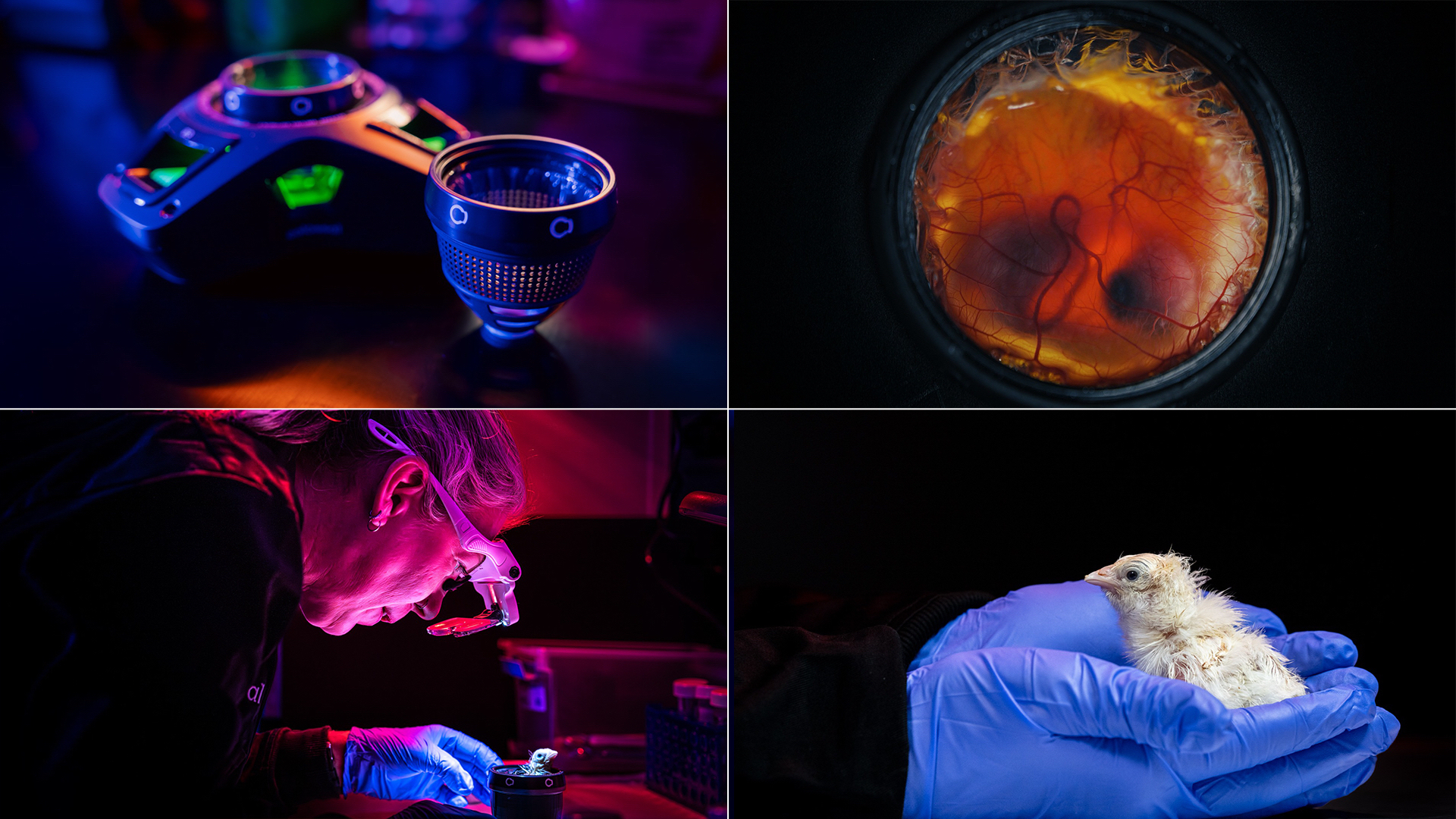
The eggs Colossal Biosciences ultimately hopes to hatch may one day be the size of basketballs.
That challenge is driving one of the company’s most unusual engineering projects yet: building a shell-less egg. The Dallas-based de-extinction startup announced it has successfully hatched live chicks using a 3D-printed shell system designed to support full avian embryo development outside a natural eggshell—a technology Colossal says could eventually enable the return of giant extinct birds such as the South Island Giant Moa.
After decades of failed attempts by researchers to culture bird embryos outside their natural shells, Colossal says its new artificial egg system avoids one of the biggest historical problems: the need for pure-oxygen environments that could damage DNA and complicate long-term development.
Instead, the company said its shell-less platform uses a bioengineered silicone-based membrane that mimics the gas exchange of a natural eggshell under normal atmospheric conditions. The 3D-printed lattice shell is designed to regulate oxygen, humidity, and temperature while remaining compatible with standard commercial incubators.
The engineering challenge becomes more complicated as eggs scale up in size.
No surrogate large enough
During a recent lab tour, Colossal researchers said South Island Giant Moa eggs were estimated to be about eight times the volume of an emu egg—well beyond the capacity of any living avian surrogate.
“We’re working with our exogenous development group to develop an artificial egg that will be able to accommodate Moa,” one Colossal scientist said during the tour.
“Every new scalable system for de-extinction is ultimately a biology problem wrapped in an engineering problem,” Ben Lamm, Colossal’s co-founder and CEO, said in a statement. “The artificial egg is a perfect example.”
Lamm said restoring species such as the South Island Giant Moa requires more than reconstructing ancient genomes and editing primordial germ cells, or PGCs.
“It requires building an entirely new incubation system where no surrogate exists and scales in ways that ordinary biology simply doesn’t,” he said.
Artificial shell ‘a major milestone’
Lamm called the artificial shell system “a major milestone” for Colossal and “a foundational technology” for the company’s de-extinction efforts.
“This is what multidisciplinary science makes possible—bringing together biology, materials science, and engineering to solve one of nature’s most elegant systems,” he said.
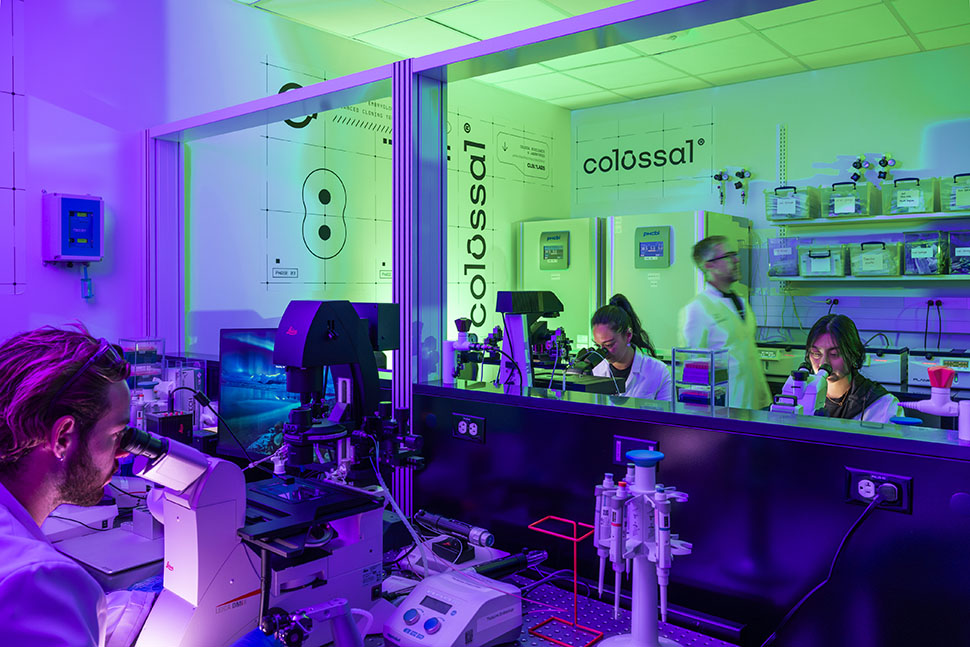
Researchers work inside Colossal Biosciences’ embryology lab in Dallas. During a during a February 2026 facility tour, scientists demonstrated the avian development and genome-editing work behind Colossal’s bird de-extinction programs. [Image: John Davidson/Colossal]
The 3D-printed lattice shell was designed for eventual transition to injection molding for low-cost, high-volume production. The shell size can be adjusted, with additional versions already under development that exceed the dimensions of any available surrogate species, Colossal said.
Researchers first attempted shell-less avian culture in the 1980s, but earlier systems required large volumes of pure oxygen, which Colossal said caused DNA damage and affected long-term animal health. Those systems also were incompatible with standard commercial incubators and difficult to scale for conservation or industrial use.
Engineered for both endangered species and de-extinction
“We’ve created a novel shell-less culture system that is fully scalable and biologically accurate,” said Andrew Pask, Colossal’s chief biology officer. “It’s a new system designed for long-term, healthy avian embryo development.” The result, the company said, is a system compatible with standard commercial incubators, manufacturable at scale, and adaptable to eggs of different sizes.
Pask said the platform is designed to operate independently of surrogate species while scaling across different egg sizes.
“The artificial egg gives us that platform: controlled, scalable, and completely independent of a surrogate,” he said. “It’s species-agnostic, size-scalable, and unlocks entirely new pathways—from rescuing endangered birds with low hatch success to enabling de-extinction where no surrogate exists.”
“We designed it with one priority,” Pask added: “Producing healthy animals that can thrive, not just hatch.”
From de-extinction to biotech applications
Beyond conservation and de-extinction, Colossal said the platform could also have applications in biotechnology research involving genome-edited birds.
The company said the system’s transparent, modular design allows continuous access to developing embryos during incubation, which could support gene-editing workflows used in areas such as therapeutic protein production and other forms of avian biotech research.
“Any field that needs precise, scalable access to developing avian embryos now has a tool that didn’t exist before,” Lamm said.
Don’t miss what’s next. Subscribe to Dallas Innovates.
Track Dallas-Fort Worth’s business and innovation landscape with our curated news in your inbox Tuesday-Thursday.
R E A D N E X T
-
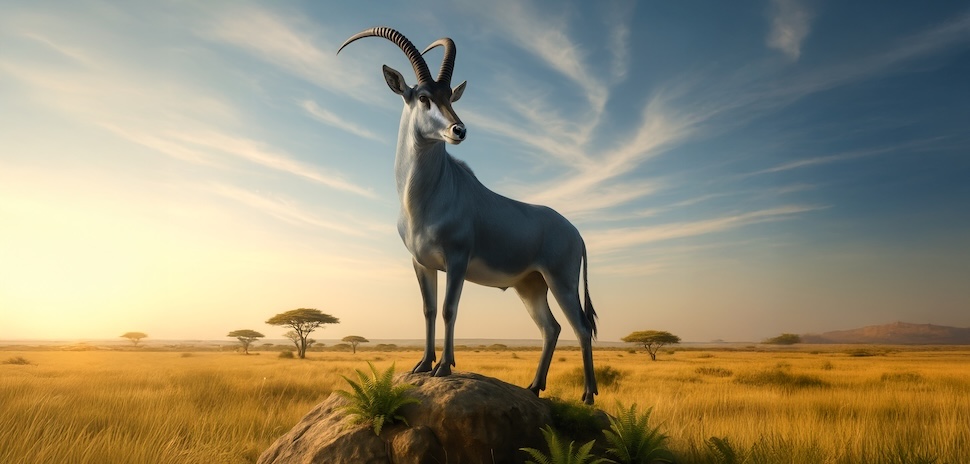
At a $10 billion valuation—and spinning out new ventures—Colossal names the bluebuck its sixth de-extinction target, extending its biotech platform into antelope conservation through a global BioVault effort.
-

Colossal Biosciences took home a gold Edison Award for developing a first-of-its-kind mammalian cloning method from blood samples—which led to what the company called "the world’s first true de-extinction" of the dire wolf. Also, Breakout Learning won a silver for its NextBook learning platform, while OhmBody took home a bronze for its period-easing wearable nerve stimulation device.