At this year’s TUNIE conference—the annual statewide gathering of university innovation leaders—one of the most insightful conversations wasn’t about startups and student founders, at least directly. It was about cities.
Specifically, how local economic development leaders are working with Texas universities to turn ideas into opportunity.
Inside TUNIE 2025: A collaborative moment for Texas higher ed
The 2025 TUNIE annual meeting took place July 24–25 on the campus of Southern Methodist University, hosted by the William S. Spears Institute for Entrepreneurial Leadership at SMU Cox School of Business.
The event brought together directors, faculty, and administrators from higher education entrepreneurship centers across Texas to share ideas, build partnerships, and shape the future of innovation education.
Now in its fifth year, TUNIE—short for Texas University Network for Innovation and Entrepreneurship—represents 24 universities and reached more than 12,000 students last year through member programs, SMU said in a news release. Participation in the network grew 40% year-over-year, a sign of the rising demand for cross-campus collaboration in entrepreneurship.
“Hosting TUNIE’s annual meeting allowed us to amplify proven campus programs and spark new partnerships that help entrepreneurs thrive across Texas,” said Joshua Taylor, executive director of the Spears Institute, in an email to Dallas Innovates.
The event, he says, reflects SMU’s strategic focus on building networks that support student founders statewide.
Building out university/economic development partnerships
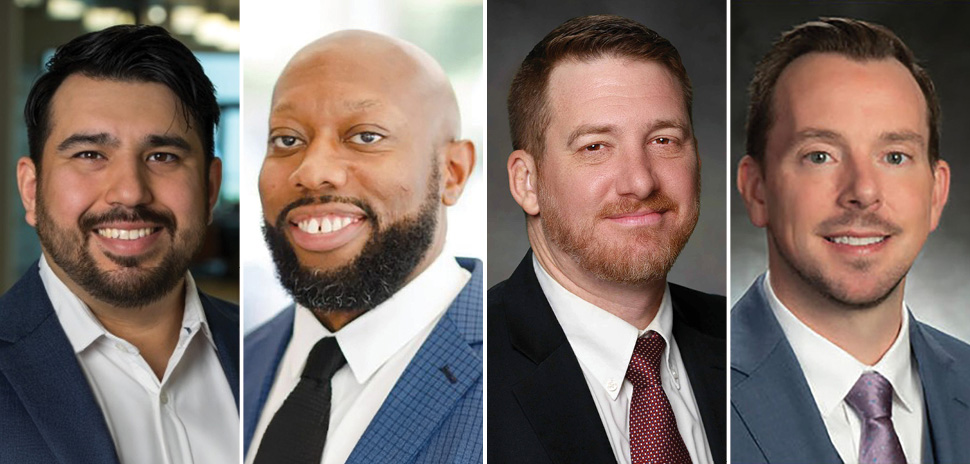
In a standing-room-only session at SMU’s Cox School of Business, leaders from four North Texas cities—Dallas, Richardson, Frisco, and McKinney—discussed what it takes to build partnerships between universities and economic development teams to unlock opportunity for local communities.

Emily Choi, executive director, Caruth Institute for Entrepreneurship, SMU Cox School of Business [Photo: SMU]
The panel, moderated by SMU’s Emily Choi, focused on the practical ways their cities are leveraging university relationships to fuel real-world impact—and what they’d like to see more of.
From shared real estate to startup grants, workforce training to capstone partnerships, each city is experimenting with programs that bring universities and communities closer together.
Dallas: Anchoring growth through real estate
Miguel Esparza, economic development manager for the City of Dallas, who oversees Dallas’ small business programs, described his work as going block-by-block to activate neighborhoods, often with tools like real estate development or community-serving retail. Esparza sees major potential in working with universities on physical projects, like SMU or UNT Dallas putting down roots with incubator spaces tied to real estate.
“Education institutions are known as anchor institutions,” he said. “So how do we get those anchors in parts of the city that maybe were lacking an anchor?”
He pointed to two real-world examples: the UNT Dallas campus in southern Dallas and the city-supported creation of the UNT Dallas College of Law in downtown. Both institutions were intentionally placed in areas targeted for long-term investment and catalytic redevelopment.
“The city of Dallas has gone out and—not once, but twice—helped start new universities within the city of Dallas,” he said.
The focus in Dallas, he says, is on two things: growing the tax base and creating livable-wage jobs. That means staying clear-eyed about where the city’s funding levers are strongest.
“Innovation is a very broad word,” Esparza said. “For us in the city of Dallas, it’s going to be tied to real estate.”
Esparza emphasized that no two cities operate alike. Each has its own mission, funding model, and capacity, he said, and understanding “how your boat gets fueled, and where it’s trying to go” is key to building effective university partnerships.
Frisco: Building from the ground up in sports and fintech
In Frisco, the strategy starts with infrastructure, and the recognition that a city without a four-year university was missing a key piece.
“We didn’t have a four-year university,” said Jeremiah Anderson, director of innovation for the Frisco Economic Development Corporation. “So we went and got one.”
Partnering with the University of North Texas, Frisco now hosts a growing campus just north of downtown Frisco that has become a catalyst for broader economic development goals, he says.
That recruiting move launched a deeper partnership with the University of North Texas, including a research-driven study to help Frisco identify its target industries.
The result is a focus on areas where the city could lead, including sports tech and FinTech.
Anderson called sports tech “almost low-hanging fruit,” pointing to UNT’s sports business management program and Frisco’s unique mix of major teams and corporate players.
Frisco has since partnered with the university to create a “soft landing pad” for international startups in the sports innovation space.
“Those students are working out of the soft landing pad as part of the program,” he said. “And that is transitioning to a leader of that program being a native of the Netherlands… so how do you create soft landing opportunities for those companies?”
UNT students are now actively involved in research and business development, even as the academic focus continues to take shape.
Anderson is also focused on tapping into university research earlier in the innovation pipeline. He cited a concept piloted at Baylor, where research discoveries are matched with entrepreneurial teams and support before hitting the licensing stage, helping move promising ideas into the market.
“The earlier we can tap into university research, the better,” he said. “There’s so much opportunity for commercialization.” The idea includes reviewing technology before it’s licensed and building small teams around those ideas to feed to the private sector—venture capital, private equity, or anyone willing to invest before the seed stage.
Frisco is also collaborating with McKinney on innovation programming. Together, the two cities co-host Plug and Play accelerators for FinTech and sports tech startups. By working together, they’ve increased their visibility and reach, attracting promising early-stage companies and national attention.
“Together, we’ve created a sort of runway for startups, corporates, and investors to get engaged in our communities,” Anderson said.
McKinney: Building relationships and betting on founders
In North Texas, cities may compete, but as Anderson noted in the case of McKinney and Frisco, they’re also partnering. The result of the city’s work together with Plug and Play accelerators creates a larger draw for startups and investors, and more opportunity for students and founders across both communities, he says.
Michael Kowski, CEO of the McKinney Economic Development Corporation, agrees. The two neighboring cities have different strategies, but shared goals have led to regular collaboration, he says.
The two cities co-host accelerator programs and coordinate closely to avoid working at cross-purposes. “We get together for lunch all the time,” Kowski said, describing a gentleman’s agreement to stay in sync.
That commitment to partnership isn’t limited to North Texas turf. McKinney and Frisco also travel together to the Smart Cities Expo in Barcelona, where they share booth space and strategy. “We work the booths together during the day and go to dinner at night,” Kowski said. “It’s very, very successful.”
That collaborative mindset is central to how McKinney operates, he says. “McKinney’s vision statement for staff and the community is, we build relationships. Period. Full stop.”
And, he says, “we build relationships with all sectors—universities in particular. Still, Kowski acknowledges it’s a work in progress.
Those relationships show up in practical ways. For instance, the city works closely with Collin College to bring instructors into workplaces, sometimes reverse-engineering outdated machinery to retrain workers and rewrite manuals from scratch.
“This is not strategy or philosophical,” Kowski said. “It’s truly roll-up-your-sleeves and make those connections.”
That same energy drives McKinney’s approach to talent. “Our focus right now isn’t bricks and mortar and big stuff. That’s just the headline.” Kowski said. “It’s upskilling, upskilling, upskilling … essential skill development.”
Jobs are changing fast, he says. “We have a lot of students who are trying to figure out what their forever job is going to be, and I’m not sure if that’s the way to approach life anymore,” Kowski said.
And on the topic of jobs, he level sets the role. “I do not create jobs. We foster an environment where a private sector creates jobs, right? There’s this key difference there.”
One of the city’s boldest moves has been its Innovation Fund: direct grants of $50K to $200K to tech startups, with no equity taken. The only ask? That founders locate in McKinney for at least three years.
So far, the fund has backed 48 companies whose combined portfolio value now exceeds $500 million. Kowski sees the program as a powerful lever for both startup attraction and university engagement. One example: UTD capstone teams visit startups funded by McKinney to assess their progress and present findings to the city’s board—a win-win for students and founders.
Kowski is also thinking about new ways to make university partnerships more flexible and valuable for employers. One concept involved academic credits as part of incentive packages.
“If a university wants to acquire land from the city, maybe instead of paying full price, they could offer credits in return,” he said. “Then we could pass those along to employers—1,000 credits toward coursework for their team. That’s a powerful lever.”
It’s a “secret sauce” he says, and all the folks on the panel have the same question to answer: Do you want to be a hunter or a farmer?
“We could be in airplanes all the time looking for our next big project, or bring farmers and grow the next business in our backyard,” Kowski said.
Richardson: Mature university relationships, and still evolving
When SMU moderator Emily Choi asked each panelist to rate their city’s level of engagement with universities on a scale of 1 to 7, Richardson came out on top. “We’re probably closer to a 6,” said Chris Shacklett, director of economic development for the city.
That high mark reflects a long-standing partnership with the University of Texas at Dallas, which has helped shape the city’s identity and economy. “We’ve had the benefit of the University of Texas at Dallas being in Richardson for decades,” Shacklett said. “It’s not something new that we’re trying to explore. It’s been there.”
That relationship deepened in recent years with the launch of the Richardson Innovation Quarter (IQ), a 1,200-acre district focused on tech, entrepreneurship, and R&D. At its core is IQ HQ, a shared space that co-locates the city’s economic development team with UTD research centers.
“They host research, coworking, startup offices, even classrooms,” Shacklett said. “We’ve now filled out the other spaces with the group focused on international startups landing and growing in the North Texas area, as well as a 5G lab, where UTD is heading up the university side of the partnership with AT&T and Verizon and all of their partners and customers in the area.”
That kind of embedded collaboration is where work can accelerate. “Now that we’re actually sharing a facility together and having those daily interactions where we can coordinate and collaborate with one another… we’re really further along with the partnership,” Shacklett said.
Shacklett, who previously worked in city planning and development, acknowledged that Richardson doesn’t have the open land some cities do. “What’s left is essentially owned by the state or the university,” he said. But that constraint is driving a sharper focus on activating what the city does have: dense infrastructure, deep academic assets, and embedded innovation capacity.
Rather than chase big greenfield developments, Richardson is leaning into targeted redevelopment, co-location, and research pilots that unlock real-world applications, he says.
One example: A UTD faculty member working on AI-powered traffic signal optimization partnered with the city’s transportation department to test her system at 12 intersections near campus. “That may be something we implement citywide if we see the success,” Shacklett said.
Richardson also works closely with Collin College and Dallas College to develop talent and support local industries. From technical certifications to degree pathways, he sees value in coordinating across all levels of higher ed.
Even with decades of collaboration, Shacklett said the work is far from done. “We’re further along than most,” he said. “But we’re still learning and looking to fine-tune what we’re doing and how we engage.”
‘Who do I call first?’
Moderator Emily Choi, executive director of the Caruth Institute for Entrepreneurship at SMU Cox, framed the purpose behind the work. “It’s about building community, building communities, bridging with people,” she said. “Another theme that’s come up is it’s not just innovation at ‘insert city’ or ‘insert university’—innovation is everywhere.”
So what does it take to make those collaborations happen, she asked. According to the panel, it boils down to three things: regular communication, clear contacts, and shared storytelling.
Universities need to identify a single point person for innovation partnerships, McKinney’s Kowski said. “Who do I call first?” Confusion arises when there isn’t a clear contact for innovation within universities, he says, suggesting that universities should provide more transparency and designate a spokesperson or central office for these partnerships.
That struck a chord with Richardson’s Shacklett. Having someone to go to and say, “Hey, this is something we’re working on,” would be extremely helpful for building collaboration and communication between cities and universities, he said.
Frisco’s Anderson added that storytelling can be a lever too. When universities share real examples of student and startup partnerships, it gives cities the confidence to push for deeper collaboration—and helps EDCs make the case to local employers.
Esparza agreed. Especially for a city the size of Dallas, it’s all about finding the right fit. “If your institution is focused on getting opportunities for your students,” he said, the collaboration is already headed in the right direction.
Connecting dots across the region—and Texas
While city leaders shared how they’re building university partnerships from the ground up, the host of this year’s TUNIE conference is working to connect the entire region and beyond.
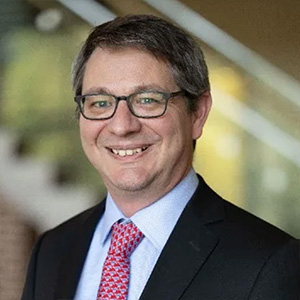
Joshua Taylor leads the daily work of the Spears Institute, working with co-founding directors Megha Tolia and Nirav Tolia in alignment with the mission of SMU Cox. [Photo: SMU]
Joshua Taylor, who joined SMU as executive director of the William S. Spears Institute for Entrepreneurial Leadership at SMU Cox in March 2024, sees the event as just one part of a bigger effort to strengthen North Texas’ innovation fabric.
Taylor describes the region as a series of “overlapping concentric circles”: corporate, capital, entrepreneurs, universities, and service providers. But, “for some reason, a lot of these groups just don’t overlap,” he said. In his view, the corporate circle is especially large, the capital circle is substantial, and the entrepreneur circle stands apart, with SMU and other universities in the mix.
Those circles need to collide more often, he says. And SMU Spears is positioned to help make that happen. “It’s a well-funded enterprise,” Taylor said, and his is a mission-driven organization without a profit burden.
Taylor uses the analogy “It’s like trying to contain water” to describe the nature of innovation communities and networks. He explains that these systems are too complex to be controlled from the top down or by any single person. Instead, they operate through “trust-based, loosely coupled relationships, where anyone can interact with anybody.”
The point being that you can’t rigidly organize these groups: Like water, they naturally flow and connect in unpredictable ways, he says.
Taylor takes a big-tent approach to bringing together the different “bubbles.” He says he’s personally called or emailed thousands of people, especially SMU alumni entrepreneurs, to invite them into the community, listen to their needs, and connect them with resources.
The Spears director describes his approach as a “grand experiment,” constantly trying new ways to connect people, showcase success, and build density in the community.
Is it working? Yes, if that means visible results of his entrepreneurship strategy and programs at SMU, which are now being recognized by university leadership and the broader community.
Part of the strategy is hosting and organizing big events like TUNIE, The DEC Network’s DFW Startup Week, and the Innovators Exchange. Twice a year, Taylor’s team runs the exchange, where startups set up trade stalls at SMU, and students can meet founders and secure internships, which is funded by Spears.
“They’re the ones actually taking the risk”
For Taylor, everything centers on the founder. “We’ve lost sight of the fact that the entrepreneur needs to be at the center of it,” he said. “They’re the ones actually taking the risk and putting their life’s work into building something, and our job should be to support them to do that.”
Taylor and his team have also implemented an accelerator that provides preseed funding to student startups, attracting mentors and partners to campus and building a critical mass of entrepreneurial activity. Spears also funds internships for students at local startups.
“The only way to operate is to be someone who does what they say they’re going to do, someone people want to interact with and help,” Taylor said.
“My mission is clear, right? Drive innovation and to help more students, alumni, and community members start companies.”
Don’t miss what’s next. Subscribe to Dallas Innovates.
Track Dallas-Fort Worth’s business and innovation landscape with our curated news in your inbox Tuesday-Thursday.
R E A D N E X T
-

North Texas has plenty to see, hear, and watch. Here are our editors' picks. Plus, you'll find more selections to "save the date."
-
The Tech Transfer Showcase spotlights life science innovation at universities and strengthens the development of future leaders and entrepreneurs, BioNTX said. Here are the six university finalists who'll be pitching at the summit.
-
Dallas Innovates, in partnership with the Dallas Regional Chamber, once again is recognizing the most innovative leaders in AI in Dallas-Fort Worth. From visionaries and mavericks to transformers and academics, AI 75's class of 2025 are the AI pacesetters you need to know now.
-
You'll find deadlines coming up for a new accelerator program; and many more opportunities.
-
We're searching for the entrepreneurs, executives, and trailblazers driving meaningful change in North Texas. Submit your nominations for D CEO and Dallas Innovates' The Innovation Awards 2025 by Tuesday, September 24. Now in its sixth year, the awards recognize companies and individuals leading innovation across sectors like AI, cybersecurity, healthcare, consumer goods, real estate, and more.