Zhijian “James” Chen, Ph.D., a professor of molecular biology at UT Southwestern Medical Center, is receiving the 2026 Japan Prize in Life Sciences, which UTSW called “one of the highest international honors for science and technology.”
Numerous winners of the Japan Prize have gone on to win the Nobel Prize for their achievements—including, most recently, Shimon Sakaguchi, who received the 2025 Nobel Prize in Physiology or Medicine for discovering regulatory T cells.
Chen shares this year’s Japan Prize with Shizuo Akira, M.D., Ph.D., a professor at Osaka University.
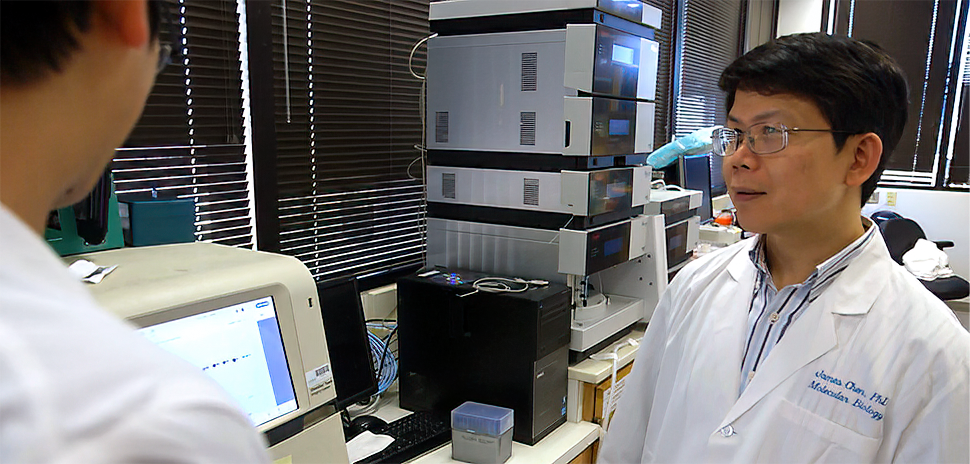
Zhijian “James” Chen, Ph.D., right, a professor of molecular biology at UT Southwestern Medical Center, is a winner of the 2026 Japan Prize in Life Sciences. [Video still: UTSW]
Emperor and Empress of Japan will attend Tokyo ceremonies
The Japan Prize will be presented in Tokyo on April 14, during Japan Prize Week, which includes award ceremonies attended by the Emperor and Empress of Japan and commemorative lectures by the laureates.
Established in 1983, the Japan Prize is awarded each year to scientists and researchers from around the world to honor individuals who have contributed significantly to peace and prosperity through original, excellent achievements that have greatly advanced the progress of science and technology.
“I’m extremely honored and humbled to be selected to receive the Japan Prize,” Chen, a Howard Hughes Medical Institute Investigator and director of the Center for Inflammation Research at UT Southwestern, said in a statement.
Chen said the recognition “validates the collaborative work of scientists at UT Southwestern and worldwide to expand our understanding of human disease,” adding that he’s grateful for “the students, postdoctoral fellows, and staff members in my lab for their hard work and to the leadership at UT Southwestern for their unwavering support.”
More on Chen’s discoveries
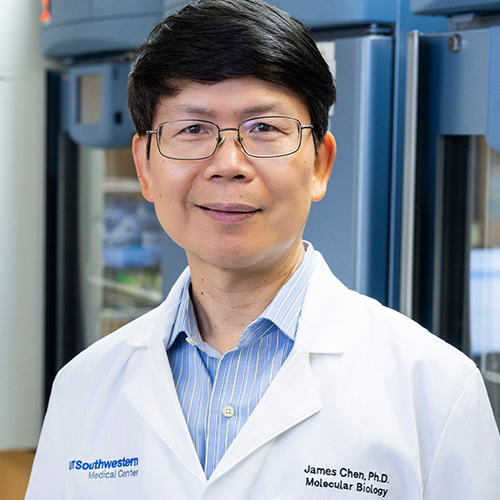
Zhijian “James” Chen, Ph.D. [Photo: UTSW]
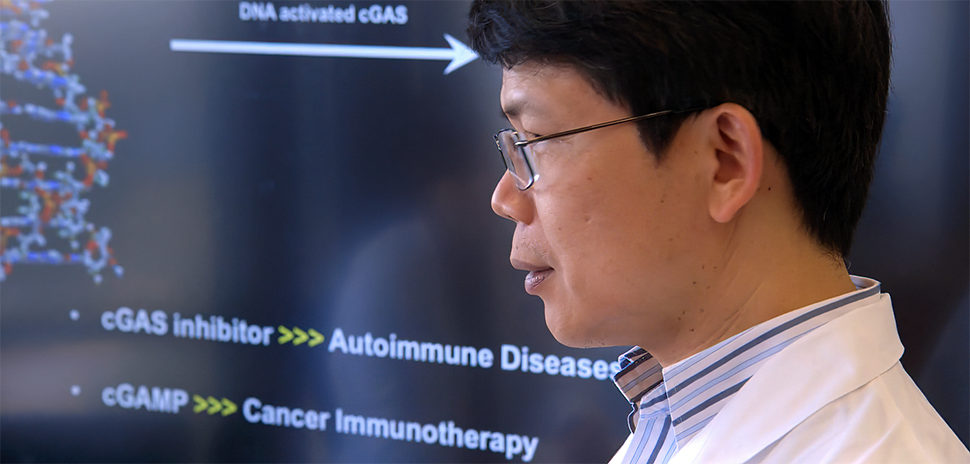
Recognized as one of the world’s top researchers on how the body’s immune system protects against such threats as bacteria and viruses, Chen received the prize for his discoveries about the immune system, including cyclic GMP-AMP synthase, or cGAS, which “acts as the body’s burglar alarm to trigger defense from invading pathogens,” UTSW said.
“Dr. Chen’s breakthroughs have significantly advanced the field of immunology, paving the way for new approaches to the development of more effective vaccines and novel therapies for a broad range of diseases, including cancer and autoimmune disorders,” said UTSW President Daniel K. Podolsky, M.D. “The entire UT Southwestern community takes great pride in seeing the impact of Dr. Chen’s work recognized by this very special high honor.”
Chen’s discoveries have illuminated how the human body fights off invasive viruses, bacteria, and other microbes. In 2012, his laboratory identified cGAS, which triggers the innate immune system when it detects foreign DNA inside a cell. Earlier, he identified the first mitochondrial protein known to be involved in immunity against infections, which he dubbed MAVS, describing its function (mitochondrial antiviral signaling) and honoring his favorite basketball team, the Dallas Mavericks.
Latest of many honors Chen has received
Chen’s research has been recognized with some of the highest awards in science, including the Paul Ehrlich and Ludwig Darmstaedter Prize (2025), the Albert Lasker Basic Medical Research Award (2024), the Louisa Gross Horwitz Prize (2023), and the Breakthrough Prize in Life Sciences (2019), among others. He also won the 2018 Lurie Prize in Biomedical Sciences, as we reported at the time.
Chen is a member of the National Academy of Sciences and the National Academy of Medicine and a Fellow of the Royal Society of the United Kingdom. At UT Southwestern, he is part of the Center for the Genetics of Host Defense and the Harold C. Simmons Comprehensive Cancer Center, and he holds the George L. MacGregor Distinguished Chair in Biomedical Science.
David Seeley contributed to this report.
Don’t miss what’s next. Subscribe to Dallas Innovates.
Track Dallas-Fort Worth’s business and innovation landscape with our curated news in your inbox Tuesday-Thursday.
R E A D N E X T
-
The project, known as Vascularized Immunocompetent Tissue as an Alternative Liver, or VITAL, aims to "biofabricate" functioning livers using patients' own cells and advanced 3D printing techniques.
-
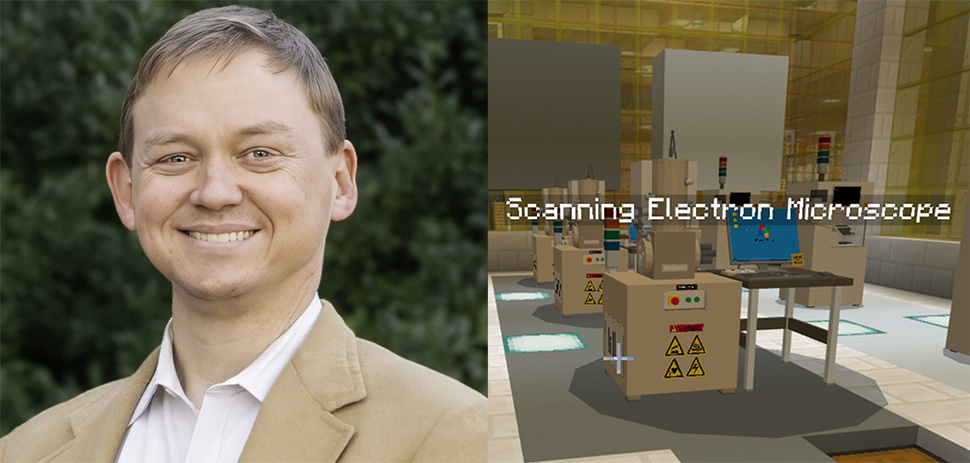
UT Dallas researcher Dr. Walter Voit transformed Minecraft’s 170-million-player universe into an advanced virtual training ground—for students and for AI agents tested by DARPA. His team’s Polycraft World uses gameplay to turn classroom theory into real-world expertise, covering topics from synthetic organic chemistry to nuclear plants to semiconductor facilities. Their new startup company, Pedegree Studios, has licensed the core technologies from the university to create a scalable digital pipeline for education and workforce development.
-

Researchers at UTSW identified a set of neurons in the "brain's timekeeper" that may drive nighttime snacking—and in mice, control up to 7% of body weight. The discovery could pave the way for new weight-loss strategies.
-

A UT Southwestern study of blind fruit flies and mice reveals a brain-wide stress response, shedding light on the biological link between sensory loss and dementia.
-
Dallas biotech GenrAb is developing an antibody therapy that aims to protect brain cells under stress—the kind of damage that leads to disability in diseases like MS and ALS. The therapy, found in the spinal fluid of real patients, is now showing promise in animal models and moving toward human trials.