North Texas is the newest federal front line in the fight against Alzheimer’s and dementia.
The National Institute of Health has awarded UT Southwestern a $23 million, five-year grant from the National Institute on Aging to establish the North Texas Alzheimer’s Disease Research Center (ADRC). The designation makes it one of 37 such centers nationwide and the second in Texas, according to an announcement.
The new center, based at UT Southwestern Medical Center, will be a focal point for research that could reset how the disease is detected and treated. Scientists plan to probe how cardiometabolic conditions like high blood pressure accelerate dementia, train AI to hear vocal cues of cognitive decline, and build digital replicas of patients to test therapies.
Texas by the numbers
Texas, which is the nation’s second most populous state, has the third-highest number of Alzheimer’s patients, the second-highest Alzheimer’s-related deaths, and the highest dementia burden score, according to UTSW. The dementia burden score is a measure of the emotional and psychological toll on caregivers.
That reality, paired with UT Southwestern’s long-standing strength in neurology and its Peter O’Donnell Jr. Brain Institute, laid the groundwork for the designation.
Tackling cardiometabolic factors in dementia and more
Each Alzheimer’s Disease Research Center operates with a unique theme. In North Texas, the focus will be on advancing the national agenda by exploring how cardiometabolic factors, especially hypertension, contribute to Alzheimer’s and related dementias. Hypertension affects nearly 120 million Americans, according to UTSW.
The center also plans to use AI voice analysis to discover vocal changes that accompany cognitive decline. Researchers will develop “digital twin” technology to create virtual representations of patients, which will help distinguish between factors associated with normal aging and those linked to dementias, according to Dr. Ihab Hajjar, principal investigator of the new center.
“Being named an ADRC is not only an indication of scientific excellence, but also highlights an intentional commitment to research Alzheimer’s disease and cognitive impairment in our community,” said Hajjar, who is professor of neurology and internal medicine at UT Southwestern, in a statement.
Hajjar said the designation gives North Texas “the chance to make an unprecedented leap in understanding and treating Alzheimer’s disease and related dementias.”
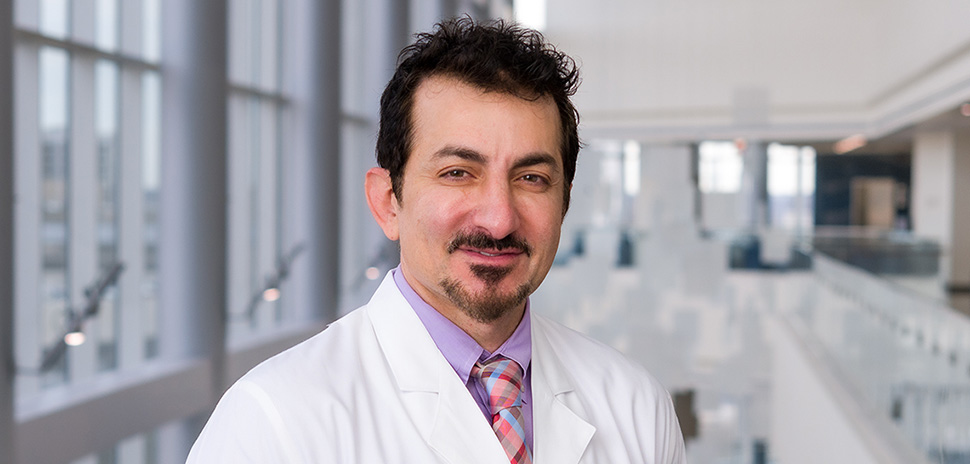
Dr. Ihab Haijar [Photo: UT Southwestern Medical Center]
North Texas collaboration in the dementia fight
The designation is designed in collaboration with UT Dallas and UT Arlington.
The North Texas ADRC will not only enable new science but also “enhance scientific and clinical collaborations locally and nationally” while creating education opportunities for researchers, clinicians, and learners, according to UTSW.
Dr. William T. Dauer, director of the Peter O’Donnell Jr. Brain Institute, points to the new designation as proof of what can happen when institutions combine their strengths.
“This designation reflects the power of bringing together outstanding scientists, clinicians, and community partners to tackle one of the most urgent societal challenges,” Dauer said in the announcement. “It will strengthen our ability to link discoveries from O’Donnell Brain Institute laboratories with the needs of patients and families in North Texas and beyond, accelerating progress against Alzheimer’s disease and related dementias.”
Dr. Elan D. Louis, chair and professor of neurology and an investigator in the O’Donnell Brain Institute, noted that the ADRC reflects momentum already underway across his department.
“Our new ADRC reflects a growing emphasis in the Department of Neurology on learning about, understanding, and treating a group of disorders that affect millions of elderly people nationwide,” Louis said.
Feeding a national data engine for dementia research
The research generated by all ADRCs will feed into communal datasets that are made publicly available to spur collaboration and speed discovery. Hajjar said those shared efforts could offer “hope to patients with dementia and their loved ones.”
Dementia research is a core area within UTSW, and the new center builds on a decade of work by the O’Donnell Brain Institute.
UTSW also notes its No. 9 ranking for Neurology & Neurosurgery on U.S. News & World Report’s Best Hospitals list and 12 nationally ranked specialties, the most of any hospital in Texas. To date, its faculty have received six Nobel Prizes and include 24 members of the National Academy of Sciences, 23 members of the National Academy of Medicine, and 13 Howard Hughes Medical Institute Investigators.
Leadership brings specialized expertise
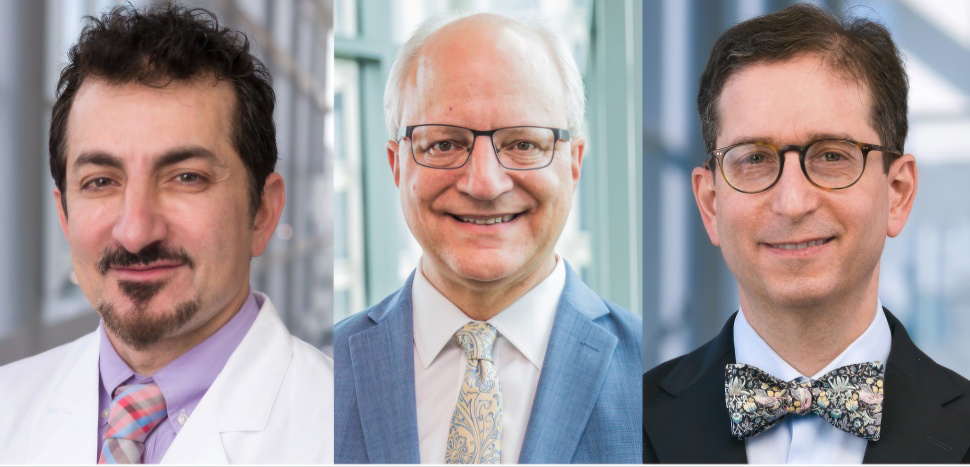
UTSW said the center’s leadership team brings long-standing expertise in neurological research with distinct but complementary focuses. Dr. Dauer holds the Lois C.A. and Darwin E. Smith Distinguished Chair in Neurological Mobility Research. Dr. Hajjar holds the Pogue Family Distinguished University Chair in Alzheimer’s Disease Clinical Research and Care, in Memory of Maurine and David Weigers McMullan. Dr. Louis holds the Linda and Mitch Hart Distinguished Chair in Neurology.
The ADRCs were established in 1984 as congressionally designated NIH Centers of Excellence. The mission includes improving detection, diagnosis, treatment, prevention, and care for patients and families. Each center tailors its theme to local populations and scientific priorities.
The North Texas center joins another Texas ADRC, a collaboration between UT Health San Antonio and The University of Texas Rio Grande Valley designated in 2021, strengthening the state’s role in national dementia research efforts.
Don’t miss what’s next. Subscribe to Dallas Innovates.
Track Dallas-Fort Worth’s business and innovation landscape with our curated news in your inbox Tuesday-Thursday.
R E A D N E X T
-
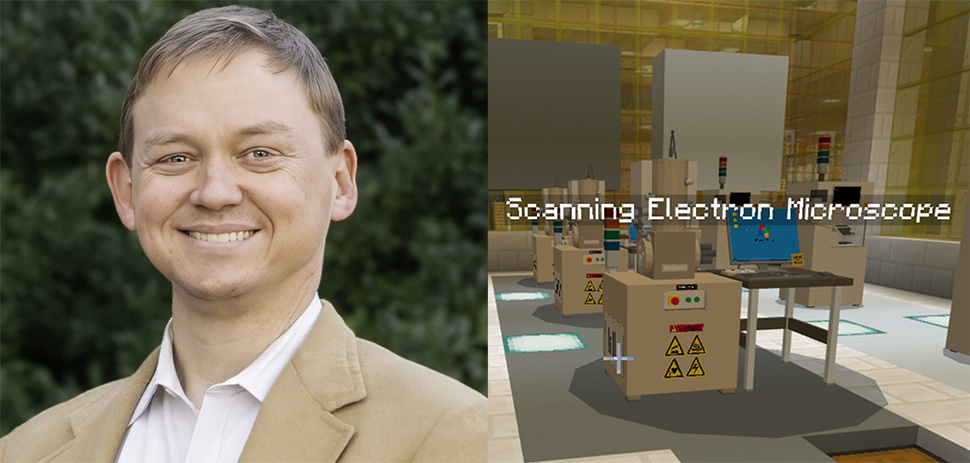
UT Dallas researcher Dr. Walter Voit transformed Minecraft’s 170-million-player universe into an advanced virtual training ground—for students and for AI agents tested by DARPA. His team’s Polycraft World uses gameplay to turn classroom theory into real-world expertise, covering topics from synthetic organic chemistry to nuclear plants to semiconductor facilities. Their new startup company, Pedegree Studios, has licensed the core technologies from the university to create a scalable digital pipeline for education and workforce development.
-

UTA and UT Southwestern researchers have built BIT, a new computational framework that helps scientists identify the proteins that switch genes on and off in cancer and other diseases. The work could pave the way to more targeted treatments and boost gene research accuracy.
-
![Organoids without blood vessels can't grow larger than sesame seeds—about 3 millimeters—before dying from lack of oxygen and nutrients. UNT and Stanford researchers say they've solved this problem. Seeds pictured above are not to scale. [Image: Pinchai Puntong/istockphoto]](https://s24806.pcdn.co/wp-content/uploads/2025/08/Sesame-Seed-organoid-science-iStock-1487667097-970x464.jpg)
Scientists at at the University of North Texas and Stanford Medicine have created tiny artificial organs called organoids with fully formed blood vessel networks. The stem cell-based breakthrough could transform drug testing and disease research while reducing the need for animal models—and expand possibilities for regenerative medicine.
-

What started as a ‘friendly conversation’ on the UNTHSC campus could lead to a breakthrough in treating glaucoma—the leading cause of irreversible blindness, affecting over 80 million people worldwide. With AI, the lab team can speed up the process of screening billions of virtual compounds to attack the problem.
-

Part of the 2025 iC³ Life Science & Healthcare Innovation Summit to be held September 16-17 in Dallas, the showcase pitch event is designed to connect university researchers with potential investors, industry executives, and strategic partners. This is the first year the showcase has expanded beyond Texas.