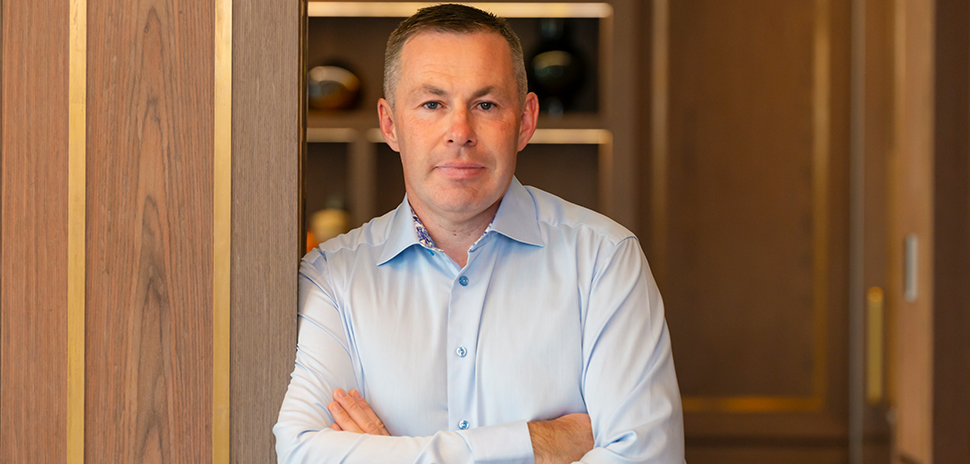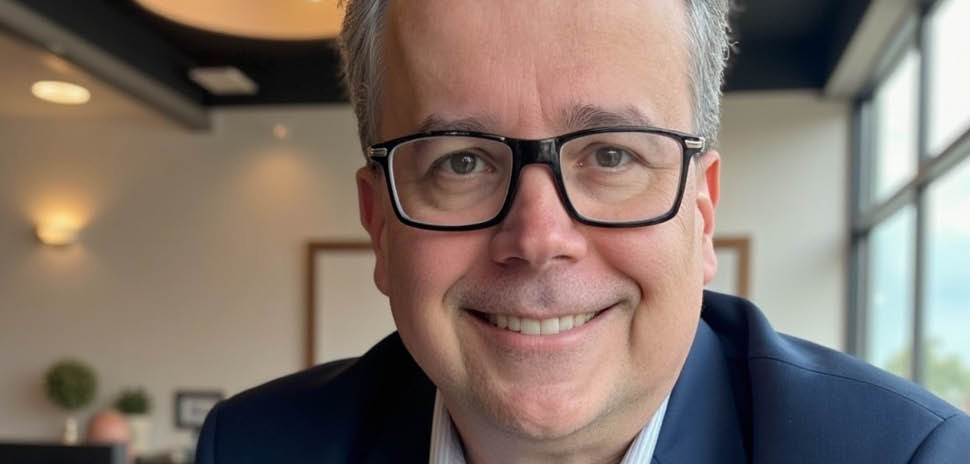
James would like you to know that he is “one of the most good-looking actors you will see in AI.” He says it in a crisp British accent, surrounded by cameras on a film set, with the charm of someone who’s hosted a hundred junkets. Then he pulls back the curtain. “This isn’t just copy and paste,” he says. “Here is the secret sauce. It’s completely human supervised.”
James is not a human.
He’s the narrator of a featurette from Dallas startup Plotsy, which uses AI and a team of artists to bring books to the screen. He’s also a cast member in the company’s growing stable of AI actors, which Plotsy calls “Plotsy Players.”
In a scripted blooper that makes a point, the machine-generated actor proves he’s loose enough to joke. “Sorry, I forgot my line,” he says. The take resets.
It makes James the friendly face of a serious bet.
Dallas-based Plotsy, co-founded by Teladoc pioneer Michael Gorton, is emerging from stealth with a platform that turns books into episodic streaming videos. Its app, Plotsy.tv, is set to reach the major app stores in the coming days.

A still from the teaser for “Starfighter Down,” M.G. Herron’s novel and Plotsy’s first vBook. [Source: Plotsy “Starfighter Down” teaser]
The first title, indie science-fiction author M.G. Herron’s “Starfighter Down,” begins streaming July 14, with new episodes weekly. Herron is the first author signed, with two more in the pipeline. Gorton said the company has raised $2 million in seed funding led by San Francisco-based Pier 88 and has hired Emmy-winning producer Christopher G. Cowen, who is relocating to Dallas.
“Great stories belong on screen as much as they belong on the page,” Gorton said. “What we’re about to do will change how the industry thinks of books.”
Now he wants to turn more books into what Plotsy calls “vBooks.”
“The things that we’re going to be able to do are going to disrupt Hollywood,” Gorton said in an interview with Dallas Innovates.
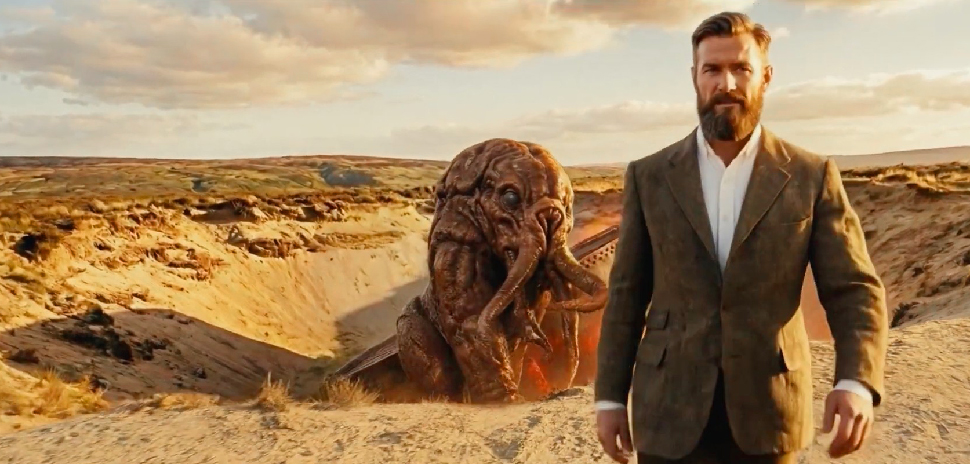
James, shown here in Plotsy’s featurette with a Martian looming behind him, was cast in the startup’s “War of the Worlds” proof of concept. [Source: Screenshot/Plotsy YouTube]
Proving it could work
Earlier this year at Capital Factory in downtown Austin, founders and investors watched a screening of H.G. Wells’ “The War of the Worlds” that looked like it could have come from a big-budget streaming series. According to Gorton, most of the audience didn’t realize the actors weren’t real.
Neither, of course, were the Martians. Every frame had been generated by a production system Plotsy built on top of multiple AI models. James, the AI actor from Plotsy’s introductory featurette, appears here as the protagonist.
What the founders wanted to know was whether AI could sustain a long, consistent, watchable story instead of just short clips. “Anybody can make a short video, right?” Plotsy Co-Founder Nathan Fletcher said. “But to really do something that’s long, you have to have consistent characters through the whole series.” The test was a single hour-long episode, not a series, but it was enough.
The software that produced it is what Fletcher calls the “Cineversion process.” It’s not an adaptation, he says, “because it sticks loyal to the source material. So whatever is in the book is what’s on the screen. That’s our motto.”
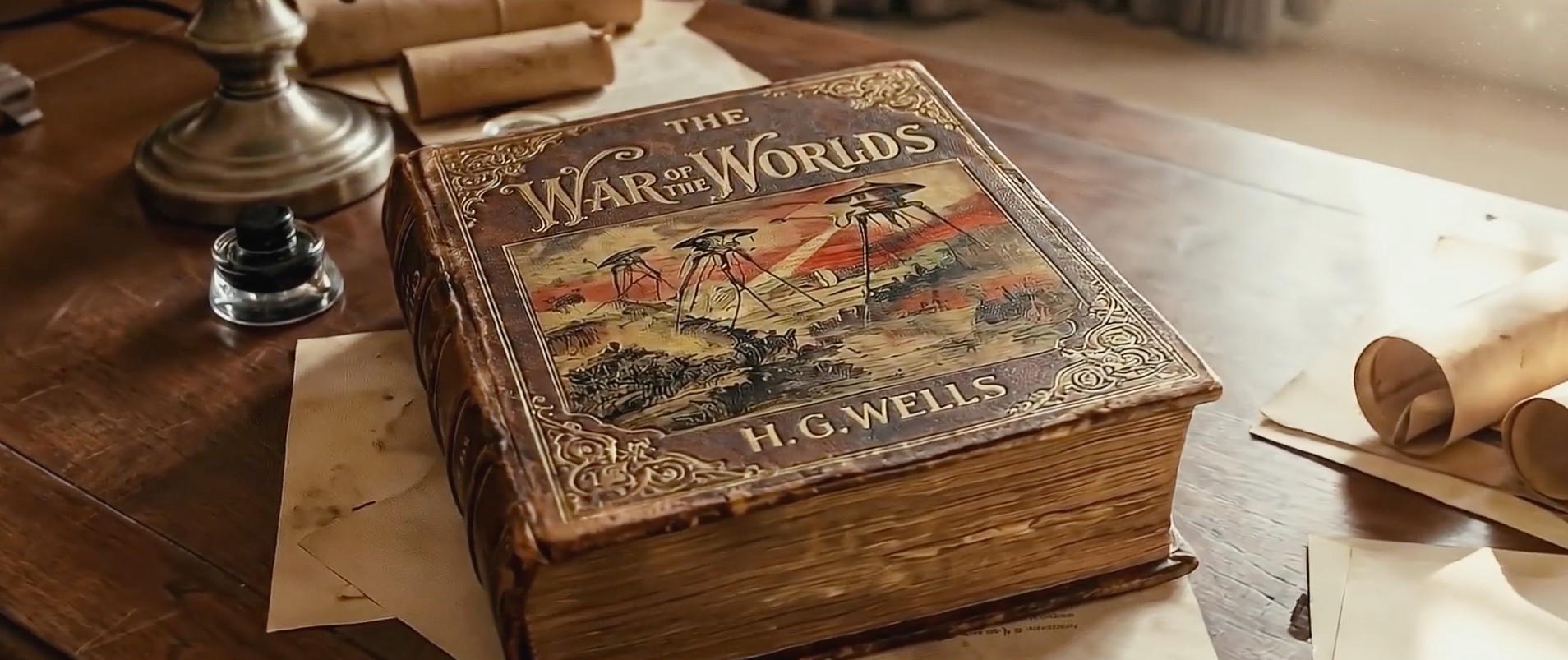
H.G. Wells’ “The War of the Worlds,” rendered in Plotsy’s featurette. Chapter one of the public-domain novel was the company’s first test. [Source: Screenshot/Plotsy YouTube]
The project started late last year, when Gorton began experimenting with AI video and brought in Fletcher, a Texas television and streaming executive whose career included leadership roles at GAC Media and RIDE TV. They chose “The War of the Worlds,” a public-domain novel they could use without licensing costs. Their goal was to create a full-length episode with consistent characters and enough visual quality to stand alongside a modern streaming series.
Gorton had built on emerging technology before. Beyond Teladoc, which introduced telemedicine years before virtual doctor visits became common, he’s launched 17 companies spanning digital health, solar power, internet services, space education, and other fields. He’s also a novelist, with more than a dozen books to his name, most of them science fiction. That gives him firsthand experience with one of the problems Plotsy is trying to solve: Most books, especially self-published ones, never make it to the screen.
It was a proof of concept, Gorton says. But “the demo is just that, a demo,” he said. “We’ve gotten an order of magnitude better in the last couple of months.”
‘The book was better’
We’ve all heard it, and most of us have probably said it ourselves, Gorton says: “The book was better.” The technology is one part of the equation, but Plotsy needed someone who understood authors.
He found that in Lynn McGinnis, a publishing and author-marketing veteran who joined Plotsy as chief publishing officer. She works with authors, helps choose which books the company pursues, and, ultimately, has to persuade writers that putting their work on screen doesn’t have to mean losing what made it work on the page.
“We’ve effectively created the fourth book format,” said McGinnis, placing vBooks alongside print, ebooks, and audiobooks.
McGinnis, a three-decade book-marketing veteran, says the goal isn’t to replace any of those formats. It’s to give readers another way to experience the same story. “What it does is it makes the book more accessible,” McGinnis said. “People have preferences for how they consume their content.” Her model is that attention compounds across formats. She saw it happen with the novel and movie “Project Hail Mary”: “There were new readers, because the movie came out, and everybody was talking about it, and then all of a sudden, everybody had to buy the book.”
She’s also familiar with the complaint that follows so many movie adaptations. “That’s where you get that, ‘Wow, the book was so much better,’” she said.
Plotsy approaches the work differently. “It’s really a translation. We’re translating the book from page to screen,” she said.
Plotsy, she says, wants viewers to come away thinking the vBook felt like the book.
Building the world
Every vBook begins with the author. The goal, the company says, is to produce the whole book as an episodic series, not condense it into a two-hour cut. Fletcher said the team works through the principal characters, casts AI actors, runs screen tests, and shows the results to the author before production moves forward.
“Does this AI actor really capture this character?” Fletcher asks.
James, the AI narrator in Plotsy’s featurette, described the company’s proprietary Cineversion software as the blueprint, first generating a screenplay. “Now we build the world.”
Fletcher said that while the software creates that blueprint, people shape the finished work. Writers oversee the story. Editors assemble scenes, adjust color, and add sound and music. Directors guide the production from start to finish.
The goal, James says, is a film whose “heart beats exactly as the author intended.”
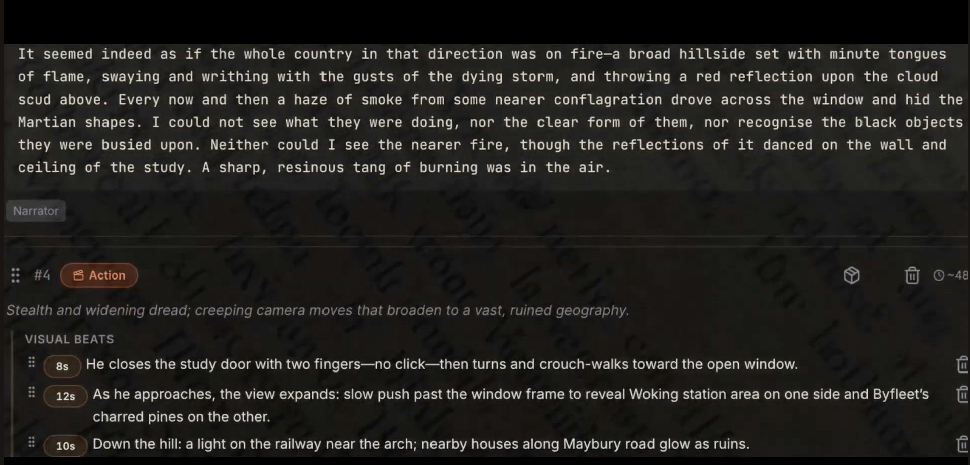
Plotsy’s Cineversion process turns a book’s prose into a screenplay with timed “visual beats,” a step the company says a human writer supervises. [Source: Screenshot/Plotsy YouTube]
That human role also shapes the company’s approach to copyright, Fletcher says. He pointed to recent U.S. Copyright Office guidance distinguishing between fully automated AI output and work shaped by human creative control.
“As long as human artists are shaping and editing and putting things together and have that creative control, then you can copyright it,” Fletcher said. “What you can’t do is just put one prompt into an engine and output a video and then copyright that video.”
Because Plotsy’s process runs through writers, editors, and directors, Fletcher says, each episode can be copyrighted the way a studio production would be.
For authors, another path to the screen
Gorton knows how rarely books make it to the screen. He’s written more than a dozen novels himself, and he believes the biggest obstacle isn’t a lack of stories. Plotsy offers another path.
Plotsy is starting with independent authors who have already found readers but may never see a traditional film or television deal. Fletcher says the company expects their readers to become its first audience. “They read the book, they bought the book. They’re fans,” he said.
“They’re able to see the vision that they will never see if Hollywood makes it,” he said. “Their fans get to experience it that they would never get if Hollywood adapts it.”
Authors stay involved throughout the process, Fletcher said, describing a model where authors keep the rights to their books while sharing in the revenue from the finished vBook.
Unlike some audiobook projects, Plotsy is not asking authors to pay for production. “We’re not asking the authors to pay,” Fletcher said. “They can’t afford what it costs us to make.”
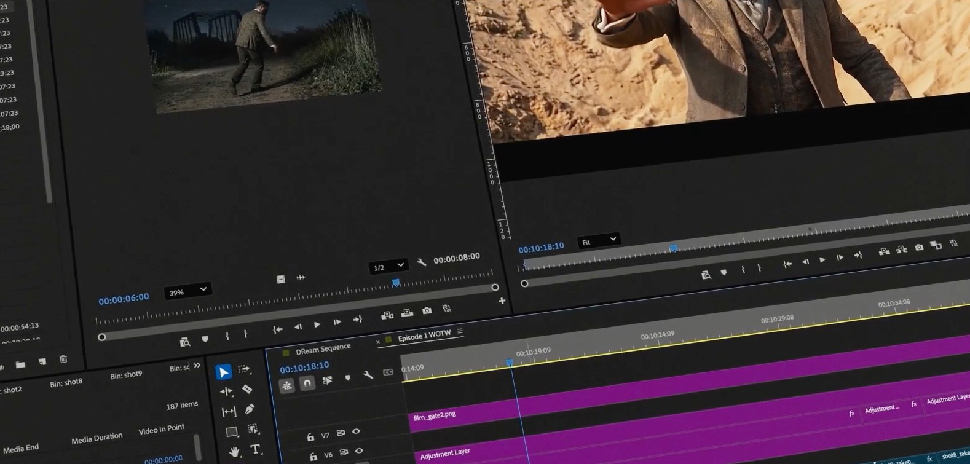
Human editors handle Plotsy’s post-production, adding color, sound and music. [Source: Screenshot/Plotsy YouTube]
A different equation for runtime
Gorton has an engineering background, so when he explains why he thinks Plotsy works, he starts with the math. The company’s one-hour “War of the Worlds” demonstration took 382 man-hours to produce, he said. By comparison, Gorton estimates a major studio film such as “Project Hail Mary” required roughly 3.25 million.
“That means two things,” he said. “How long did it take?” and “How much did it cost?”
Gorton says those numbers are moving quickly. His goal is to cut the 382-hour figure nearly in half by the end of the year. “That starts creating real disruption,” he said.
He estimates the first vBook will cost about $200,000 to produce, a figure he expects to fall to roughly one-quarter of that within 18 months as the technology and production process improve.
The figures are Gorton’s estimates, based on Plotsy’s own production work and his comparison with a major Hollywood film. He also acknowledges Hollywood productions involve union structures that Plotsy doesn’t have to navigate.
“When Hollywood does something, there are 16 unions that you have to hurdle through just to get to your end movie,” he said. “And we don’t have any of those.”
A different kind of economics could also change how audiences watch Plotsy’s serialized stories. “I don’t want to watch the 10 episodes in season one and then wait a year and a half for the next season,” Gorton said.
Instead, Plotsy plans to launch a new vBook with several episodes available immediately and release the rest weekly. Fletcher said building from existing book series should also let the company move more quickly from one installment to the next than a traditional television production.
“It makes the app really sticky,” Fletcher said.
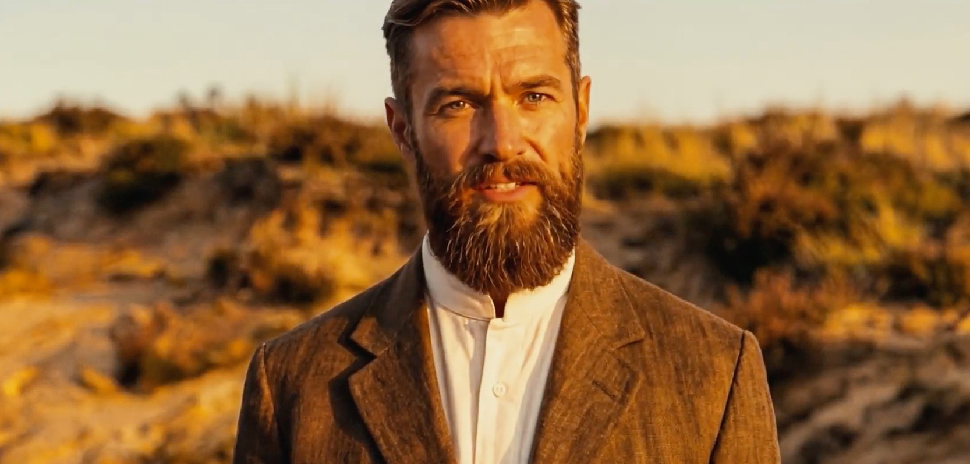
“We have our actors, we have our sets,” James says in Plotsy’s featurette. The company plans to own its “Plotsy Players” outright. [Source: Screenshot/Plotsy YouTube]
Best supporting asset: Actors you can own
If the books are the source material, the AI actors are another asset Plotsy plans to build.
Fletcher says the company’s Plotsy Players, like James, have names and can appear beyond a single title. Over time, he adds, Plotsy could develop those actors as characters with their own followings.
“They’ll have social media accounts,” Fletcher envisioned. “Coca-Cola can hire them as a spokesperson.”
Fletcher says Plotsy sees those AI actors as part of the company’s intellectual property. “We’re going to own our AI actors,” he said. “They’re going to be our IP.”
That’s different from some other AI-actor efforts, Fletcher said, which have tried to move synthetic performers into the traditional Hollywood system. He pointed to union issues as one reason Plotsy is taking another route.
SAG-AFTRA has said studios and union signatories would have to compensate the union for AI actors as if they were human performers, Fletcher says.
“That’s not our model,” he said.
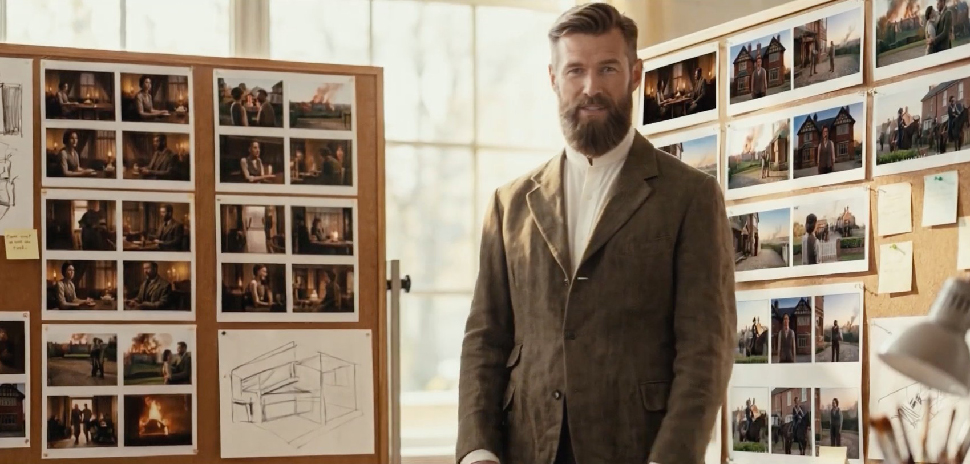
James explains concept art and storyboards for a Plotsy adaptation. The company builds locations and characters before a Plotsy director sets framing, camera moves, and lighting. [Source: Screenshot/Plotsy YouTube]
Filling out the cast
As Plotsy moved from experiment to product, Gorton recruited people from publishing, television, finance, and Hollywood production.
The latest is the aforementioned Christopher G. Cowen, an Emmy-winning producer who spent more than eight years at Tom Hanks’ Playtone, where he worked on projects including “Band of Brothers” and “The Polar Express.” Cowen joined Plotsy as chief content officer and executive producer and is relocating from Los Angeles to Dallas.
“He’s one of the absolute GOAT producers in Hollywood,” Gorton told us, adding that he wanted someone who understood the demands of long-form production. “He did ‘Apollo 13,’ he did ‘From Earth to the Moon,’ he did ‘Gettysburg,’ ‘Band of Brothers,’ ‘Polar Express.'”
Other hires were closer to home, literally. Co-founder and Chief Financial Officer Will McDade, the former finance chief at Interstate Batteries, is Gorton’s next-door neighbor. “I literally stand on the fence and talk to him in his backyard,” Gorton said. When Gorton showed McDade an early demo, the decision came quickly. “He took one look, and he goes, ‘I’m in,’” Gorton said.
The broader team includes head of production Cenk Kilar, whose visual-effects work includes stints at Industrial Light & Magic and Weta Digital, according to the company, and legal counsel Quentin Faust, a Cornell-trained attorney and former big-firm partner who serves as in-house counsel.
Backing the launch
Plotsy’s launch is backed by its $2 million seed funding round led by San Francisco investment firm Pier 88, with about $1.5 million committed so far. An earlier friends-and-family round was oversubscribed, he said.
Gorton believes the current raise will be enough to get the company to revenue.
Interest, he says, is already coming from outside publishing. After Plotsy demonstrated “The War of the Worlds” at Capital Factory, a three-star general asked Gorton to make a movie. “So we’re doing a movie for him right now,” Gorton said, based on a screenplay one of the general’s clients had written.
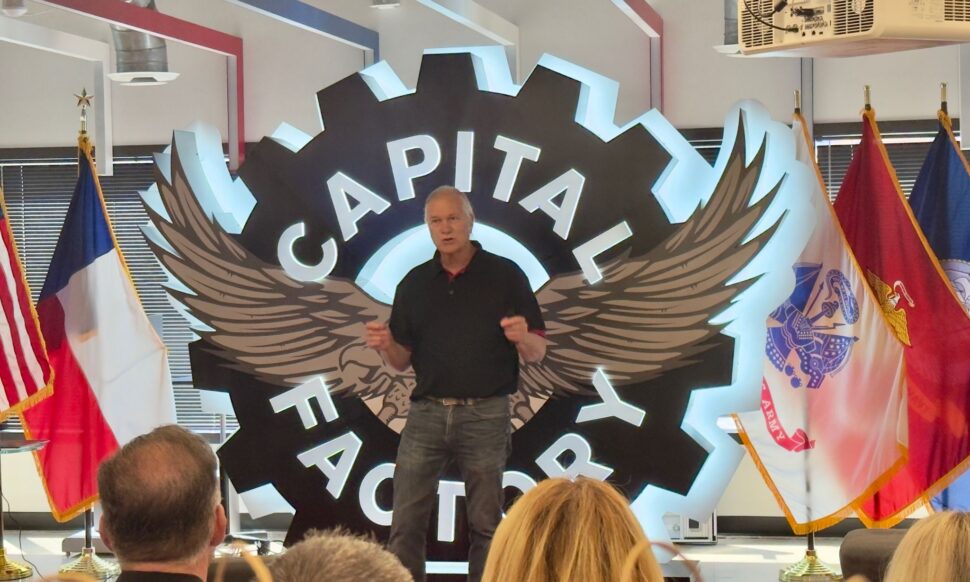
Michael Gorton onstage at Plotsy’s first public reveal, at Capital Factory in downtown Austin. Robert Blount, CEO of Austin-based Speed City Broadcasting, who attended, called the company “a massive industry disrupter” in a LinkedIn post. [Source: Robert Blount via LinkedIn]
One book at a time
As noted above, Gorton is a novelist himself. His “Tachyon Tunnel” series, he says, has earned bestseller status and more than 15 literary awards.
So will one of his own books become a vBook? Not yet, he says.
“I’m the founding CEO, but the decision maker for this is Lynn,” Gorton joked. “I don’t qualify yet.”
McGinnis added that part of her job is making sure he eventually does.
Don’t miss what’s next. Subscribe to Dallas Innovates.
Track Dallas-Fort Worth’s business and innovation landscape with our curated news in your inbox Tuesday-Thursday.
R E A D N E X T
-

North Texas has plenty to see, hear, and watch. Here are our editors' picks. Plus, you'll find more selections to "save the date."
-
“From day one," Cornbread Hustle Founder and CEO Cheri Norris said, "Cornbread Hustle was built on the belief that a person's worst mistake should not define the rest of their life." The acquisition combines two purpose-driven organizations with a shared commitment to helping people overcome barriers to employment—including criminal records—so they can develop sustainable careers.
-
Because of the explosion in the use of artificial intelligence throughout society, the legal industry is undergoing seismic change, and the profession needs ways to build the judgment, confidence, and fluency to use AI effectively, BARBRI said.
-
Bottle Rocket founder and serial entrepreneur Calvin Carter and AI programmer-turned-medical-doctor Alex Sheppert developed Matic's agentic AI to take care of the busywork—"so physicians can focus on the patient and practices can optimize care."
-
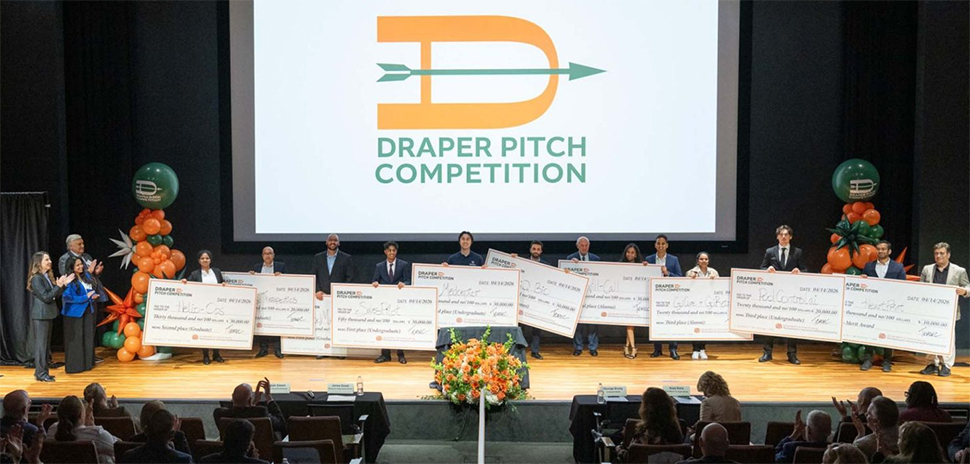
Nine student and alumni teams made the finals in three tracks: undergraduate, graduate student, and alumni. Winning ideas ranged from AI sales coaching to radiation mapping and noninvasive brain drug delivery as the university’s entrepreneurship push continues to scale.
-
Cartesian's global footprint includes London, Boston, New York, and Paris, with several hundred experts supporting clients in key international markets, primarily in North America and EMEA. The combined organization has more than 5,000 specialists across AI services, data, analytics, cloud, and user experience, serving a diverse portfolio of Fortune 1000 companies and global enterprises.
-

The DECA Dental founder returned to his alma mater to keynote UT Dallas' record-breaking Draper Pitch Competition. He told student founders what it really takes.
-

The funded projects include the use of AI for better health outcomes, vaccines that could target the most aggressive and deadliest forms of breast cancer, research on breast cancer in younger populations, the role of weight loss on breast cancer risk, and prevention and reducing disparities in breast cancer outcomes for all populations.
-

Travis Machen, CEO and group head of global banking and markets at Scotiabank, said the acquisition "further supports our strategic focus within the North American corridor."
-
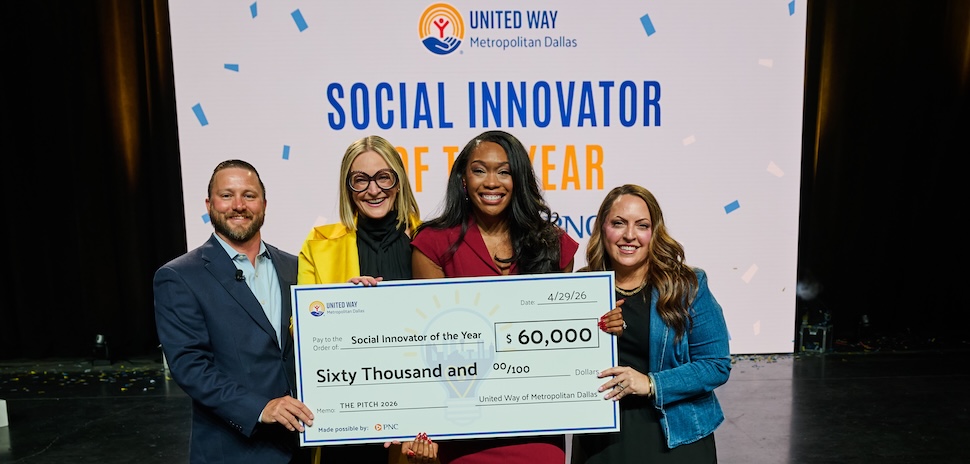
The Dallas-based reproductive health platform offers a cycle-tracking app for logging cycles and managing conditions like endometriosis and PCOS. It was one of five finalists taking part in North Texas' premier social innovation competition.