A North Texas biotech company, working with researchers at the University of Texas at Dallas, has demonstrated a wearable sensor that measures key sleep-related hormones through sweat, offering a new approach to monitoring circadian health beyond today’s consumer wearables.
UT Dallas bioengineers partnered with Allen-based EnLiSense to evaluate the company’s CORTI wearable platform, a perspiration-based electrochemical sensor that continuously monitors cortisol and melatonin, two hormones that regulate the body’s sleep-wake cycle. The results were published in the October issue of Biosensors and Bioelectronics: X, marking the first study to demonstrate circadian rhythmicity of both hormones measured through sweat.
EnLiSense is commercializing the CORTI sensor platform.
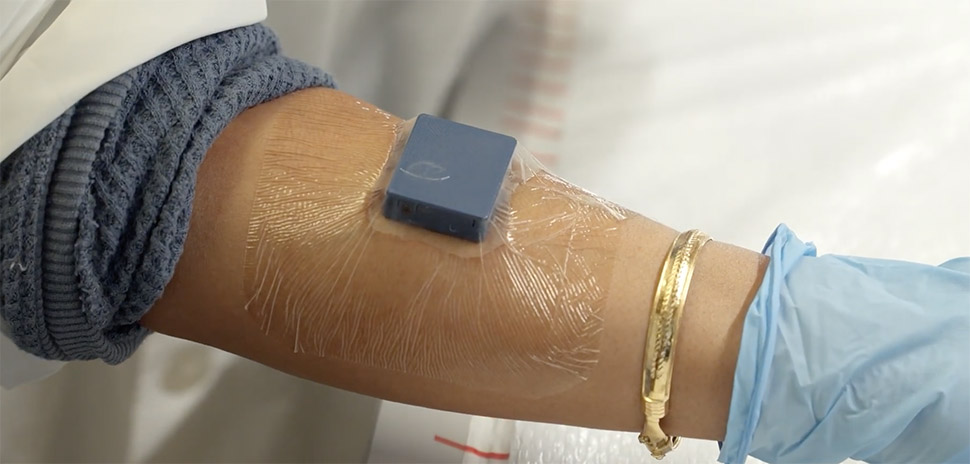
Video still: UTD
Moving beyond indirect sleep tracking
Most commercially available sleep wearables estimate sleep quality using indirect signals such as movement, heart rate, or body temperature. The CORTI platform is designed to directly measure biochemical markers tied to wakefulness and sleep.
Cortisol promotes alertness, while melatonin signals the body to prepare for sleep. Measuring both hormones typically relies on saliva samples, which are considered the gold standard but are impractical for continuous monitoring.
“Precise and continuous evaluation of cortisol and melatonin is essential for understanding and managing circadian health,” Annapoorna Ramasubramanya, a biomedical engineering doctoral student at UT Dallas and first author of the study, said in a statement. “Current methods involving salivary samples, however, are inconvenient for continuous monitoring.”
In sleep studies, participants are often awakened multiple times overnight so technicians can collect samples. The sweat-based approach allows hormone levels to be monitored continuously through passive perspiration, with the sweat naturally produced by the body without external stimulation.
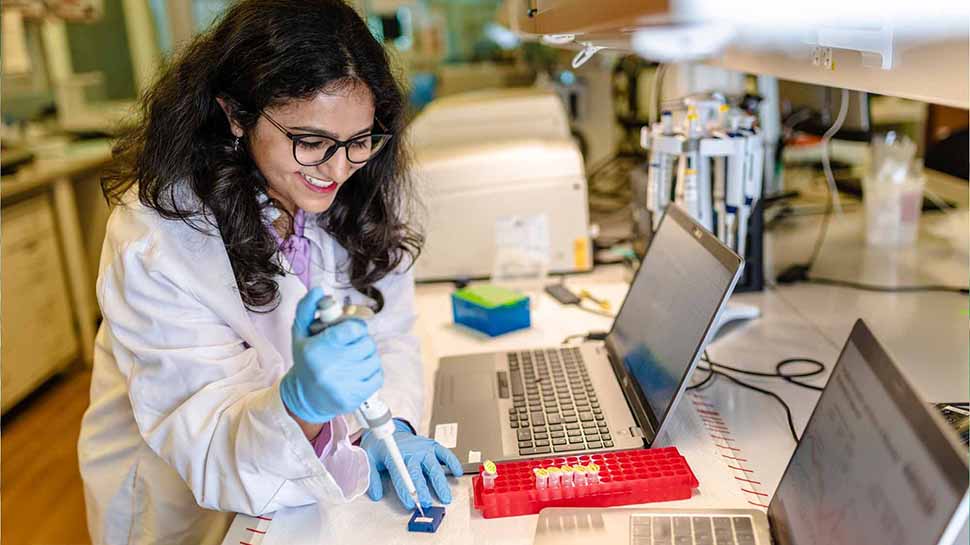
Annapoorna Ramasubramanya, a biomedical engineering doctoral student at The University of Texas at Dallas, places a sample on a sensor that measures two key hormones that regulate the body’s sleep-wake cycle. [Photo: UTD]
Study compares sensor data with saliva samples
To evaluate the technology, researchers enrolled 43 participants who wore the sweat-based sensor continuously for 48 hours. During the study, saliva samples were collected 12 times and compared with readings from the wearable device.
Researchers reported that results from both methods closely aligned, supporting the sensor’s ability to track hormone fluctuations over time.
Ramasubramanya’s contribution focused on translating device data into thresholds relevant to stress, wellness, and circadian rhythm monitoring, helping contextualize what hormone fluctuations indicate for users.
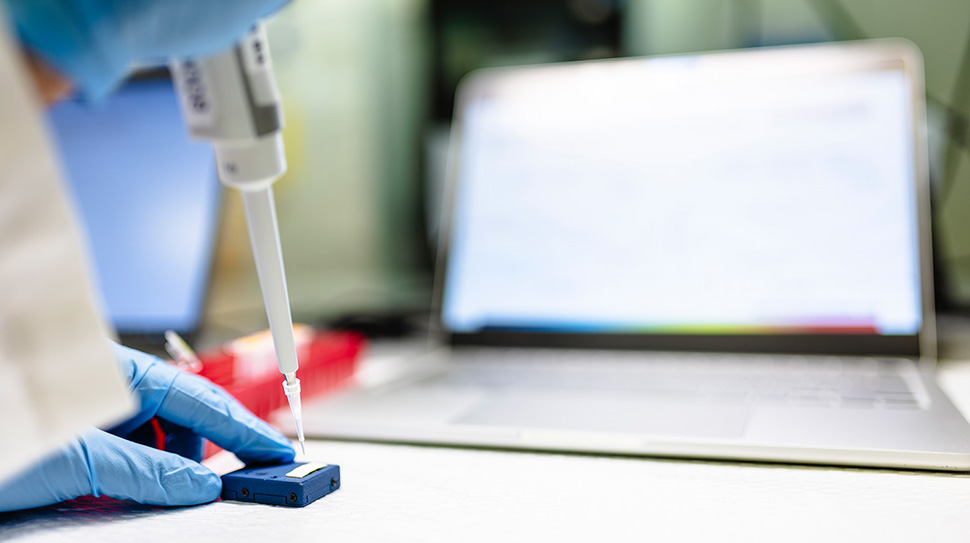
Photo: UTD
Commercialization with regional roots
The CORTI device was developed by EnLiSense, a Texas-based biotech company focused on lifestyle-based sensors and wearable health technologies. The UT Dallas study provides peer-reviewed evidence as the company works to bring the platform to market.
Dr. Shalini Prasad, professor and department head of bioengineering in the Erik Jonsson School of Engineering and Computer Science at UT Dallas and corresponding author of the study, said the technology contributes to chronobiology, the study of biological rhythms, by providing objective physiological data tied to sleep patterns.
“In the world we live in today, electronics play such an important role in our sleep quality,” Prasad said. “Our sleep patterns are changing. We don’t have to be shift workers or flying airplanes to throw off our circadian rhythms. Just the fact that we live with so much technology has changed the way and the amount of sleep we are getting.”
Prasad also noted that sleep disruption is closely linked to mental health, an area where continuous hormone monitoring could offer additional insight.
Academic and industry collaboration
The project reflects collaboration between UT Dallas researchers and industry partners. Study co-authors include UT Dallas research scientists and EnLiSense co-founder Dr. Sriram Muthukumar. Prasad is also a co-founder of EnLiSense.
Ramasubramanya received a New Investigator Award in September at the World Sleep Congress 2025 in Singapore, organized by the World Sleep Society.
Researchers said the technology could support future applications in sleep science, stress monitoring, and circadian health as interest grows in wearables that provide more direct physiological data.
Don’t miss what’s next. Subscribe to Dallas Innovates.
Track Dallas-Fort Worth’s business and innovation landscape with our curated news in your inbox Tuesday-Thursday.
R E A D N E X T
-

North Texas has plenty to see, hear, and watch. Here are our editors' picks. Plus, you'll find more selections to "save the date."
-

AI seem overwhelming? Just go to office hours.
-
 Led by Dallas Entrepreneur, Givelify Reports $300 Million in North Texas Giving, $6 Billion Globally
Could passing the offering basket become a thing of the past in places of worship? Can nonprofits rely on a third-party app to handle fundraising with one click? Givelify, a leading online and mobile giving platform, is doing its best to realize both. And it says that Dallas-Fort Worth alone has now surpassed $300 million in donations by using its services. Headquartered in Indianapolis, Indiana, Givelify is led by Dallas-based co-founder and CEO Wale Mafolasire, a Nigerian immigrant who moved from Indiana to Dallas in 2017. While the company previously had a physical office in Dallas, today 20% of Givelify's…
-

Dallas Innovates, in partnership with the Dallas Regional Chamber, once again is recognizing the most innovative leaders in AI in Dallas-Fort Worth. From visionaries and mavericks to transformers and academics, AI 75's class of 2025 are the AI pacesetters you need to know now.
-
Cait Brumme says the event at Dallas' Pegasus Park on Nov. 6 will explore the technologies and economic forces defining the future for entrepreneurs and innovators.