KYRO AI, a Plano-based company that builds AI software used by utilities and construction teams to manage field operations, has signed a memorandum of understanding with the Electric Power Research Institute to participate in the Open Power AI Consortium, founder and CEO Hari Vasudevan said.
The global consortium, announced in March 2025 at NVIDIA GTC, brings together utilities, technology companies, and researchers working to apply AI to how electricity is generated, transmitted, and managed as demand accelerates. The Open Power AI Consortium, or OPAI for short, launched with backing from major utilities including Duke Energy, Exelon, and Southern California Edison, according to EPRI.
Exelon CEO Calvin Butler, whose company is a member of the consortium, recently described the sector as facing a “convergence” of forces—AI-driven power demand, data center expansion, manufacturing onshoring, and broader electrification of the economy.
Butler told Fortune the grid’s “check engine light is on,” comparing the current state to a vehicle being driven to the brink of failure. “I’ve been in the utility industry for about 25 years … and probably the last four decades we have never had a moment of this amount of load growth,” he said.
The consortium is governed by an executive advisory committee of senior leaders from more than 20 energy companies, including Southern California Edison, CPS Energy, and Westinghouse Electric Company, alongside technology firms such as Microsoft, NVIDIA, Oracle, AWS, according to EPRI.
KYRO is the only Texas-based technology firm with a formal partnership in the consortium, Vasudevan told Dallas Innovates. He said the role gives the company a chance to contribute field-tested experience as utilities figure out how to handle what’s coming.
“As AI drives unprecedented demand for power, it’s equally important that AI helps make the grid more reliable, resilient, and affordable,” Vasudevan said.
KYRO’s focus, he added, is practical innovation using AI to help utilities modernize how they respond to storms, reduce wildfire risk, and manage vegetation and construction more safely and efficiently.
[Image: Courtesy KYRO AI]
Solutions tailored to the electricity industry
The consortium is developing open-source AI models and building a sandbox environment to test AI applications, according to EPRI. The work focuses on specific problems utilities face, including grid reliability and cost control.
EPRI—the Palo Alto-based Electric Power Research Institute—is the power sector’s nonprofit research and development organization, an industry consortium founded in 1972 that brings together utilities, tech companies, and researchers to develop grid solutions. EPRI operates a regional office in Irving that serves as a meeting and training center for members and partners.
“Over the next decade, AI has the great potential to revolutionize the power sector by delivering the capability to enhance grid reliability, optimize asset performance, and enable more efficient energy management,” EPRI President and CEO Arshad Mansoor said in a March 2025 statement announcing the consortium.
The group is developing domain-specific large language models trained on EPRI’s proprietary energy and electrical engineering data, NVIDIA said in a March announcement. The models are designed to help utilities streamline operations, boost energy efficiency, and improve grid resiliency. The focus is to “transform the way we make, move, and use electricity.”
The work could cut the timeline for interconnection studies, which analyze the feasibility of connecting new generators to the existing electric grid. The process can take up to four years, but the consortium aims to cut that timeline by at least five times, according to NVIDIA. The AI model could also support the preparation of licenses, permits, environmental studies, and utility rate cases.
Beyond releasing datasets and models, the consortium plans to develop standardized benchmarks. Utilities and researchers would use them to evaluate AI performance and reliability, NVIDIA said.
What KYRO brings

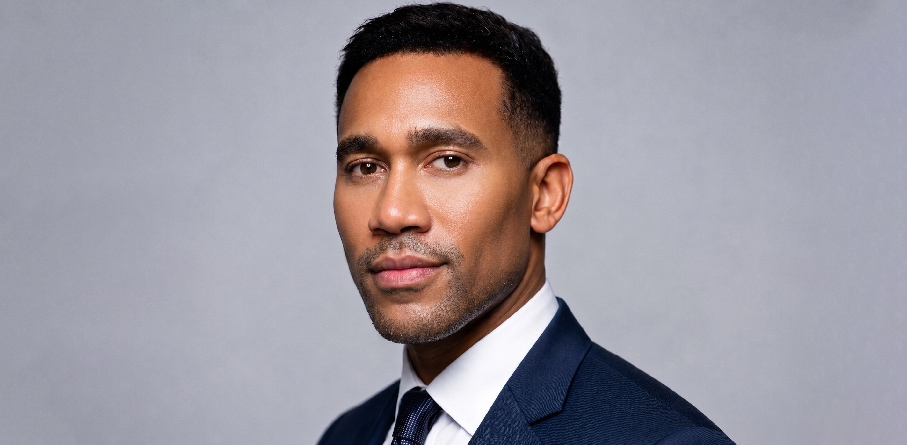
Hari Vasudevan, founder and CEO of KYRO AI [Courtesy photo]
Founded in Plano in 2021, KYRO builds software for the people who physically keep power and infrastructure running—from utility crews to construction teams. The platform connects field activity with back-office decision-making, Vasudevan said.
In practice, that means turning real-time photos, notes, GPS data, and asset information into decisions: which neighborhoods to prioritize after a storm, which spans of line to clear ahead of wildfire season, or which job-site risks need immediate attention, according to the company.
Vasudevan, a licensed engineer with a background in civil infrastructure, brings direct operating experience—and perspective—to the consortium. Years ago at his previous company, Think Power Solutions, a single-digit error in field data nearly cost the business $10 million. “That’s one of the reasons why KYRO was born,” he said on his “From Boots to Boardroom” podcast, “because I realized that many [other well-run] companies had the same issue.”
That experience became the foundation for connecting data to executive decisions. “We recognized the importance of the field to office connectivity, and we bridged that gap,” he said. “We solved the problem.”
Field-tested during major storms
KYRO’s software has supported utility partners during major weather events, according to the company. After Hurricane Helene in North Carolina, KYRO said its platform was deployed through a field-services partner to support Duke Energy’s restoration efforts. Crews used it to coordinate mutual-aid teams, track damage with drone imagery, and manage invoicing during the recovery.
In Texas, Oncor has used the platform through partners to speed storm damage assessments, according to KYRO. In a blog post, the company said those efforts included completing an impact assessment and recovery plan within 24 hours in Colorado City. And after severe flooding in Corsicana, engineers reviewed geotagged aerial images remotely. The approach reduced the need for ground crews to enter hazardous areas, KYRO said.
Scaling the grid—and shielding customers
Beyond contributing field operations expertise to the consortium, Vasudevan—a Dallas Innovates AI 75 honoree—has been calling for closer collaboration between utilities and the hyperscalers driving the surge in power demand.
In an op-ed published last week in Energy Intelligence, he wrote that “the electricity grid is about to reach a breaking point from an operational and financial standpoint,” as AI workloads and data centers push demand faster than infrastructure can respond. Data center–driven power demand rose 22% across the U.S. this year alone and could triple by 2030, he wrote.
The strain, he warned, is already showing up in less visible ways. Permitting delays are “racking up hidden costs for ratepayers to the tune of tens of billions of dollars,” even as utility bills climb. Cutting permitting timelines by just one year could unlock roughly $22 billion in returns on infrastructure projects.
Vasudevan described the moment as a “wake-up call” for the sector requiring utilities, technology companies, and regulators to rethink how the grid scales under pressure.
“Alarm bells are ringing,” he wrote. But, he contends, the way forward lies in partnership.
He supports a co-development model in which utilities and hyperscalers such as Microsoft, OpenAI, Meta, Amazon, and Google work together on adaptive load-management agreements. In that model, he wrote, the capital risk for new power capacity sits with hyperscalers, not customers, while utilities remain responsible for grid reliability and oversight.
What’s next for KYRO and OPAI
That view helps explain why Vasudevan is participating in the Open Power AI Consortium, where utilities and technology companies are working with researchers in a shared testing environment to develop and validate open AI models for real-world grid operations.
Over the coming months, Vasudevan said KYRO plans to contribute its AI-driven field workflows—drawn from storm response, damage assessment, and daily utility operations—to help OPAI’s models reflect how work actually happens on the ground.
“If AI is part of the problem on the demand side,” Vasudevan told Dallas Innovates, “it has to be part of the solution on the reliability side too.”
Don’t miss what’s next. Subscribe to Dallas Innovates.
Track Dallas-Fort Worth’s business and innovation landscape with our curated news in your inbox Tuesday-Thursday.
R E A D N E X T
-
Data scientist Anmolika Singh put Dallas on the global AI Tinkerers map. At the first meetup, more than 30 pros—founders to Fortune 500 technologists—showed up to trade ideas, projects, and solutions.
-
Avoid common pitfalls with practical insights from guiding Fortune 500 companies through AI adoption
-

AI seem overwhelming? Just go to office hours.
-
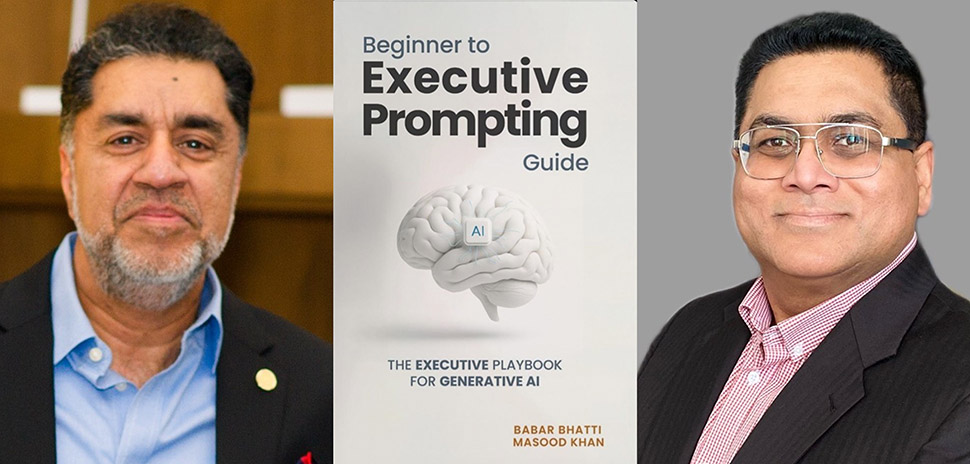
Most people are getting AI all wrong—asking random questions and getting mediocre results, say Babar Bhatti and Masood Khan. Their new guide shows how to prompt like a pro and turn AI into your strategic team.
-
Dallas Innovates, in partnership with the Dallas Regional Chamber, once again is recognizing the most innovative leaders in AI in Dallas-Fort Worth. From visionaries and mavericks to transformers and academics, AI 75's class of 2025 are the AI pacesetters you need to know now.