Only a small fraction of drugs can cross the blood-brain barrier.
While it protects the brain from harmful substances, the barrier also restricts the passage of most drugs, according to the National Institutes of Health. Dallas-based biotech Lantern Pharma puts the percentage at 2% to 6% of small-molecule drugs.
That makes the barrier a major challenge for drug development designed to treat brain cancers, central nervous system disorders, and neurological conditions from Alzheimer’s to Parkinson’s disease to stroke.
Now Lantern Pharma has a new AI tool it says could help researchers and drug developers identify compounds with a higher likelihood of getting through.
The biotech, founded in 2013 and publicly traded on the Nasdaq under the ticker LTRN since 2020, has announced the release of an open-access version of its new trademarked AI-powered prediction module, predictBBB.ai.
The tool, now available to demo at predictBBB.ai, is offered through a public freemium model, with core features accessible at no cost and more advanced functionality planned for future release.
In a statement, Lantern CEO Panna Sharma said the technology “transforms what has historically been one of drug discovery’s critical bottlenecks into a competitive advantage.”
Predicting BBB access with 94% accuracy
Lantern says the new model achieves 94% accuracy, with 95% sensitivity and 89% specificity, based on validation against publicly available data sets.
Identifying compounds that can cross the blood-brain barrier is a key filter in early-stage drug discovery.
The launch targets a longstanding pain point in CNS drug development, where failure rates run roughly 50% higher than in other areas and costs often outpace even cardiovascular drug programs, according to Lantern.
Development costs exceed those of cardiovascular therapeutics by 30%, the company said.
Lantern Pharma said the platform has the potential to shift the economics of CNS drug development by identifying blood-brain barrier permeability early—”before expensive preclinical or clinical testing.”
The AI engine behind the tool: RADR
The PredictBBB tool is a module of Lantern Pharma’s larger AI-driven drug discovery platform, RADR, which is under continuous development by the company.
Lantern’s proprietary RADR platform processes billions of molecular data points from its internal data lake in real time.
The company says it uses a combination of machine learning models—including deep neural networks, support vector machines, random forests, and logistic regression—to identify patterns and make predictions.
The new module builds on Lantern’s past efforts to predict BBB permeability. In May 2023, the company first announced its “highly accurate AI algorithms.” Lantern said it currently holds five of the top eleven positions on the Therapeutic Data Commons Leaderboard, a global benchmark for machine learning models in drug discovery.
Today, Sharma says the company’s public release of its BBB tool “has the potential to be a paradigm shift in how pharmaceutical organizations and researchers approach CNS drug development.”
Democratizing access to predictive tools
By opening access to the tool for outside researchers, Sharma said he hopes to speed up drug development and foster new collaborations.
The company says the BBB tool and RADR have already been used to support development programs at Lantern itself as well as collaborators at Actuate Therapeutics and CNS oncology programs at Starlight Therapeutics, a Lantern subsidiary.
“Our freemium strategy reflects a deep understanding of how pharmaceutical organizations evaluate AI tools,” Sharma said, pointing to the opportunity to impact multiple disease areas.
A $20.3 billion market—and rising stakes
Lantern cites projections showing the blood-brain barrier technologies market is projected to grow from $1.4 billion in 2023 to $9.85 billion by 2032. According to the company, data projecting the broader AI drug discovery technology market estimates $20.3 billion by 2030.
“We’re witnessing unprecedented demand for AI-driven solutions that deliver measurable impact on pharmaceutical development success rates,” Sharma said.
From AI models to clinical milestones
Lantern said its AI platform and in-house pipeline have both made recent headway. In its second-quarter update, the company reported a complete tumor response in a lung cancer patient treated with its drug LP-300.
Another candidate, LP-284, yielded a complete metabolic response in a patient with relapsed diffuse large B-cell lymphoma. And LP-184, which targets brain and other solid tumors, has completed Phase 1a enrollment and is advancing toward trials in triple-negative breast and recurrent bladder cancers.
In terms of financial performance, Lantern has reported a Q2 net loss of $4.33 million, down from $4.96 million a year earlier. The company ended the quarter with $15.9 million, which it says will fund operations into mid-2026.
Patent protection is also in place for the predictBBB.ai platform through a PCT filing (PCT/US2024/019851), with “favorable search reports,” according to the company. Lantern says the IP strengthens its position for future partnerships and platform expansion.
Lantern estimates its AI-driven pipeline could reach a combined $15 billion annual market while potentially delivering what the company calls “life-changing therapies” to hundreds of thousands of cancer patients globally.
Don’t miss what’s next. Subscribe to Dallas Innovates.
Track Dallas-Fort Worth’s business and innovation landscape with our curated news in your inbox Tuesday-Thursday.
R E A D N E X T
-
Avoid common pitfalls with practical insights from guiding Fortune 500 companies through AI adoption
-

The funding supports UT Arlington researcher Junzhou Huang, whose team recently ranked first in protein contact prediction and placed sixth overall in an international AI challenge competing against Google DeepMind, the University of Washington, and others.
-
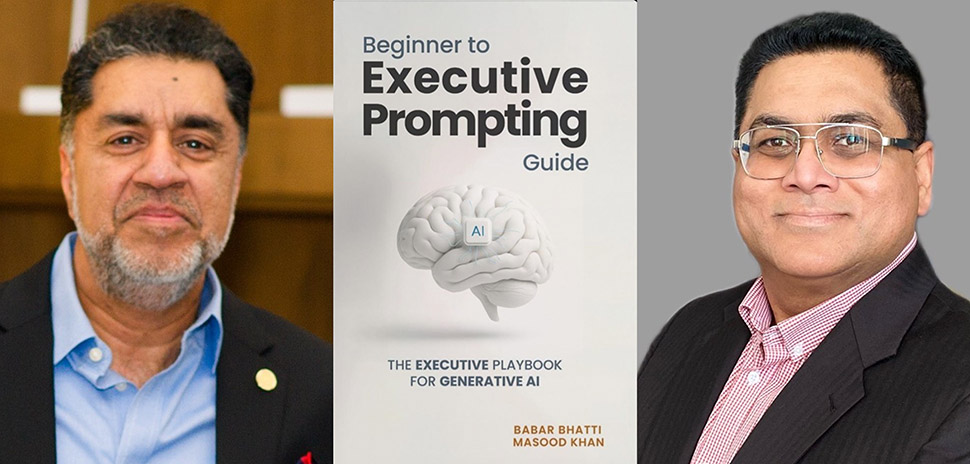
Most people are getting AI all wrong—asking random questions and getting mediocre results, say Babar Bhatti and Masood Khan. Their new guide shows how to prompt like a pro and turn AI into your strategic team.
-
Trevor Gicheru created Nurovant AI, an app that converts lectures into flashcards, quizzes, and summaries, helping students focus on key themes. With support from institutions like SMU, Harvard, and MIT, he’s now scaling his venture and aiming for a $2-3 million seed round in 2025.
-
Data scientist Anmolika Singh put Dallas on the global AI Tinkerers map. At the first meetup, more than 30 pros—founders to Fortune 500 technologists—showed up to trade ideas, projects, and solutions.