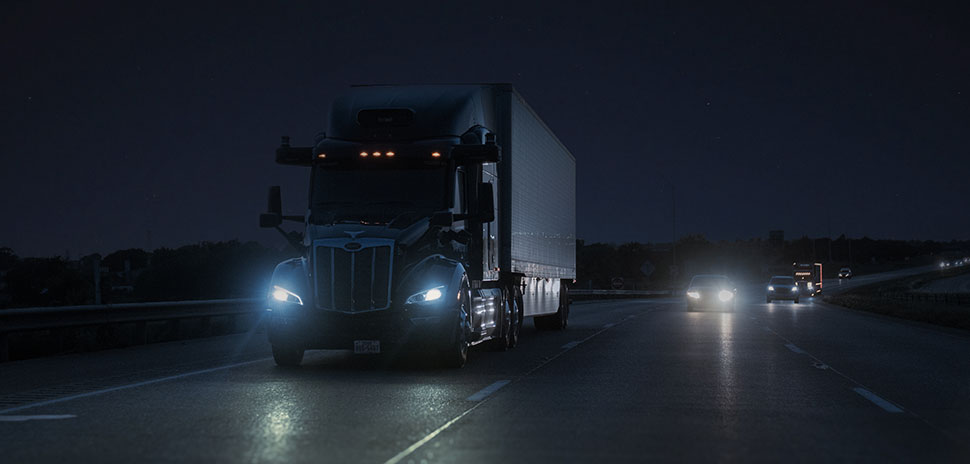
In April—after years of testing its self-driving tech on I-45 with safety drivers in truck cabs—Pittsburgh-based Aurora Innovation launched America’s first fully driverless 18-wheeler delivery service between Dallas and Houston. But those runs were deployed amid bright daylight. Now the company’s gone a step further by launching nighttime runs between the Texas cities.
The nighttime runs began Sunday. the company said. At launch in April, one driverless truck was running during the daytime, completing two runs a day. Now Aurora (Nasdaq: AUR) has three trucks running on I-45 day and night, scaling up to enable 12 runs a day and doubling potential truck utilization.
“Efficiency, uptime, and reliability are important for our customers, and Aurora is showing we can deliver,” Chris Urmson, co-founder and CEO of Aurora, said in a statement. “Just three months after launch, we’re running driverless operations day and night and we’ve expanded our terminal network to Phoenix. Our rapid progress is beginning to unlock the full value of self-driving trucks for our customers, which has the potential to transform the trillion-dollar trucking industry.”
Opening 15-hour Fort Worth to Phoenix route
As Urmson noted, Aurora opened its Phoenix terminal in June. The company is now making autonomous hauls on the Fort Worth-Phoenix route for its partner logistics companies Hirschbach and Werner.
The Fort Worth to Phoenix route has a trip time of over 15 hours, surpassing a human driver’s legal 11-hour driving limit, which until now has meant a driver must stop for rest along the way. Aurora says its self-driving trucks can “halve transit times,” especially on long routes like Fort Worth-Phoenix—which the company notes is nearly half the distance of the busy Atlanta to Los Angeles freight corridor.
2nd-quarter results and ‘Aurora Driver’ livestream
On Wednesday, Aurora announced its second-quarter 2025 revenue results, which totaled $1 million across driverless and vehicle operator supervised commercial loads for Hirschbach, Uber Freight, Werner, FedEx, Schneider, and Volvo Autonomous Solutions, among others.
This was Aurora’s first quarter with commercial revenue, following the launch of its driverless operations in April. In a sign that Aurora is truly in this for the long haul, however, eyeing future scaling and expansion, it also reported a Q2 operating loss of $230 million (excluding $55 million in stock-based compensation) and a net loss of $201 million.
If you want to see the company’s trucks in action, you can check out Aurora Driver Live, a publicly available YouTube livestream of its self-driving truck operations. The company says the livestream “demonstrates the safety, reliability, and growing maturity of the Aurora Driver, offering a first-of-its-kind glimpse into the future of freight transportation.”
Don’t miss what’s next. Subscribe to Dallas Innovates.
Track Dallas-Fort Worth’s business and innovation landscape with our curated news in your inbox Tuesday-Thursday.
R E A D N E X T
-

North Texas has plenty to see, hear, and watch. Here are our editors' picks. Plus, you'll find more selections to "save the date."
-
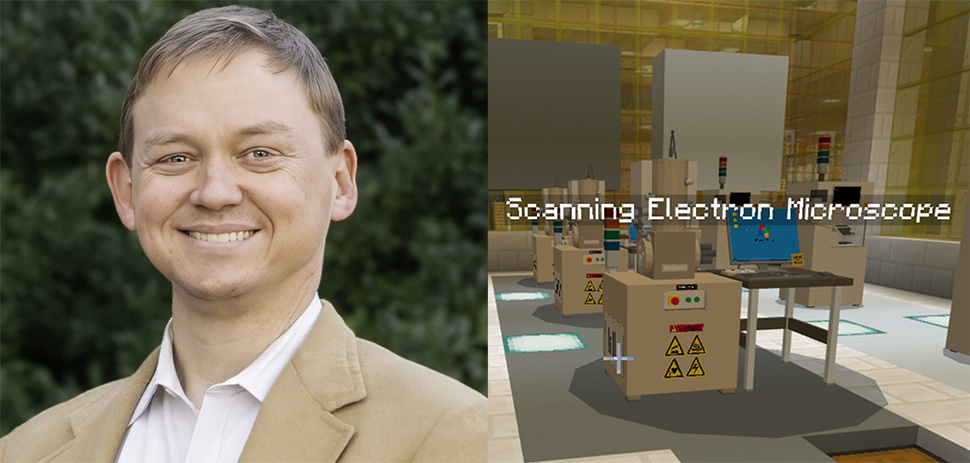
UT Dallas researcher Dr. Walter Voit transformed Minecraft’s 170-million-player universe into an advanced virtual training ground—for students and for AI agents tested by DARPA. His team’s Polycraft World uses gameplay to turn classroom theory into real-world expertise, covering topics from synthetic organic chemistry to nuclear plants to semiconductor facilities. Their new startup company, Pedegree Studios, has licensed the core technologies from the university to create a scalable digital pipeline for education and workforce development.
-

Combining cutting-edge research and real-world applications, the UT Dallas professor transforms public health with innovations in detection technology, including “a check engine light” for the human body. In collaboration with EnLiSense, the company she cofounded, Dr. Prasad combines chemistry with software and hardware to bring the technology to life as market-ready devices.
-

The southern half of Dallas County is home to just over 1.05 million residents. That’s about 40% of the total number of people who call Dallas County home—and roughly 200,000 more than the entire population of San Francisco. Coupled with the fact that Dallas-Fort Worth is emerging as a top life science market, as documented in a 2023 CBRE report, you can see why the DeSoto Development Corp. is including an 80-acre Life Sciences Innovation Core among its major projects. “In terms of economic development, research shows that it’s more effective when it happens regionally,” says Matt Carlson, DDC's chief…
-
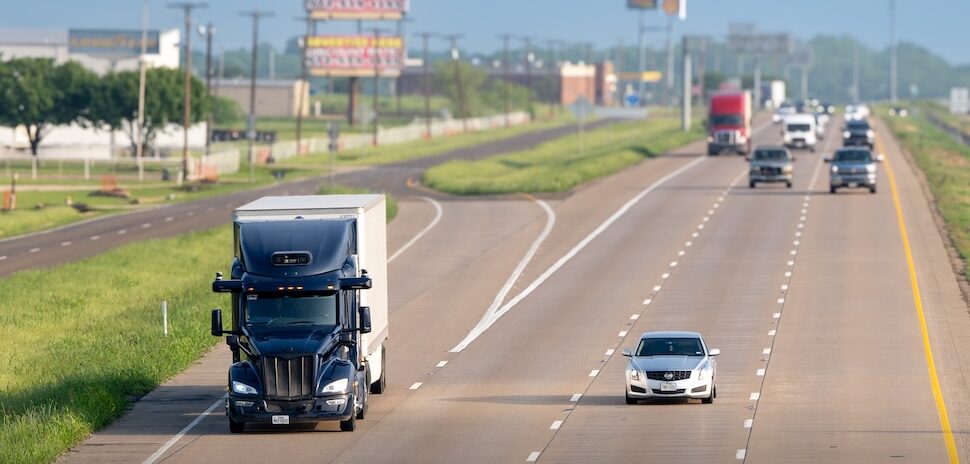
PACCAR, the manufacturer of Aurora's Peterbilt and Kenworth trucks, "requested we have a person in the driver’s seat, because of certain prototype parts in their base vehicle platform," Aurora CEO Chris Urmson said in a company blog post, three weeks after Aurora's self-driving trucks first rolled on I-45 without a human in the cab.