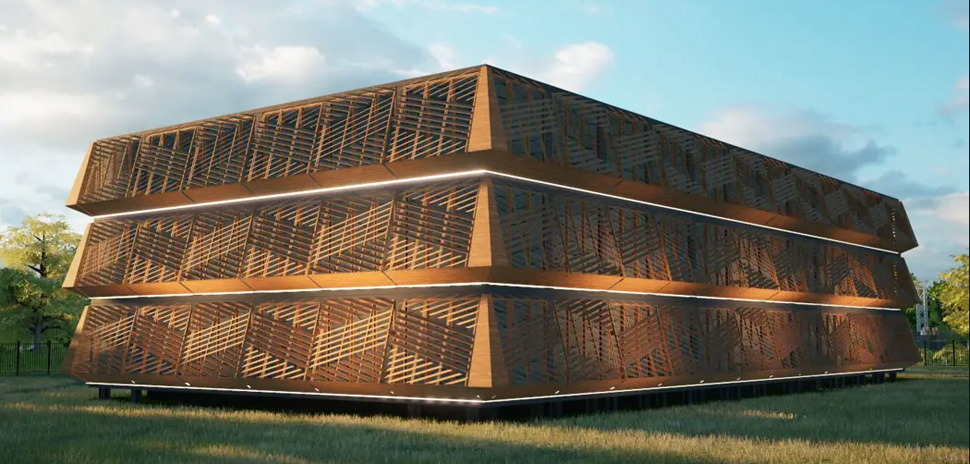
As power demand from data centers and other large energy users continues to climb, the Texas A&M University System and Austin-based Last Energy plan to build a pilot microreactor at the Texas A&M–RELLIS campus.
ERCOT expects electricity demand in Texas to grow by 7% in 2025 and 14% in 2026—as new data centers and other large industrial loads come online, according to the U.S. Energy Information Administration’s July outlook.
The RELLIS project will test Last Energy’s 5-megawatt PWR-5 design—a scaled version of its commercial PWR-20 microreactor—and marks Last Energy’s first U.S. deployment.
Testing is expected to begin next summer. The pilot will first demonstrate safe, low-power criticality before evaluating the reactor’s ability to produce electricity for the grid. While the work will take place in Bryan–College Station, it comes as Last Energy pursues other activity in Texas, including a separate commercial effort to build 30 microreactors in Haskell County, northwest of Dallas, to serve data center customers.
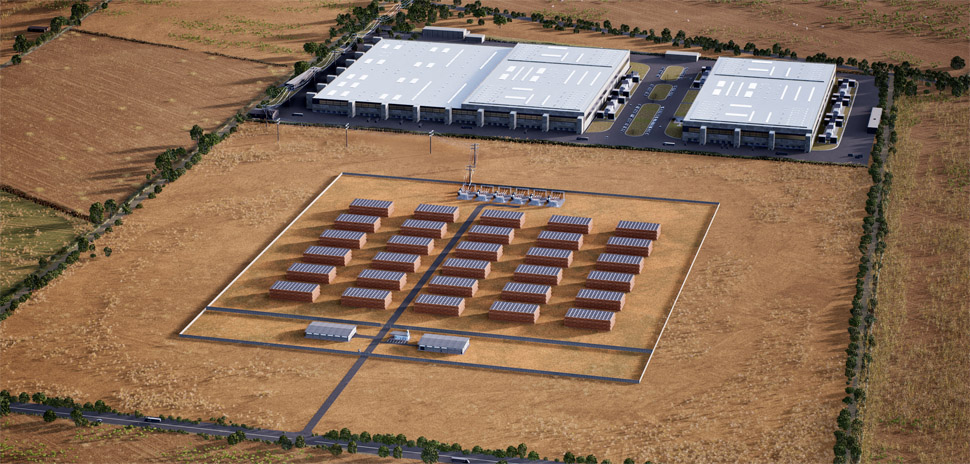
Rendering of an aerial view of Last Energy’s Haskell County project northwest of Dallas. [Souce: Last Energy]
Last Energy, which was founded in 2019 and relocated its headquarters to Austin from Washington D.C. in May, said it has secured a land lease at RELLIS, procured a full core load of low-enriched uranium fuel, signed an Other Transaction Agreement with the U.S. Department of Energy, and begun formal licensing submissions.
The DOE selected the project for its New Reactor Pilot Program, which provides an accelerated pathway for initial testing of advanced reactor designs.
“We’re partnering with Texas A&M to usher in the next Atomic Era,” said Bret Kugelmass, founder and CEO of Last Energy. “With fuel in hand, an optimal site at RELLIS, and DOE authorization underway, we have the ideal conditions to demonstrate a standardized, scalable microreactor product to the United States.”
Robert Albritton, chairman of the Texas A&M Board of Regents, called the effort “a meaningful step forward to unleash American energy innovation.”
Texas A&M Chancellor Glenn Hegar said the project aligns with the vision for the RELLIS campus. “It’s bold, it’s forward-looking, and it brings together private innovation and public research to solve today’s energy challenges,” Hegar said in a statement.
The word “RELLIS” is an acronym for the six core values of Texas A&M University: Respect, Excellence, Leadership, Loyalty, Integrity, and Selfless Service. The RELLIS Campus was named after these values to reflect its mission as a collaborative innovation, technology, and research hub.
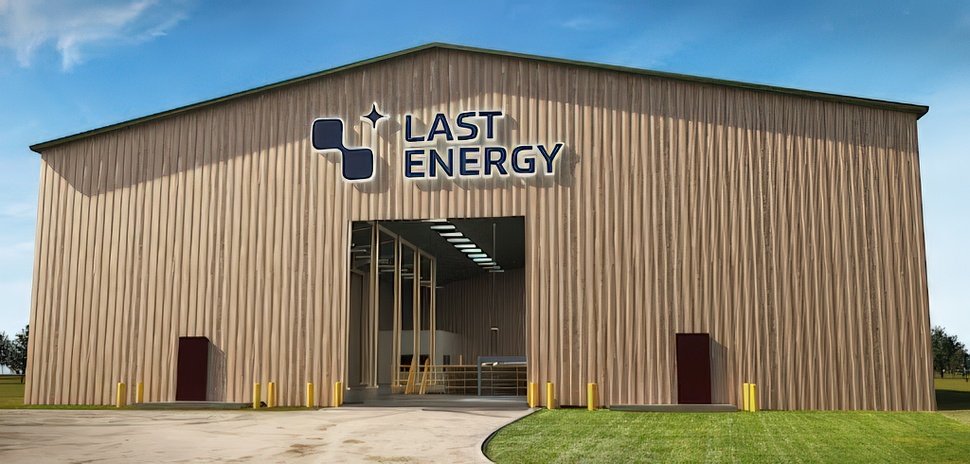
A rendering of Last Energy’s RELLIS-campus project exterior building. [Source: Last Energy]
Local leaders say the pilot effort extends the region’s role in advanced research. Bryan Mayor Bobby Gutierrez said the project builds on the community’s growing focus on clean energy, advanced manufacturing, aerospace, hypersonics, and semiconductor technologies.
North Texas universities have also expanded their nuclear research capabilities. This week, the University of Texas at Arlington received a $450,000 gift from HF Controls to support new research at the intersection of nuclear engineering and artificial intelligence.
In 2021, Texas A&M and UTA received a three-year, $500,000 Nuclear Regulatory Commission grant to study liquid metal heat pipes for microreactors—a separate academic project not connected to the RELLIS pilot.
According to the announcement, the microreactor demonstration at RELLIS is financed with private capital.
Don’t miss what’s next. Subscribe to Dallas Innovates.
Track Dallas-Fort Worth’s business and innovation landscape with our curated news in your inbox Tuesday-Thursday.
R E A D N E X T
-

The investment strengthens UTA’s pipeline for high-demand engineering talent and supports research on AI-enabled safety systems for nuclear plants.
-

Cait Brumme says the event at Dallas' Pegasus Park on Nov. 6 will explore the technologies and economic forces defining the future for entrepreneurs and innovators.
-

DirectH2 said the funding will accelerate the development and commercialization of its cutting-edge hydrogen solutions in collaboration with Houston-based Rice University—addressing critical challenges in the clean energy sector.
-
The new center at Bridge Labs will train the workforce powering North Texas’ biotech boom—helping startups speed therapies, vaccines, and breakthrough biologics from lab bench to patients. Funded in part by Lyda Hill Philanthropies, the National Center for Therapeutics Manufacturing Satellite Campus is set to open this summer.
-
From DFW Airport to Darling Ingredients, North Texas leaders join other innovators statewide proving that conservation and business can thrive together.