TCU is making one of its largest research and technology investments to date with the launch of AI², a $10 million initiative designed to expand secure AI research computing, strengthen interdisciplinary research, and prepare students for a workforce increasingly shaped by artificial intelligence.
The effort includes contributions from Dell Technologies and cloud partners AWS and Microsoft. TCU said the initiative marks a significant step in achieving Research One (R1) status, the highest designation in the Carnegie Classification system.
“AI isn’t just changing the rate of learning and the landscape of higher education; it’s making history,” TCU Chancellor Daniel W. Pullin said in an announcement.
The university plans to use the technology to accelerate learning, improve operations, and expand the university’s research impact for the community at an “even greater scale,” he added.
Hybrid AI infrastructure backed by Dell, AWS, and Microsoft
AI² will operate through a hybrid model that combines secure on-campus computing with cloud capacity. TCU said the approach allows sensitive data to remain local while enabling more flexible workloads to run in the cloud.
Provost and Vice Chancellor for Academic Affairs Floyd Wormley said AI-driven research activity is already widespread across campus and that the new investment will help scale those efforts responsibly.
“The volume of AI-driven work and research on campus currently is impressive,” Wormley said in the announcement. He called the initiative critical to supporting academic units and empowering students, faculty, and staff to make use of emerging tools in ways that align with the university’s mission.
For its on-campus foundation, TCU is deploying the Dell AI Factory with NVIDIA. NVIDIA AI Enterprise software and open Nemotron models will also be available to support the development of agentic tools designed to optimize university operations.
Jennifer Herbert, Dell Technologies’ head of public sector sales in North America, said the company views the project as a model for how higher education institutions can adopt AI securely and at scale.
“TCU researchers and students will be enabled to explore new frontiers in ethical AI, foster interdisciplinary collaboration, and drive meaningful impact across their campus and beyond,” Herbert said.
According to the university, the AI infrastructure includes Dell PowerEdge servers with NVIDIA GPUs, NVIDIA Spectrum-X Ethernet networking, and Dell PowerScale storage.
TCU said hardware installation is already underway. Pilot activity is expected before the end of the calendar year, with updated timing for a full campus rollout planned for January.
AI² to connect work across TCU
AI² is designed to centralize and accelerate AI activity across academic units, turning previously disconnected efforts into a coordinated institutional resource for research, teaching, and operational innovation, the university said.
“AI² gives our faculty and students a world-class tool to foster interdisciplinary research partnerships and generate high-impact outcomes,” said Reuben F. Burch V, vice provost for research and a professor of engineering.
Burch said AI² will be “an immediate boost in all facets of TCU’s Strategic Plan,” influencing faculty collaboration, student preparedness, and the university’s progress toward R1 status.
Ethical and cross-disciplinary AI
TCU said ethical and applied use of AI is a core part of the initiative, with faculty governance shaping development across four areas: using AI tools in teaching, using AI in research, conducting research about AI, and ensuring responsible AI practices.
“What makes this distinctive is the emphasis on cross-disciplinary integration, ethical considerations, and practical application across various fields of study,” Burch said in a separate Q&A.
He noted that the model spans fine arts, liberal arts, business, sciences, and engineering.
“TCU’s investment is more than hardware and software, it’s another proof point that we are serious about innovation and impact,” said Bryan Lucas, chief technology officer.
But, the CTO said, powering research capability for new projects and those currently underway is just one aspect of AI². He added that the university plans to roll out additional tools and services in the coming months, including AI-focused learning certificates for students and institutional tools designed to support teaching, research, and campus operations.
Don’t miss what’s next. Subscribe to Dallas Innovates.
Track Dallas-Fort Worth’s business and innovation landscape with our curated news in your inbox Tuesday-Thursday.
R E A D N E X T
-

AI seem overwhelming? Just go to office hours.
-

You'll find deadlines coming up for a new accelerator program; and many more opportunities.
-
Dallas Innovates, in partnership with the Dallas Regional Chamber, once again is recognizing the most innovative leaders in AI in Dallas-Fort Worth. From visionaries and mavericks to transformers and academics, AI 75's class of 2025 are the AI pacesetters you need to know now.
-
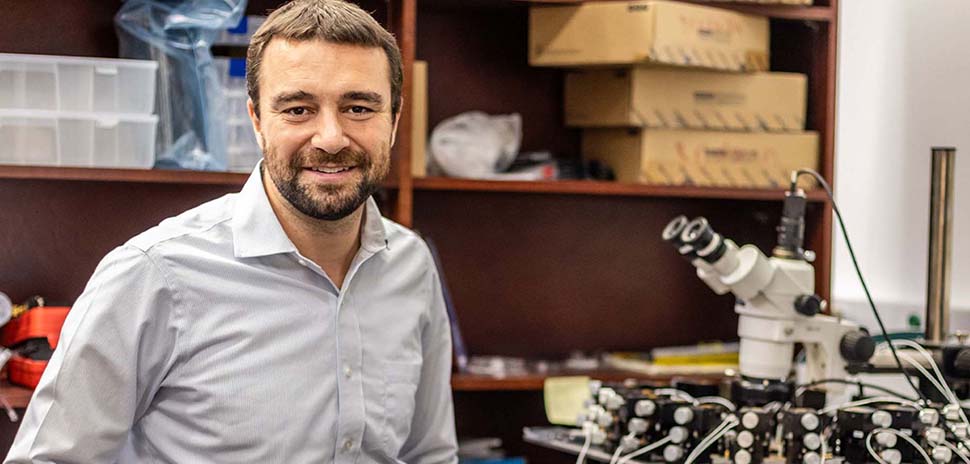
The brain-inspired design could lower the energy and compute costs behind AI training requirements, an increasingly urgent challenge for enterprises.
-

In TCU's recent Insights publication, Neeley Executive Education faculty leader Eric Arseneau says generative AI is delivering real business value as it climbs Gartner's "Slope of Enlightenment." But AI specialization is creating unexpected friction for organizations. Here's his take.