MORE►
CRISPR
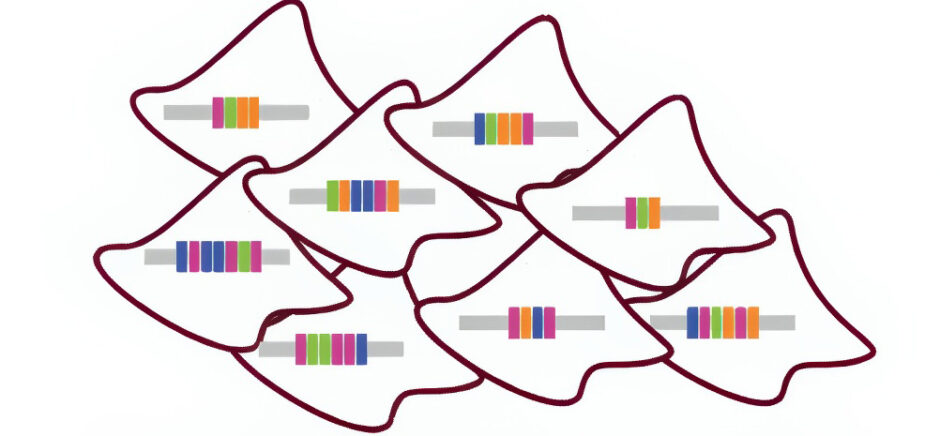
Researchers at UT Dallas used an enzyme called TdT to create unique genetic "fingerprints" inside living cells—a breakthrough in biosecurity that could help biotech companies verify cell identity and prevent counterfeiting. The technique, published in Advanced Science, increases randomness in DNA repair to generate one-of-a-kind markers. This cropped image shows a key step—Pol X’s role in the process. [Source: Figure 1, TdT (1D) PUF/Advanced Science]
UT Dallas Researchers ‘Barcode’ Engineered Cells with Patent-Pending Tech to Protect Biotech IP
by Maddie Preston | Sep 27, 2025
The UTD team’s approach adapts a chip-security technique to biology. The breakthrough gives biotech companies a new way to prevent costly misidentification and protect intellectual property.

by Dallas Innovates | Staff Report |
Mar 1, 2023
Dallas-Fort Worth is well known for its tech expertise. Now it being recognized as the place where technology meets life science—a convergence that’s driving rapid growth in the biotech ecosystem....
MORE►
by Kevin Cummings |
Sep 27, 2022
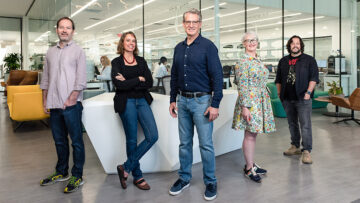
Dallas-based Colossal Biosciences, the de-extinction company behind plans to bring back the woolly mammoth and thylacine, developed its own software solution "after reviewing everything available on the market." Now it's sharing the platform with the launch of Form Bio.
The spinout's technology tools can help drive the “entire molecular revolution” that is occurring in the life sciences and biotech space, in addition to bolstering the Lone Star state as a hub for the industry, says Chief Strategy Officer Claire Aldridge.
The spinout's technology tools can help drive the “entire molecular revolution” that is occurring in the life sciences and biotech space, in addition to bolstering the Lone Star state as a hub for the industry, says Chief Strategy Officer Claire Aldridge.
MORE►
by David Seeley |
Aug 16, 2022
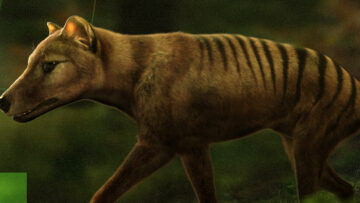
Colossal is already working to "de-extinct" the woolly mammoth via a mammoth-elephant hybrid project. Now the Tasmanian tiger—which went extinct nearly 100 years ago due to human hunting—is the second species Colossal is seeking to bring back.
"We’re thrilled to be collaborating with Andrew Pask and the University of Melbourne to restore this amazing animal to Earth," said Ben Lamm, Colossal's co-founder and CEO.
MORE►

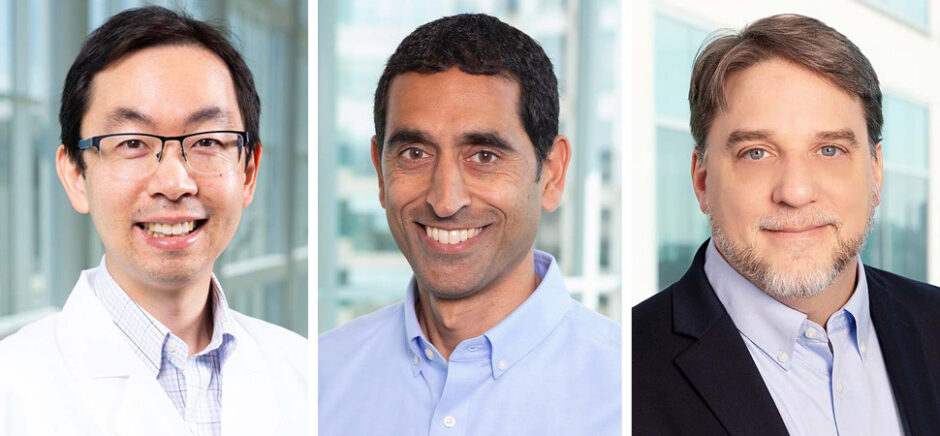
Left to right: Gary Hon, Ph.D., UTSW Assistant Professor of Obstetrics and Gynecology; Nikhil Munshi, M.D., Ph.D., Associate Professor of Internal Medicine and Molecular Biology; W. Lee Kraus, Ph.D., Professor and Director of the Cecil H. and Ida Green Center for Reproductive Biology Sciences
UT Southwestern Team Awarded $8.8M to Participate in Genomic Variation Consortium
by David Seeley | Oct 25, 2021
The team is led by UTSW assistant professor Gary Hon, Ph.D., who developed Mosaic-seq, a gene engineering technique that helped lead to the grant award. UTSW will now become a research partner in a new $185M National Institutes of Health (NIH) initiative to build on findings of the Human Genome Project.
MORE►

by Quincy Preston |
Oct 8, 2020
This year's Nobel Prize in Chemistry, awarded to two female scientists for the development of CRISPR as a gene-editing tool, is a revolution, according to a pair of UTSW scientists.
UTSW's Eric Olson and Rhonda Bassel-Duby use the technology in their work to treat Duchenne muscular dystrophy. Olson also is the co-founder of biotech Exonics Therapeutics, which exited last year in a deal roughly valued at $1B.
MORE►
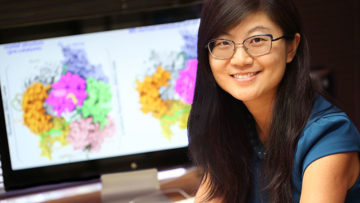
by Lance Murray |
Oct 4, 2019
In this weekly roundup of research and development activity in North Texas, you’ll also find out about how a $427,000 NIH grant is helping a UTA team study the healing of cranial injuries, and how Lexus researchers are creating a high-end audio system.
MORE►

by Lance Murray |
Jun 17, 2019
The biotech company uses CRISPR technology licensed from UT Southwestern Medical Center in Dallas, and was co-founded by UTSW researcher and faculty member Eric Olson.
MORE►