Imagine having a personal receptionist who answered every call on your mobile phone, sorting out the spam from the shout-outs from your friends, co-workers, family members, and more. When a call sounds urgent, the receptionist will patch it right through to you.
No, you don’t have to pay a receptionist $50,000 a year to do that (plus benefits and vacation time). For now, you just have to be one of “several” customers in North Texas who are testing a new AI tool from Dallas-based AT&T.
AT&T aims to roll out its new “digital receptionist” to select customers throughout this year, the company said. The AI tool adds on to the company’s other spam filters, including AT&T ActiveArmor, “by literally talking to callers” to see who’s suspicious—and who’s not.
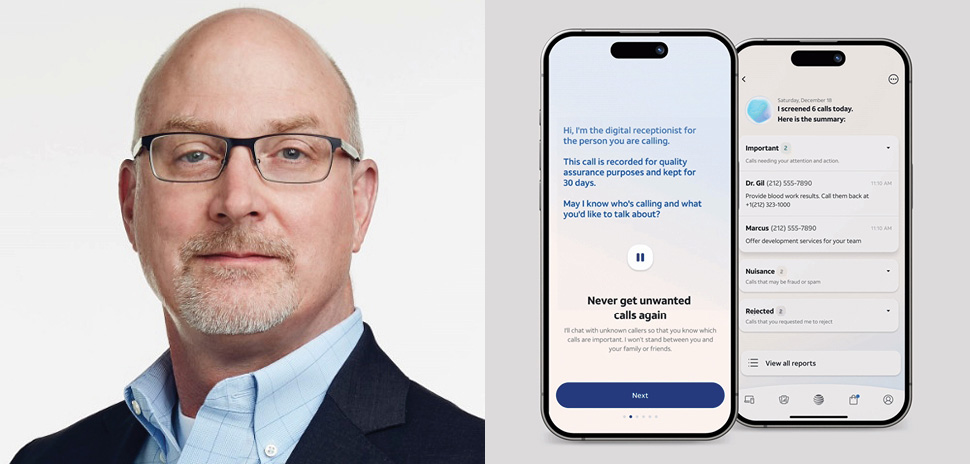
“We’ve taken years of data and knowledge about how spam and fraud works—and our algorithms for fighting them—to create this new powerful tool,” AT&T Chief Data Officer Andy Markus wrote in a blog post.
Fending off sophisticated robocallers
Why is the tool needed? AT&T said it currently blocks or labels more than 2 billion robocalls per month. But spammers have begun using their own AI to spam people even more, in ever-more sophisticated ways. So AT&T said it’s “fighting fire with fire” by using agentic artificial intelligence to battle fraud and spam.
The tool uses “advanced voice-to-voice and agentic AI” to screen a customer’s calls with a human-like voice, the company says.
Customers can put trusted numbers like family, friends, doctors, etc., on a “Do Not Screen” list, which will bypass the AI and ring on your phone like always.
But all those unknown callers, robocallers, scamsters, wrong numbers, and more? They gotta talk to the “receptionist.”
Just like a human receptionist sitting inside a company’s front door, AT&T’s digital receptionist “sits between you and the outside world,” Markus writes. It answers the caller with questions like “Who may I say is calling?” and “What is this in regard to?” Then it figures out whether the caller is a real human, how urgent the call is, and if it meets other criteria you’ve set up.
“If the call passes all the checks, the digital receptionist lets the call through to you and drops off the call completely,” Markus writes. “If the call is about something that the AI can handle on its own, like taking a message or accepting a delivery window, it will.”
Callers who won’t identify themselves, wrong-number dialers, and those who don’t meet a customer’s criteria won’t be put through. Instead, the “receptionist” will either disconnect the call or take a message.
Customers can see the process in action if they wish: While the digital receptionist is talking to a caller, they can watch a live transcript and pick up at any time. Otherwise, they can let the receptionist handle things, then check out a text summary and decide whether it’s worth a call-back.
Built into AT&T’s network
AT&T said that unlike similar solutions that require “cumbersome downloads” and can cause battery-draining, its new digital receptionist is built directly into the AT&T network to work with a customer’s phone number. It will also work even if a customer is out of cellular service range or not connected to the network.
“This will be one of the telco industry’s first agentic voice AI tools used directly by the customer, leaving other carriers in the dust when it comes to integrating consumer-focused agentic AI tools into the network,” Markus writes. “This opt-in network-based agentic solution could make decisions based on your parameters and input, not just search for information and create content.”
Uses LLMs to process speech
AT&T’s tool uses multiple large language models (LLMs) to process an incoming call’s speech. It then crafts responses—and voices them in a “natural”-feeling conversation with what AT&T calls human-like “responsiveness.”
“If it recognizes the patterns of spam or fraud, it shuts down the call automatically,” Markus writes.
Next step: Restaurant reservations and more?
Screening calls could be just the start of what the AI tool could bring,
“Eventually, a future AI agent could autonomously connect you to make reservations at the hottest restaurant,” Markus writes. “Just tell it the name of the restaurant, and it will connect you—or even book your reservation—all on its own. This digital receptionist could also eventually handle phone calls that are important, but you can’t take at the time, by getting directions from you in real time with text prompts.
The company says its strict security and privacy policies will protect customers’ information, which is only used to tailor the tool to customers’ preferences.
Currently, the AI tool remains in its “testing phase.” Meanwhile, Markus says AT&T is working on “lots of agentic AI use cases.” The company will continue sharing updates as it rolls out new AI tools to increase efficiency and convenience, he added.
R E A D N E X T
-

Data scientist Anmolika Singh put Dallas on the global AI Tinkerers map. At the first meetup, more than 30 pros—founders to Fortune 500 technologists—showed up to trade ideas, projects, and solutions.
-
Avoid common pitfalls with practical insights from guiding Fortune 500 companies through AI adoption
-
From Corporate Politics to AI, Lee Brown’s Research Transforms Education and Earns Him a Spot Among DFW’s Top Innovators.
-

AI seem overwhelming? Just go to office hours.
-
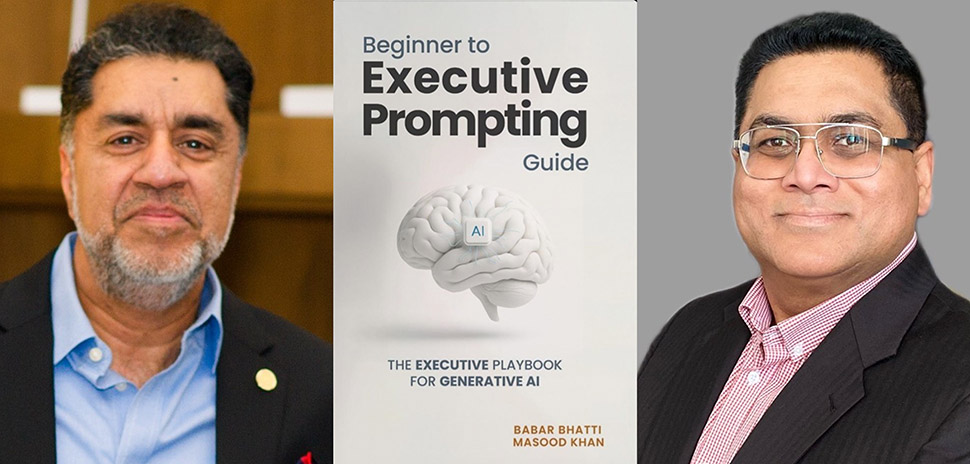
Most people are getting AI all wrong—asking random questions and getting mediocre results, say Babar Bhatti and Masood Khan. Their new guide shows how to prompt like a pro and turn AI into your strategic team.