When Maurice Wilson II joined the Plano-based North Texas Food Bank as its chief operating officer more than four years ago, his charge was to help the nonprofit recover from the pandemic — and from the loss of COVID-19 relief funds.
“A lot of the government funding was going down. Meanwhile, food insecurity rates and costs were going up,” Wilson told Dallas Innovates. “I had to come in and find efficiencies.”
The first place he looked? The organization’s software.
NTFB serves nearly 800,000 food-insecure people through nearly 500 partner pantries, schools and organizations. Donated food — much of it with a short shelf life, requiring same-day delivery — comes through its warehouses from many sources every day. That inventory must be tracked and managed across a 12-county, 9,200-square-mile area.
Software upgrade
Wilson already had a software suite at his disposal when he came aboard. But he needed to optimize the software to capture data that would help root out inefficiencies — and thereby lower expenses.
Wilson — who manages a 68-member team and a fleet of 12 long-haul semi-trucks and eight refrigerated box trucks — captures real-time data to adjust the nonprofit’s logistics. This might include changing the temperature in a vehicle and tracking how fast trucks are traveling.
“The ‘before’ was a system where we would print labels, write down what we actually pulled out of the system as we’re picking them, type that into the system and then print it out as a manifest,” Wilson said.
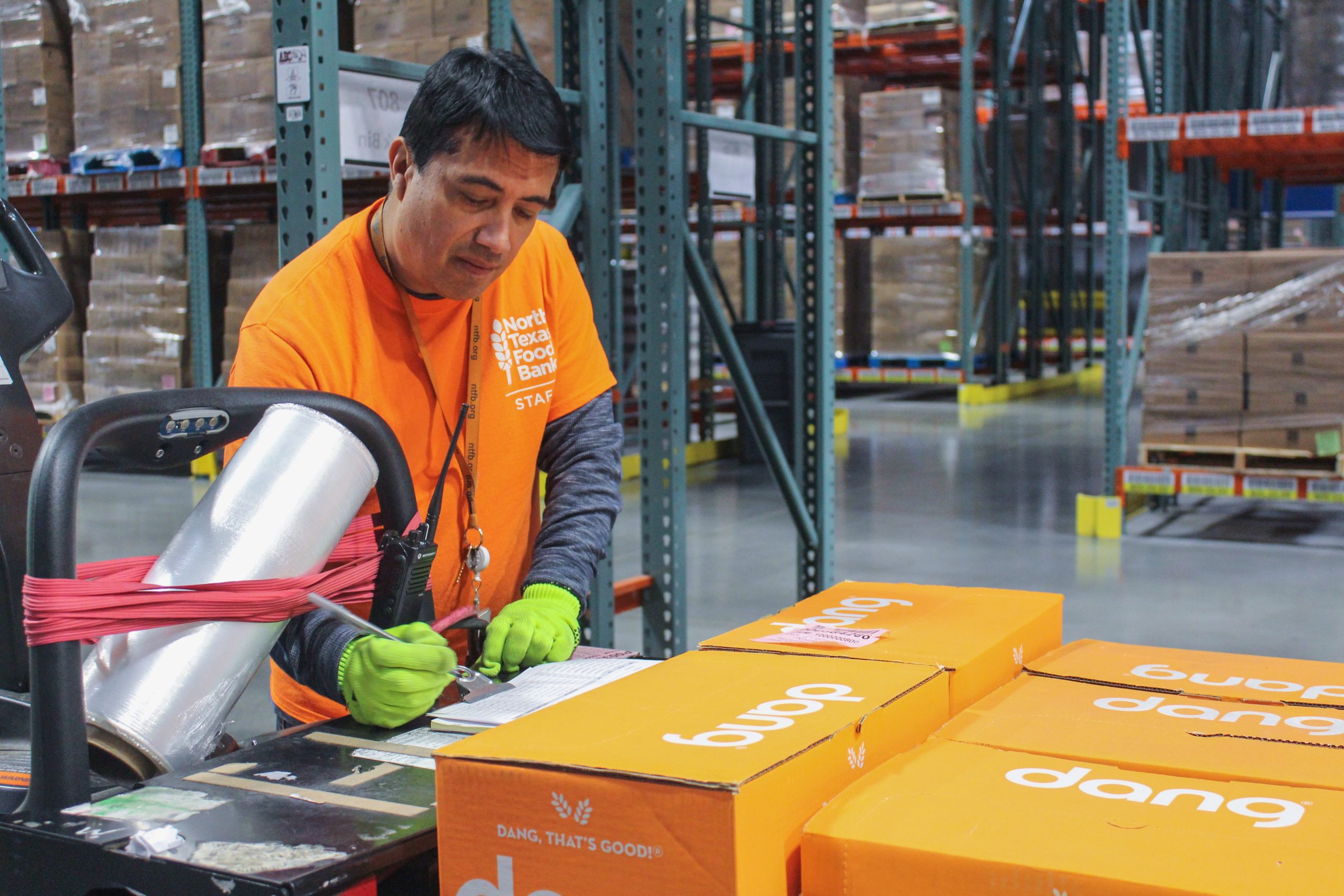
Upgraded warehouse software helped the North Texas Food Bank trim nearly $3 million in costs as meals delivered hit a record high. [Photo: NTFB]
Today, NTFB operates an upgraded system that enables scanning of details about deliveries and the truck fleet, he said. Today, NTFB uses AGI, warehouse management software that lets employees scan locations as inventory moves through the transportation cycle, rather than manually inputting data into the system, allowing for a more efficient production workflow.
“Immediately, you can see the entire life cycle of every product that comes through here, which improves our ability to deliver on time and with accuracy,” Wilson said.
The pinpoint accuracy enabled by data capture empowers NTFB to trim costs on everything from fuel to staffing. Since Wilson joined NTFB, the organization has been able to lower its operations costs by nearly $3 million — while increasing the number of meals delivered annually.
“We really started to use these tools to drive down our error rates and drive up our process efficiencies,” Wilson said. “We know that our 97% on-time delivery is among the best. We know that cycle inventory of 98% is really good. Metrics reporting really helps us to hold ourselves accountable.”
Furthermore, the technology has aided the food bank in cutting food costs by 30% year over year, Wilson said.
Nearly 120 million meals delivered
Last year, NTFB delivered a record-setting 119 million meals.
“That’s directly related to how we’re using technology to ensure that we serve our customers better,” he said. “Those are dollars that become available for different food purchases and things that help our neighbors in the fight against food insecurity.”

North Texas Food Bank distributes food across a 12-county, 9,200-square-mile area. [Photo: NTFB]
The need to feed North Texas residents remains great, though. Texas ranks as the most food-insecure state. And Dallas-Fort Worth ranks fourth among major U.S. metros for the number of people experiencing hunger. Only Los Angeles, New York and Houston rank higher.
Data collection and analysis play a key role in the food bank’s efforts to surpass the previous year’s number of meals delivered. This year, the organization hopes to surpass 119 million.
“Our network is vast and varied. We have churches that serve maybe 50 people twice a month, and we have agencies that serve 1,500 people three times a week,” he said. “Being prescriptive is difficult in that space, so for us, it is trying to ingest and understand the data, and then to be more holistic in terms of a response.”
Tapping into inventory data, NTFB can determine where its partners succeed and where they could benefit from support.
“We’re learning who they’re serving, their capacity and the days that they’re open,” Wilson said. “I say it’s like going from a mom-and-pop shop to a franchise organization where, in any part of our service area, we can predict that the service is the same.”
R E A D N E X T
-
You'll find deadlines coming up for a new accelerator program; and many more opportunities.
-
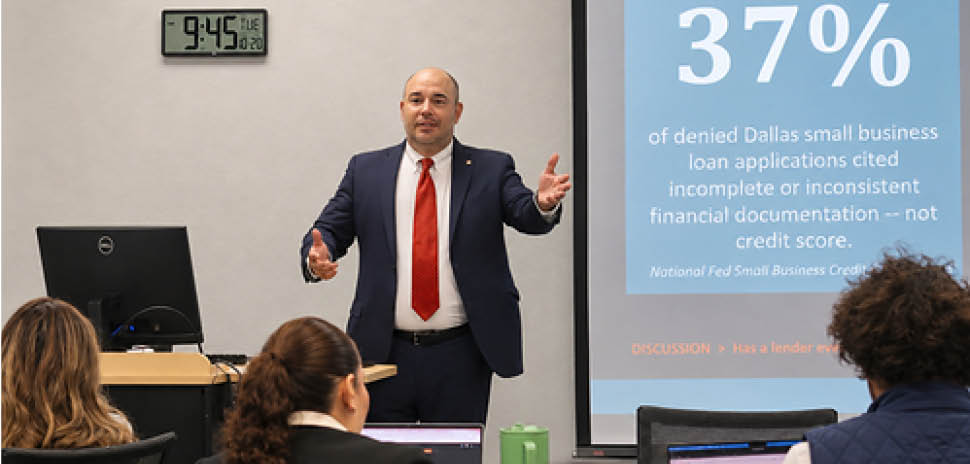
The eight-week Banker’s Blueprint program, from the Greater Dallas Hispanic Chamber, Dallas College and Texas Regional Bank, prepares established business owners to pursue financing.
-

Five financial institutions received 24 patents with North Texas inventors the week of Oct. 13. Overall, Dallas-Fort Worth ranked No. 10 among 250 U.S. metropolitan areas with 178 patents.
-

Dallas-Fort Worth ranked No. 10 nationally with 114 patents the week of Sept. 1. One went to Dallas-based ProtectMed for a shield that covers the parts of the body that standard lead aprons leave exposed.
-

Dallas-Fort Worth ranked No. 9 nationally with 135 patents the week of Oct. 6. One went to Irving-based Bioworld Merchandising for a novelty cup shaped like Santa Claus’ hat.
-
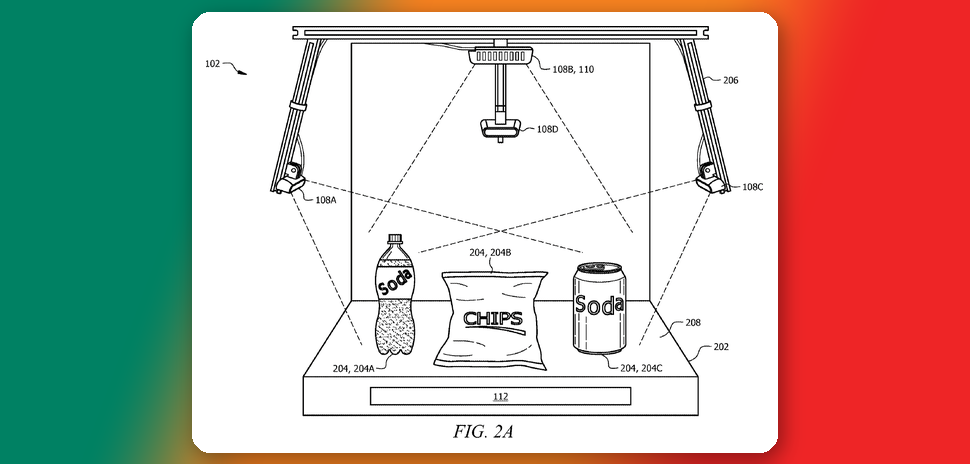
Irving-based 7-Eleven received two patents tied to inventory tracking and computer vision, as North Texas ranked No. 10 among 250 U.S. metros for patent activity the week of Sept. 29.
-
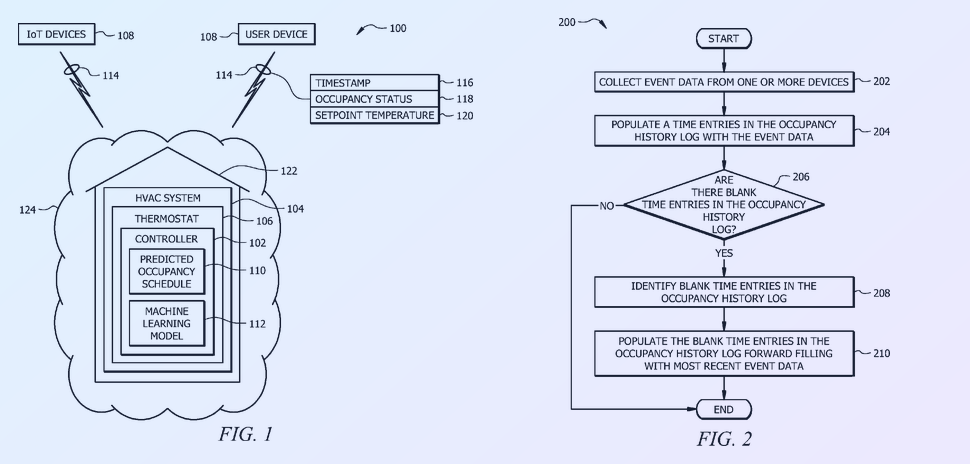 Patented: Lennox’s Machine-Learning Thermostat Scheduling and 105 More Inventions Across North Texas
Dallas-Fort Worth ranked No. 12 nationally with 106 patents the week of Sept. 15. One went to Richardson-based Lennox for a thermostat that predicts when a home is occupied and adjusts based on how aggressively the user wants to save energy.
-

Two North Texas inventors helped Netflix earn a patent for managing viewer playback during live events, as Dallas-Fort Worth ranked eighth among 250 U.S. metros for patents the week of Oct. 27.
-
The $13 billion home battery startup has grown its DFW team from around 10 employees to more than 100 in just over a year. Next up: backup power for nearly 6,500 homes in three Hillwood communities.
-

Dallas-based Communities Foundation of Texas said donors gave more than $76 million to 3,300 local nonprofits as of midnight Sept. 17.