Throughout Yellowstone National Park, a network of autonomous recorders is listening day and night, capturing thousands of wolf howls. That audio feeds into AI models to learn how wolves communicate, move, and behave in the wild.
The work is a partnership between the nonprofit Colossal Foundation, the Yellowstone Wolf Project, Grizzly Systems, and Yellowstone Forever. Sound, Colossal says, is a reliable, scalable way to monitor wildlife in real time.
So far, the team has deployed 48 recording units across the park. More than 7,000 unique howling events have been verified and used to train the models.
Yellowstone Wolf Project’s Dan Stahler called it the “most detailed acoustic study of wild wolves ever conducted.”
Four wolves now wear audio-logger collars that pair sound with GPS and motion data. All told, researchers are sifting through more than 200,000 hours of audio to better understand pack behavior, population trends, and emerging threats.
Making extinction a thing of the past
Colossal Biosciences is best known for its headlining de-extinction work using genetic engineering to reintroduce key traits of extinct species, such as the woolly mammoth and the dire wolf. But the Dallas-based biotech’s nonprofit arm has been turning its tools toward species we haven’t lost yet—ones that are under pressure. The Yellowstone acoustic study is a case in point.
And that work now has more money behind it.
Today, the Colossal Foundation announced it has secured an additional $50 million, bringing its total to $100 million since launching just over a year ago.
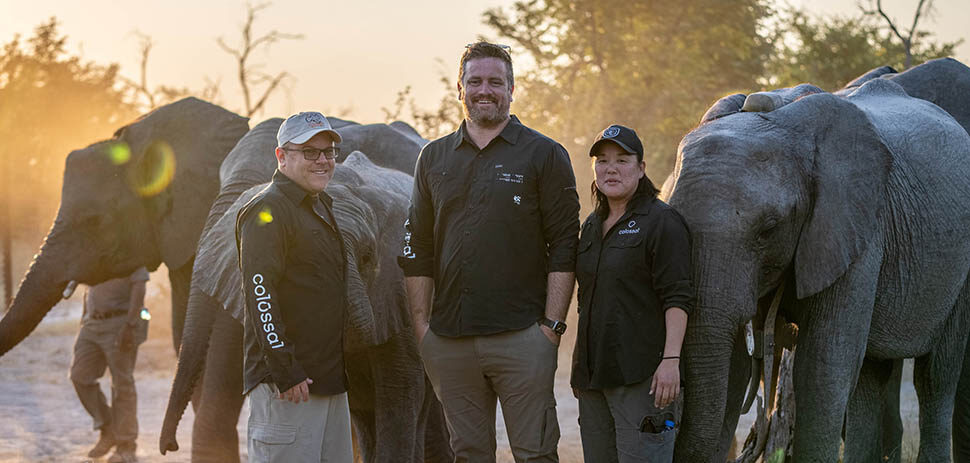
Colossal Foundation Executive Director Matt James (center) with Colossal’s head of animal husbandry, Steve Metzler, and Wendy Kiso, Colossal’s principal scientist for assisted reproduction. [Photo: Colossal]
Conventional conservation can no longer keep pace with the accelerating loss of nature, Colossal said. With a mission to “Make Extinction a Thing of the Past,” the foundation scales partner-led efforts to protect wildlife, restore ecosystems, and build a resilient genetic “safety net” for species worldwide.
Colossal said biodiversity is underfunded by more than $700 billion annually, making the need urgent.
Ben Lamm, Colossal’s CEO, told Inc. the funding represents new money for conservation—not dollars pulled from traditional efforts. “We don’t want to ever compete with existing conservation,” Lamm said. “We want to bring new money to find new ideas and new technologies for conservation.”
The foundation also released its first Impact Report, which covers projects spanning more than 40 species across six continents.
In its inaugural year, Colossal said the foundation has launched dozens of projects and partnerships around the world, piloting or deploying over 20 frontier technologies.
Genetic rescue on the Texas Gulf Coast
One of those projects is taking shape closer to home.
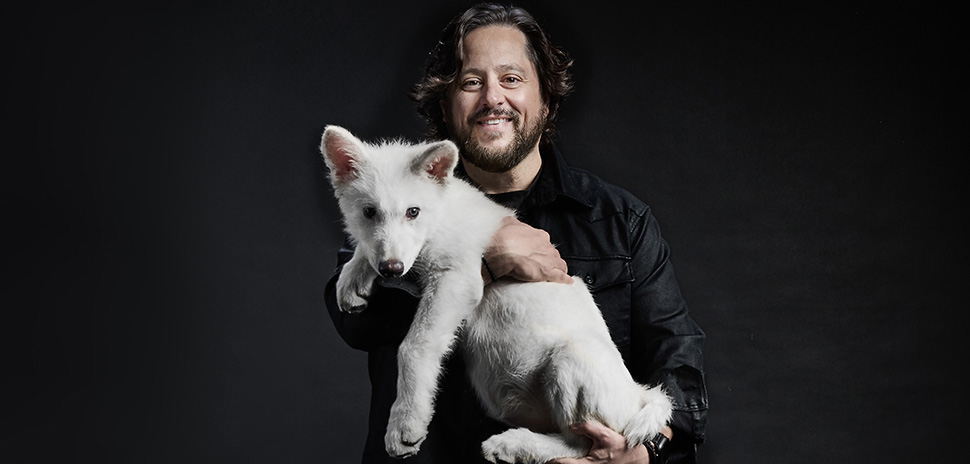
Working with the Gulf Coast Canine Project, the Karankawa Tribe of Texas, and the American Wolf Foundation, the Colossal Foundation said it helped identify and clone four ancestral “ghost wolves” from the Texas Gulf Coast. The animals carry the genetic legacy of the American red wolf, the world’s most endangered canid.
Fewer than a handful of red wolves remain in the wild today, according to the foundation. Roughly 300 live under managed care, all descended from just 12 founders. The four cloned wolves—Neka Kayda, Ash, Blaze, and Cinder—each carry 69–72% red wolf ancestry, the highest ghost lineage recovered so far, Colossal said.
The first pup, Neka Kayda (meaning “Ghost Daughter”), was named by the Karankawa Tribe and recognized as the tribe’s totem animal. The effort also produced the first complete red wolf reference genome—a key step toward restoring lost genetic diversity.

Colossal Foundation’s Matt James, during a naming ceremony for “ghost wolf” pup Neka Kayda. [Photo: Courtesy of Colossal]
A vaccine that’s already working
The Colossal Foundation’s Impact Report also highlights what the foundation calls the world’s first mRNA vaccine for elephant endotheliotropic herpesvirus (EEHV). Colossal said the disease is responsible for most juvenile elephant deaths in human care.
This spring, two young elephants at the Cincinnati Zoo, Sanjay and Kabir, were naturally exposed to EEHV after receiving the vaccine. Neither got sick. Both recovered fully. Without vaccination, the foundation says, that outcome would have been unlikely.
“I have witnessed elephants battle EEHV and have even lost a juvenile elephant that was under my care,” said Matt James, the foundation’s executive director. “To be able to get a vaccine into the world that can stop this senseless loss means everything to me.”
Five U.S. zoos have since begun administering the vaccine, with more than ten elephants now vaccinated.
Scaling the toolkit
Beyond wolves and elephants, the Impact Report covers work on amphibians, marsupials, and other threatened species—including engineering disease resistance in frogs to fight the deadly chytrid fungus, and developing genetic resistance to help Australian quolls survive the invasive cane toad.
The foundation aims to add biotech tools to conservation, from AI-enabled monitoring to genomics. And projects like the Yellowstone Wolf Project show how Colossal’s technology can advance conservation.
The company said its custom-built AI models automatically identify individual howls, chorus howls, and even gunshots. They cluster calls by acoustic “fingerprint” and extract key metrics like pack identity, size, and pup presence. The “around-the-clock bioacoustic data” allows for non-invasive census, movement, and behavior studies without researchers needing to be on the ground, according to Colossal.
“By merging AI, acoustics, and rugged field hardware,” CEO Lamm said earlier this year, “we’re addressing some of the major challenges afflicting conservation and creating a scalable framework that can support coexistence wherever wolves roam.”
At the time, Colossal reported that its wolf-classifier trained on a model developed by its AI team can now identify individual and chorus howls with over 92% accuracy. In time, the software will provide deeper insights into wolf “language” and social dynamics.
“We spend our time and money on projects that we think will have a big impact for local stakeholders and in time, the whole of conservation,” said Lamm.
Don’t miss what’s next. Subscribe to Dallas Innovates.
Track Dallas-Fort Worth’s business and innovation landscape with our curated news in your inbox Tuesday-Thursday.
R E A D N E X T
-
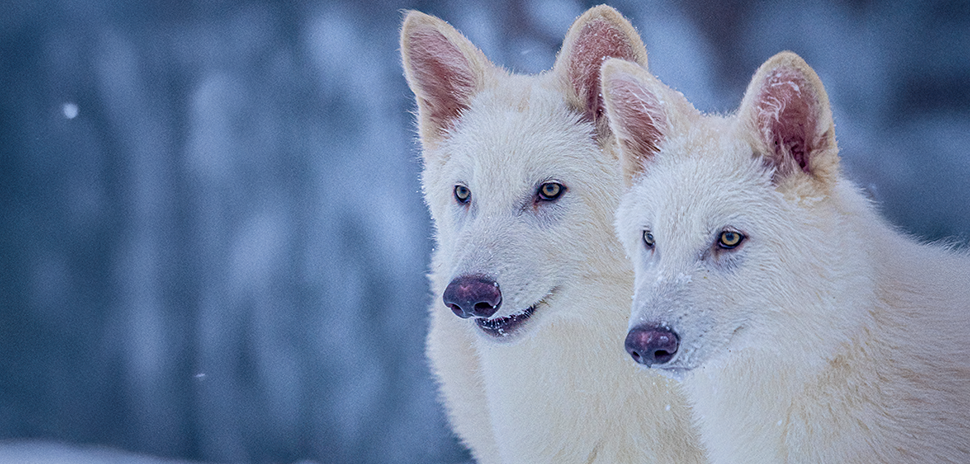
“Game of Thrones” made them famous, but the prehistoric dire wolves were real—and, according to Colossal Biosciences, have now returned after 12,500 years in what it calls the world’s first successful de-extinction. The work goes beyond headlines: It could change how we save endangered species. Meet Romulus, Remus, and Khaleesi in a video—and hear dire wolf howls for the first time in more than 12 millennia.
-
![The South Island giant moa towered over New Zealand's forests for millions of years before becoming extinct within a century of Polynesian settlement around 1400 CE. Colossal Biosciences plans to resurrect the 500-pound birds using ancient DNA extracted from cave deposits and artificial egg technology. [Source image: Colossal Biosciences]](https://s24806.pcdn.co/wp-content/uploads/2025/07/Colossal-Moa.jpg)
The Dallas decacorn is scaling its de-extinction pipeline with indigenous leadership, a New Zealand subsidiary, and economic models for species preservation, including ecotourism opportunities. Filmmaker Sir Peter Jackson helped connect the collaborators, Colossal CEO Ben Lamm says.
-
In one of his first deep interviews since Colossal's dire wolf debut made global noise, Ben Lamm joins the TechStuff podcast to talk mammoths, backlash, and why he's not here to play it safe.
-
Best known for its moonshot mission to revive the woolly mammoth, Colossal Biosciences has secured $200 million in Series C funding led by TWG Global. The world's first de-extinction company, founded in 2021 by entrepreneur Ben Lamm and renowned Harvard geneticist George Church, Colossal Biosciences is working to restore Earth's lost biodiversity, "making science fiction into science fact."
-
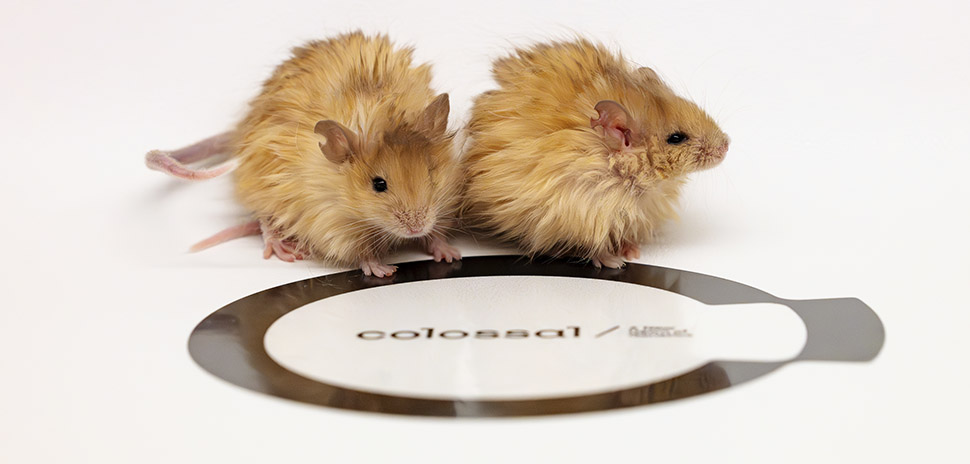
Before Colossal Biosciences can "de-extinct" the woolly mammoth, some small steps are in order. They've now been taken by the Colossal Woolly Mouse—a gene-edited creation with "dramatically altered coat color, texture, and thickness reminiscent of the woolly mammoth’s core phenotypes."