
College Park, Maryland-based quantum computing company IonQ agreed to buy Dallas-based cybersecurity company Elisity in an all-stock deal valued at up to $1.3 billion.
Publicly traded IonQ said the acquisition of privately held Elisity would create a broader cybersecurity platform for detecting and combating AI and quantum threats.
Elisity’s software improves network security by segmenting network access based on identity, content and organization-wide policies.
IonQ said it will couple Elisity’s capabilities with its own offerings for enterprise and government customers of post-quantum cryptography, or PQC; quantum key distribution, or QKD; and quantum computing. PQC and QKD defend against attacks from quantum computers. Quantum computers solve complex problems faster than traditional supercomputers.
“Our customers need to prioritize post-quantum cryptography initiatives while securing existing assets to keep essential operations running,” Elisity CEO James Winebrenner said in a statement.
An edge in microsegmentation
IonQ said the Elisity deal, expected to close later this year, would open up more opportunities in the microsegmentation market. Microsegmentation creates secure zones across cloud and data center environments to isolate app workloads from each other and individually secure them, tech giant Cisco Systems said.
The value of the global microsegmentation market will climb from $8.2 billion in 2025 to more than $41 billion by 2034, Exactitude Consultancy predicted.
Gartner estimated that only 5% to 20% of enterprises have adopted microsegmentation.
“With Elisity and its team as part of IonQ, we will be well positioned to help customers protect critical infrastructure and enterprise networks throughout the transition to the quantum era,” Niccolo de Masi, chairman and CEO of IonQ, said in a statement.
Once the deal closes, Elisity’s leadership team will remain in place, including Winebrenner as CEO, IonQ said.
Behind Elisity’s technology
IdentityGraph, the core of Elisity’s cybersecurity platform, identifies every user, device, AI agent and workload on an organization’s network. It draws on Elisity’s own data as well as information from other security tools the organization uses.
That intelligence underpins policies that give each person, device or program access to only what’s needed. Security teams can simulate policies before enforcing them.
Under such policies, a printer that needs to connect only to a print server, for example, would be unable to access a payroll database. As a result, a hacker who compromises an organization’s printing system would find it tough to infiltrate other parts of the organization’s network.
Because the platform works with existing network and security equipment, organizations don’t need to replace them. Elisity said its microsegmentation can be set up in weeks without disrupting operations. That compares with traditional segmentation projects, which can take years to finish and sometimes stall before completion.
“Quantum readiness starts with the decisions we make today about identity, access and the information we need to protect for years,” Jason Elrod, chief information security officer at Tacoma, Washington-based Elisity customer MultiCare Health System and an executive adviser to the company, said in a statement.
Elisity has handled more than 100 customer deployments around the world, IonQ said.
Elisity’s financials
Since being founded in 2018 in Silicon Valley, Elisity has raised $70.5 million across three venture capital rounds. Investors include private equity firm Atlantic Bridge and venture capital firm Allegis Capital.
The company’s revenue grew 2,765% from 2022 to 2024, Inc. magazine said earlier this year.
R E A D N E X T
-
Leaders from TRA, IBM, ORCA Computing and IonQ will gather in Dallas for an interactive discussion on the business applications of quantum technologies.
-

Flexcar says it’s disrupting a $110 billion industry “by providing customers a better alternative to car ownership.”
-

The India-based fleet maintenance tech company plans to grow its North Texas team from 15 to 100 employees by the end of 2027. Intangles has raised $40 million in venture funding to scale its digital twin technology and AI-powered system.
-
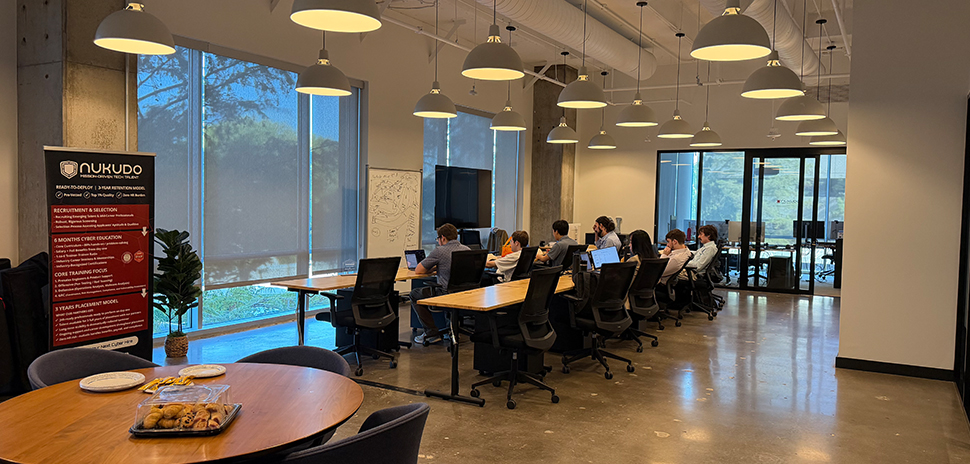
The workforce development, training and staffing company offers a free six-month program that pairs compensation with real-world training. The program says it accepts fewer than 1% of applicants.
-
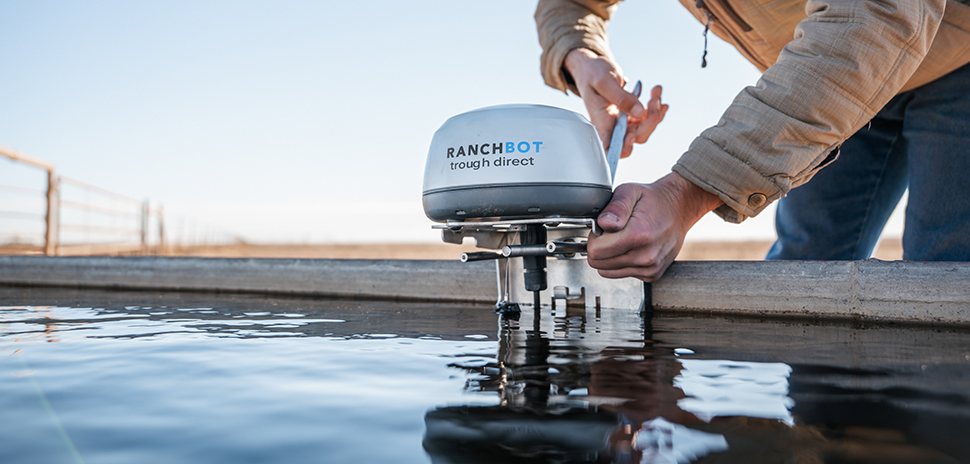
Ranchbot, a provider of real-time, satellite-based technology for water monitoring for livestock producers, plans to use some of the funding to grow its agtech portfolio.
-

The cumulative milestone reached by TrendAI, whose U.S. headquarters is in Irving, underscores how quickly AI is reshaping cybersecurity spending — and how the AWS Marketplace captures that growth.