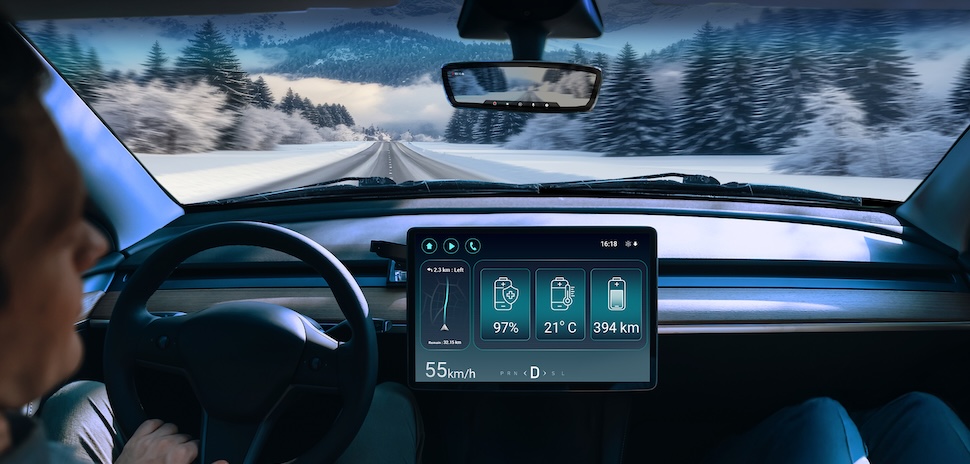
The heartbeat of every electric vehicle is its battery pack, which can propel a driver and passengers up to 400 miles or more. But on that journey, a battery monitor is a key ingredient of the battery management system, ensuring the battery is safely managed, optimized, and protected from dangers like thermal runaway. To take that monitoring to a new level, Dallas-based Texas Instruments has launched the industry’s first 26-cells-in-series channel battery monitor, which can watch over an EV battery “just as an electrocardiogram (EKG) monitors the heart.”
TI said its new BQ79826Z-Q1 is the industry’s highest-cell-count battery monitor with an integrated electrochemical impedance spectroscopy (EIS) engine, bringing “predictive intelligence, comprehensive data, and real-time diagnostics” to battery monitoring in EVs—and in energy storage systems, as well.
Single chip ‘enhances safety and extends battery life’
TI’s new battery monitor features a single chip that enhances safety and extends battery life by detecting potential failures from within battery cells, TI said, delivering the highest-cell-count monitoring in its class and tracking up to 44% more channels than previous generations.
With this increase in channels, the device significantly decreases the number of components required in a battery pack, the company added—”reducing system complexity and cost without compromising reliability.”
TI is showcasing the innovation this week at the 2026 Power Conversion, Intelligent Motion Expo and Conference in Nuremberg, Germany.
Wenjia Liu, VP and GM of battery management systems at TI, said EVs and the rapid expansion of energy storage “are redefining what battery performance must deliver, and as a leader in battery management technology, TI is uniquely positioned to meet that challenge.”
“Our high-cell-count battery monitor with a built-in EIS engine helps ‘shine a light’ inside battery cells,” Liu added in a statement, “delivering rich chemical-state data that enables systems’ software to make informed, real-time decisions on safety and performance of the battery pack, allowing engineers to address the most critical challenges in battery management.”
TI said its new battery monitor delivers continuous, real-time insight that reveals a battery’s health and warns of issues before they become critical. Integrated EIS technology enables it to detect fault conditions earlier—from inside the cells—helping to keep the battery safe and notifying passengers of potential vehicle hazards such as thermal runaway, TI said.
Monitoring energy storage systems for AI data centers
The monitor extends those benefits energy storage systems, too—a growing market as companies race to meet the power demands of AI data centers. EIS gives engineers “real-time visibility into the state of charge and state of health of each battery cell,” regardless of system size, TI said.
The BQ79826Z-Q1 supports up to 26 cells per device, TI said, setting a new industry standard with eight more than any competing solution. The company said fewer monitoring devices means a lower bill of materials, simplified architecture, and reduced board space requirements,—”translating to meaningful cost savings per channel without sacrificing quality or reliability.”
Don’t miss what’s next. Subscribe to Dallas Innovates.
Track Dallas-Fort Worth’s business and innovation landscape with our curated news in your inbox Tuesday-Thursday.
R E A D N E X T
-

North Texas has plenty to see, hear, and watch. Here are our editors' picks. Plus, you'll find more selections to "save the date."
-

Dallas' third poet laureate Kristoddie Woods steps in alongside youth poet laureate Cadence Diggs, a 17-year-old Booker T. Washington High School student, for a two-year term.
-

Solidion's Gen-ECB battery platform uses the thermal conductivity and radiation resistance of graphene to regulate temperature within battery cells, capable of operating reliably from −80°C to +60°C—with ongoing development aiming for even broader temperature ranges for deep-space missions, the company said.
-

The new office is designed to simplify how organizations work with SMU—whether through research partnerships, workforce development, or student engagement.
-

"The old human-in-the-loop rules really don't work as well when you're looking at ubiquitous, automated AI agents that are acting 24/7 as digital workers." Danny Tobey, M.D., J.D. Chair, AI and Data Analytics DLA Piper ...speaking at Convergence AI Dallas on March 31 We're moving "from an era of chatbot AI, where there is always a human at the receiving end of recommendations, to agentic and physical AI," a world, Danny Tobey said, where AI "takes actions and makes decisions on behalf of humans" and "does so in ways that don't always stop for human intervention, permission and understanding." Companies…
-
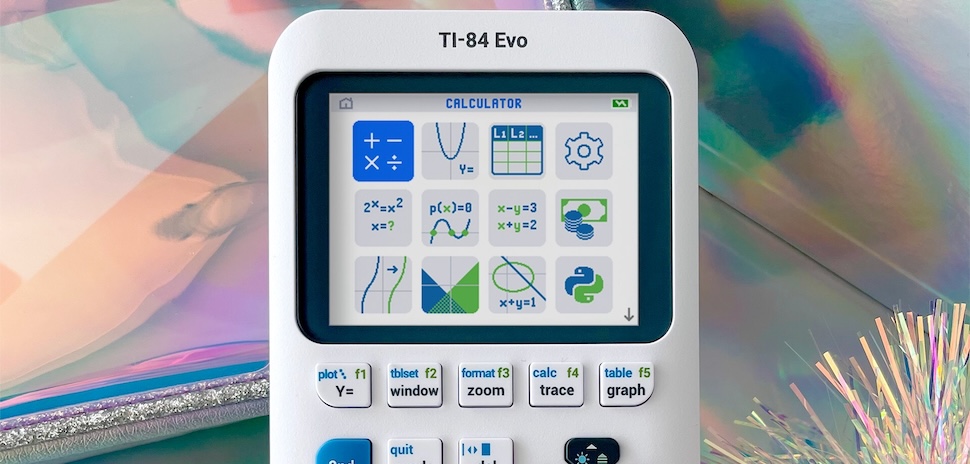
Texas Instruments invented the world's first handheld electronic calculator prototype in 1967. This week, it launched a new graphing calculator "built to meet the demands of today's math classroom" and to grow with students from middle school algebra all the way through college and future STEM careers.
-

Nine student and alumni teams made the finals in three tracks: undergraduate, graduate student, and alumni. Winning ideas ranged from AI sales coaching to radiation mapping and noninvasive brain drug delivery as the university’s entrepreneurship push continues to scale.
-

The DECA Dental founder returned to his alma mater to keynote UT Dallas' record-breaking Draper Pitch Competition. He told student founders what it really takes.
-

Travis Machen, CEO and group head of global banking and markets at Scotiabank, said the acquisition "further supports our strategic focus within the North American corridor."
-

The Dallas-based reproductive health platform offers a cycle-tracking app for logging cycles and managing conditions like endometriosis and PCOS. It was one of five finalists taking part in North Texas' premier social innovation competition.