Enterprise software has a documented problem: the gap between purchase and deployment.
McKinsey calls it the “execution gap.” Deloitte describes it as the distance “between the promise and reality” of new technology. Some call it the time-to-value chasm.
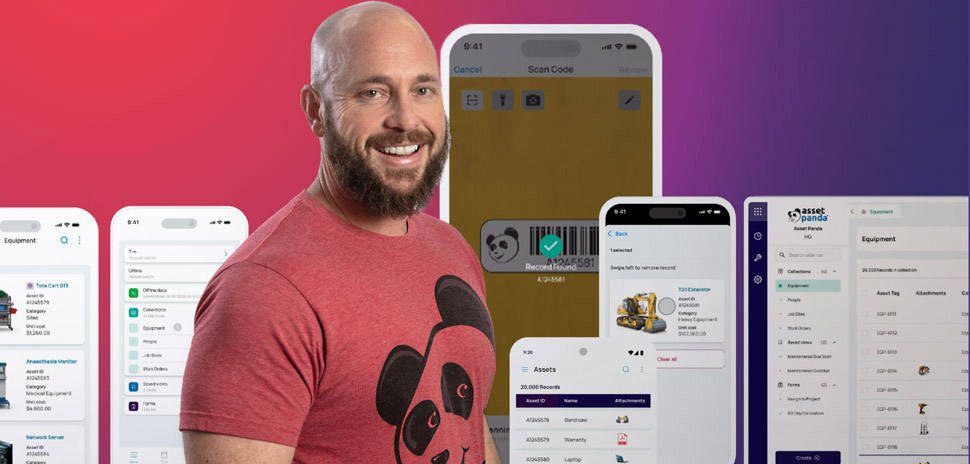
Frisco-based Asset Panda, which helps organizations track and manage assets from industrial equipment to medical devices, thinks it’s found a way to close it.
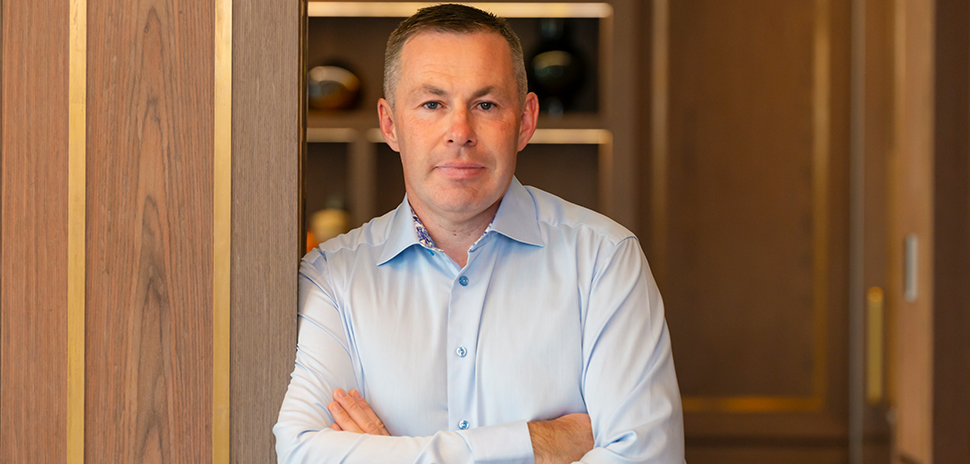
This fall, the company rolled out Asset Panda Pro with Ursa, an AI copilot designed to handle the configuration work that traditionally required consultants and months-long implementations. Founder and CEO Rex Kurzius said the goal is to reduce the friction that slows enterprise rollouts before teams see value.
“We challenge the outdated belief that deep customization must come with high costs, complex development, and long implementation times,” Kurzius told Dallas Innovates.
In his view, enterprise software should be configured around how an organization works—not the other way around—while making it fast and easy for teams to deploy. “We prove that it’s possible to have both,” he said.
Bootstrapping to scale
That belief has shaped Asset Panda’s own growth. Founded in 2012, the company has scaled without outside capital to more than 4,000 organizations across more than 60 countries. Today, customers track more than 20 million assets on the platform, Kurzius said.
Along the way, he’s watched a pattern repeat itself. Asset tracking often starts out simply—frequently in spreadsheets—but grows more complex as organizations add locations, equipment types, compliance requirements, and users. What looks manageable at first can quickly fracture into disconnected systems.
Asset Panda’s platform is built to help companies get their assets under control. It can track nearly 100 asset categories, from industrial equipment and medical devices to election hardware, depending on an organization’s needs.
Over the past year, customers executed 2.7 million workflows on the platform, Kurzius said, and more than 40,000 active users were added in the second quarter of 2025 alone. Customers include Amazon, Toyota, Dyson, and Carnival—organizations where asset tracking spans global operations and multiple asset categories, according to the company’s website.
How Ursa AI works
Ursa is meant to address the part of that journey Kurzius sees as the biggest bottleneck: configuration.
Introduced with Asset Panda Pro, the AI copilot is designed to move work that traditionally required consultants and long implementation cycles directly into the platform. Kurzius described Ursa as Asset Panda’s native AI assistant—built into the system rather than layered on as a plugin, which he said helps keep customer data secure.
Kurzius said the company built Ursa as a native feature rather than adding a third-party AI plugin—a choice he said helps keep customer data secure while avoiding what he sees as AI tools that promise more than they deliver.
Even in its early release, he said Ursa has already changed how customers interact with the platform.
Customers are using Ursa for “everything from instantaneous support and on-demand report generation to effortless database configuration using simple, natural language prompts,” he said. Ursa also supports real-time language translation for global teams and automates routine tasks like data import mapping and field entry.
Over time, Kurzius expects Ursa to move beyond setup and become a primary interface for the platform—handling configuration, reporting, and support without the friction that typically slows enterprise systems.
Balancing speed with control
Asset Panda President Justin Lackey, who previously served as the company’s CFO and CRO before being promoted in March 2025, said the challenge has been accelerating setup without removing enterprise guardrails.
“What makes this different is the balance we’ve achieved: deep configurability with rapid time to test or go live,” Lackey wrote in a recent LinkedIn post.
He added that while Ursa speeds discovery and setup, the company has intentionally kept people in the loop. Prospective customers can schedule time with solution engineers, implementation teams, or account executives, rather than being left to figure things out on their own.
Powering a “test drive” experience
That thinking has also reshaped how Asset Panda approaches trials.
“We’ve launched a new, frictionless way for prospects to get hands-on with Asset Panda instantly,” Lackey wrote. “Users can enter a trial account and leverage Ursa, our proprietary AI, to build an environment that’s configured entirely by how they prompt and describe their needs.”
The trial process reflects that shift. Prospective customers can now “generate a unique, fully configured platform to test drive in a matter of minutes,” Kurzius said.
Entrepreneurship, timing, and persistence
Kurzius’s approach to business was shaped by family and experience. He grew up watching his father run a bakery—an early lesson in ownership and responsibility that later influenced how Kurzius and his brothers approached entrepreneurship, including his older brother, who would go on to co-found Mailchimp, the company previously told Dallas Innovates.
When Kurzius was 10, his father died suddenly of a heart attack less than a month after the family moved from Albuquerque to Richardson. The loss left the family close to homelessness until his grandparents took them in.
Kurzius worked nights and weekends to pay for classes at Brookhaven College before transferring to Southern Methodist University on an academic scholarship, the company said. While at SMU, he wrote himself a $1 million check and set it aside as a personal marker—telling himself he would be able to cash it three years after graduation.
He could have. Kurzius sold his first company, staffing firm Resulte, within that timeframe. Asset Panda is now his sixth startup. He keeps the check as a reminder of how difficult entrepreneurship can be, and how persistence often matters more than timing, a company spokesperson said.
Kurzius’ persistence was tested again roughly four years into Asset Panda’s life. Kurzius had prepared a speech to tell his wife he was shutting down the company, according to a 2020 Success magazine profile. Before he could deliver it, his young daughter asked how Asset Panda was doing. His three children had named the company and helped design its panda logo, the profile said.
“I took about one second, smiled and said, ‘It’s going good, honey—couldn’t be better,’ and just kept going,” Kurzius told the publication.
He endured, and the company evolved. “We had to wait for the technology to mature,” he said. “It wasn’t until the iPhone 4 that we could scan barcodes.”
What’s driving the Pro platform evolution
Many companies are trying to consolidate SaaS platforms across business units, Kurzius said. The company’s Pro platform launch reflects five priorities: centralized control with departmental autonomy, stronger mobile capabilities, faster setup through AI, enterprise-grade scalability, and deeper integration across customer technology stacks.
Together, those changes are aimed at organizations trying to consolidate software without flattening how teams actually work—a tension Kurzius describes as increasingly common across large enterprises.
While the platform is industry-agnostic, he says, Asset Panda has seen particular traction in public administration and health services, where asset tracking and compliance are closely tied to operational continuity. Customers in those sectors include the Florida Department of Health, the City of Calgary, the City of Fort Worth, the Long Beach Police Department, OhioHealth, and Zoll Medical.
Kurzius credits much of the company’s recent execution to Lackey. Over four years at Asset Panda, Lackey has worked across nearly every internal team, giving him what Kurzius described as a “rare, granular understanding” of the business.
Over the past year, Lackey has helped revamp multiple business units and recruit talent to support the company’s next phase of growth, he said.
What’s next
“Our mission is to redefine what a configurable platform can be,” Kurzius said.
Kurzius said the company plans to deepen its focus in specific verticals over the next 12 to 24 months, introduce new templates to speed onboarding, and continue advancing its AI capabilities. The company is also exploring voice-based interactions with Ursa.
The company—recently named to TechRadar Pro’s Best IT Asset Management Software of 2025 list for best offline use—plans to expand its presence in global marketplaces and build new channel partnerships, Kurzius said.
“Our goal is to establish Asset Panda as a single source of truth for asset-related intelligence,” he said. “We want users to find the answers they need without leaving the platform.”
Don’t miss what’s next. Subscribe to Dallas Innovates.
Track Dallas-Fort Worth’s business and innovation landscape with our curated news in your inbox Tuesday-Thursday.
R E A D N E X T
-
![Social entrepreneur Byron Sanders, a former nonprofit exec, is CEO of Arete Health, launched in January 2025. [Photo: Michael Samples]](https://s24806.pcdn.co/wp-content/uploads/2025/10/27_ByronSanders-STEM-STEAM-STREAM-970_courtesy_Oct2019-1.jpg)
Creatives Care Dallas brings virtual care, behavioral health, 2,000+ medications with zero copay, and more to Dallas County's gig workers. The community initiative is powered by Arete Health Shield in partnership with the Dallas Music Office.
-

Combining cutting-edge research and real-world applications, the UT Dallas professor transforms public health with innovations in detection technology, including “a check engine light” for the human body. In collaboration with EnLiSense, the company she cofounded, Dr. Prasad combines chemistry with software and hardware to bring the technology to life as market-ready devices.
-

When a hotline failed her, 16-year-old Bhuvika Tripuraneni built her own answer. Meet the Frisco teen using AI to help Gen Z cope—and coding toward a future in bioinformatics.
-
Data scientist Anmolika Singh put Dallas on the global AI Tinkerers map. At the first meetup, more than 30 pros—founders to Fortune 500 technologists—showed up to trade ideas, projects, and solutions.
-

Unveiled at HLTH USA 2025, the Dallas-based precision health company’s Verily Me app blends clinical guidance and AI-driven tools to help people stay informed, connected, and proactive in managing their health.