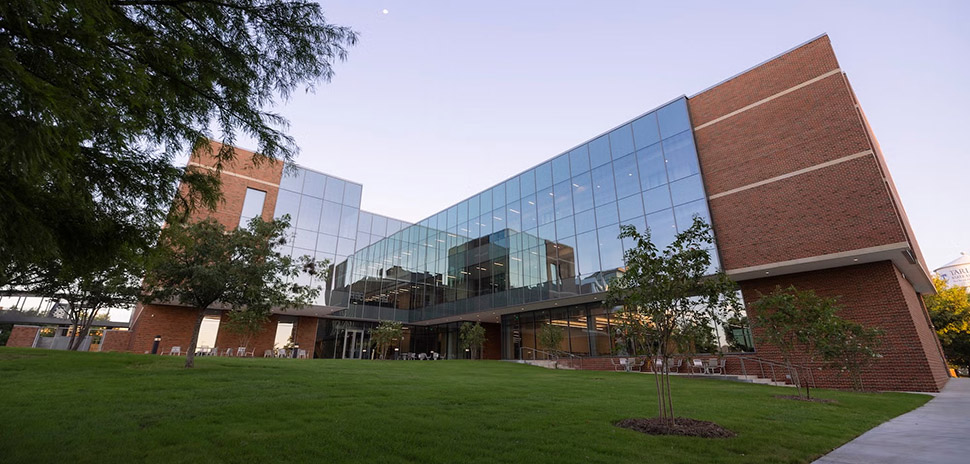
Tarleton State University has opened a new $80 million Health Professions Building in Stephenville to help meet Texas’ growing demand for healthcare workers in rural and underserved communities.
The 92,000-square-foot facility houses specialty teaching labs, research space, classrooms, a food and nutrition science lab, and a 100-seat lecture hall. Designed to support hands-on learning, it will serve academic programs in occupational therapy, physical therapy, and physician assistant studies.
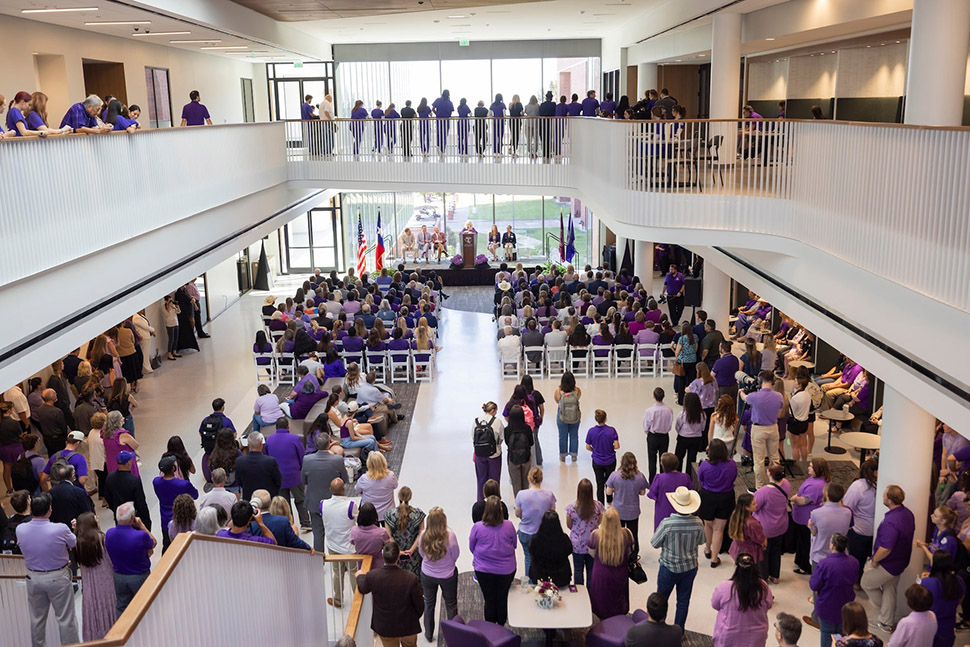
Tarleton held a grand opening on September 11. [Photo: Tarleton State University]
Tarleton President Dr. James Hurley called the facility a statement of the university’s long-term commitment to expanding healthcare access in rural Texas and beyond.
“This state-of-the-art Health Professions Building clearly showcases our commitment to transforming healthcare access for rural and underserved communities,” Hurley said in a statement. “The hands-on learning that will take place in this facility will prepare our graduates to improve community outcomes and spearhead innovative solutions.”
A centerpiece of the building is a flexible, divisible classroom space that can be partitioned into three rooms or opened to accommodate up to 160 students. A skybridge connects the new facility to Tarleton’s adjacent Nursing Building.
Tarleton is part of the Texas A&M University System and maintains campuses in Fort Worth, Waco, and Bryan. Earlier this year, it elevated its College of Health Sciences to a full Division of Health Sciences, incorporating the School of Nursing, School of Kinesiology, and School of Health and Clinical Professions—along with the proposed College of Osteopathic Medicine.
Improving rural healthcare
The university said the new facility is designed to prepare students for in-demand roles in health professions where workforce shortages persist—particularly in rural regions like Erath County, where Stephenville is located.
Texas A&M System Chancellor John Sharp said the investment is about more than facilities.
“Tarleton State’s new Health Professions Building is more than bricks and glass—it’s a promise to students and to rural Texas,” Sharp said in a statement. “This facility gives young men and women the tools to learn, serve, and lead in communities that need them most. When our students succeed here, families across this region will see the difference in better access to healthcare and stronger local economies.”
The need is clear, the university said. Nearly 50 million Americans live in rural areas, where access to physicians and specialists is often limited. In Stephenville, the patient-to-physician ratio is 1,779 to 1, according to the university.
State Rep. Shelby Slawson, whose District 59 includes Stephenville, said the facility represents more than a local milestone.
“This is a monumental day for Tarleton State on its path to being a leader in rural healthcare education,” Slawson said in a statement. “The addition of this impressive new facility will provide students with cutting-edge learning spaces and have a direct correlation to improving the lives of rural Texans. The regional impact that follows will be transformative.”
Expanding health sciences
Tarleton said the creation of the Division of Health Sciences was part of a broader strategy to expand and unify its academic health programs. The move brings several schools under a single umbrella: Nursing, Kinesiology, and Health and Clinical Professions, along with the university’s proposed College of Osteopathic Medicine.
Texas A&M System Board of Regents Chairman Robert Albritton said the Health Professions Building is a result of aligned priorities across the system.
“The members of the board of regents, the leaders of the system, and top officials at Tarleton State all recognize the importance of investing in rural healthcare education,” Albritton said in a statement. “This facility will help train the next generation of healthcare professionals who will go where they’re needed most. It’s a proud day for Tarleton State, for Stephenville, and for the entire Texas A&M System.”
Don’t miss what’s next. Subscribe to Dallas Innovates.
Track Dallas-Fort Worth’s business and innovation landscape with our curated news in your inbox Tuesday-Thursday.
R E A D N E X T
-

Combining cutting-edge research and real-world applications, the UT Dallas professor transforms public health with innovations in detection technology, including “a check engine light” for the human body. In collaboration with EnLiSense, the company she cofounded, Dr. Prasad combines chemistry with software and hardware to bring the technology to life as market-ready devices.
-
Take Command’s new COO will sharpen operations as the company builds on national momentum around Individual Coverage Health Reimbursement Arrangements (ICHRAs), with advancing legislation that could codify the model into federal law.
-

When a hotline failed her, 16-year-old Bhuvika Tripuraneni built her own answer. Meet the Frisco teen using AI to help Gen Z cope—and coding toward a future in bioinformatics.
-
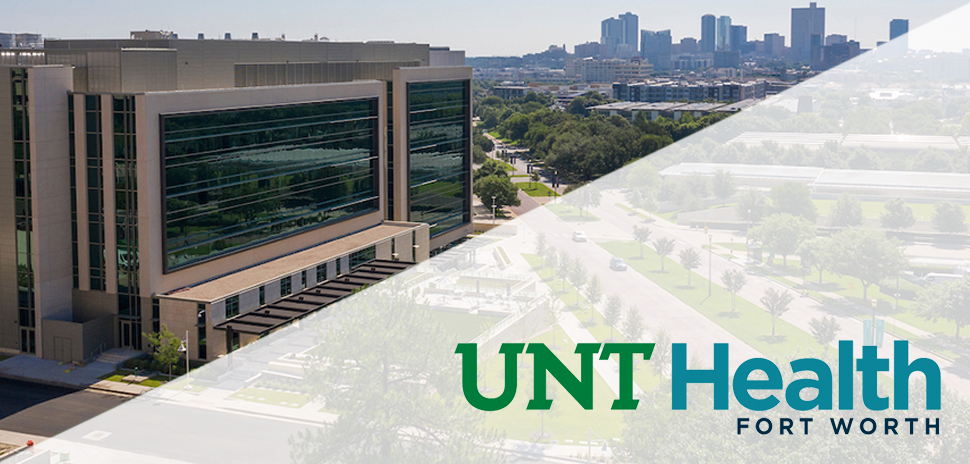
The academic medical center formerly known as UNTHSC is embracing a new identity that ties it more closely to the University of North Texas System—and to the community it serves. With nearly $100M in funded research and a tech-forward focus, UNT Health Fort Worth will continue to champion innovation in healthcare.
-

The Building Brains Coalition builds upon the growing recognition that brain health is integral to human potential and societal progress, HKS said. Founding partners include HKS, The Center for BrainHealth, Center for Advanced Design Research and Evaluation (CADRE), the Brain Capital Alliance, and Rice University’s Baker Institute Neuro-Policy Program.