Eric Olson, Ph.D., founding chair of molecular biology at UT Southwestern Medical Center in Dallas, has been awarded the 2025 Louisa Gross Horwitz Prize for his pioneering research into the genetic control of muscle development and disease, as well as his work to advance treatments for Duchenne muscular dystrophy (DMD), a fatal disorder that weakens skeletal and heart muscle.
Presented by Columbia University, the Horwitz Prize honors major contributions in biology or biochemistry. It’s one of the field’s most prestigious recognitions: UTSW said that nearly half of the scientists who received the Horwitz Prize over the past 58 years were subsequently awarded the Nobel Prize.
Olson’s discoveries of the molecules and mechanisms that guide muscle development and his efforts to develop a gene-editing therapy for Duchenne muscular dystrophy exemplify his dedication to the patients and families facing DMD,” Joan Conaway, vice provost and dean of basic research at UT Southwestern, said in a statement. She added that his work also reflects the institution’s “deep commitment to bench-to-bedside research.”
The award includes an honorarium and a Columbia University lecture series in New York.
A career spent pushing toward ‘a cure for this devastating disease’
Olson, who directs both the Hamon Center for Regenerative Science and Medicine and the Wellstone Muscular Dystrophy Cooperative Research Center at UTSW, is widely considered a leader in regenerative medicine. His research has helped unravel the biological underpinnings of Duchenne muscular dystrophy—a rare genetic disease that affects 1 in every 3,500 to 5,000 male births worldwide. In rare cases, females can develop DMD.
DMD is caused by mutations in the dystrophin gene, which is essential for the stability of muscle fibers and the heart, UTSW said. Without intervention, it leads to the loss of mobility in adolescence and can progress rapidly, causing early death from heart and lung failure.
“It is an honor to join the esteemed colleagues who have won this award in the past,” Olson said. “We continue to make progress toward the biggest prize of all—a cure for this devastating disease.”
According to UTSW, Olson’s lab has identified key transcription factors—proteins that regulate gene activity—that drive the development of cardiac and skeletal muscle. Among its discoveries: MEF2 and myocardin, which control muscle tissue formation, and myomaker and myomixer, rare membrane proteins that enable muscle progenitor cells to fuse into functioning muscle fibers.
Over the past decade, Olson has focused on using CRISPR gene editing to target muscle diseases including DMD. That approach is now moving toward human clinical trials, UT Southwestern said.
Recognizing a trio of trailblazers
Olson shares the 2025 Horwitz Prize with two other scientists who’ve made major contributions to the understanding of DMD.
Louis Kunkel, professor of genetics and pediatrics at Harvard University and director of the Genomics Program at Boston Children’s Hospital, is being honored for discovering the dystrophin gene—mutations of which cause the disease.
Kevin Campbell, a professor at the University of Iowa and a Howard Hughes Medical Institute Investigator, is being recognized for showing how dystrophin proteins form structural scaffolds with glycoproteins inside cells. Disruption of those complexes, Campbell found, leads to muscle fiber instability.
Part of a legacy of science and discovery
The Louisa Gross Horwitz Prize was established by the late S. Gross Horwitz and honors his mother, the daughter of Samuel David Gross, a prominent 19th century surgeon. Since 1967, 118 researchers have won the award.
UTSW said that Olson is the fifth UT Southwestern faculty member to be awarded the Horwitz Prize, joining Zhijian “James” Chen, professor of molecular biology (2023), and three Nobel Laureates: the late Alfred Gilman, former chair of Pharmacology (1989); Michael S. Brown, professor of Molecular Genetics (1984); and Joseph L. Goldstein, chair and professor of Molecular Genetics (1984).
Olson, a member of the National Academy of Sciences, the National Academy of Medicine, and the American Academy of Arts and Sciences, has received numerous honors over his career, including the Fondation Lefoulon-Delalande Grand Prize for Science (2009), the Passano Award (2012), and the Edwin G. Conklin Medal in Developmental Biology (2019).
He holds several distinguished positions at UT Southwestern, including the Robert A. Welch Distinguished Chair, the Annie and Willie Nelson Professorship in Stem Cell Research, and the Pogue Distinguished Chair in Research on Cardiac Birth Defects.
Don’t miss what’s next. Subscribe to Dallas Innovates.
Track Dallas-Fort Worth’s business and innovation landscape with our curated news in your inbox Tuesday-Thursday.
R E A D N E X T
-
University of Texas at Arlington reported its projects contributed $59 million to the national economy last year, an increase of 39% from 2023, according to a new report from the Institute for Research on Innovation and Science (IRIS).
-
UTA and UT Southwestern researchers have built BIT, a new computational framework that helps scientists identify the proteins that switch genes on and off in cancer and other diseases. The work could pave the way to more targeted treatments and boost gene research accuracy.
-
Funding 25 projects across 17 institutions, the Dallas-founded nonprofit is prioritizing metastatic disease, precision medicine, and closing care gaps.
-
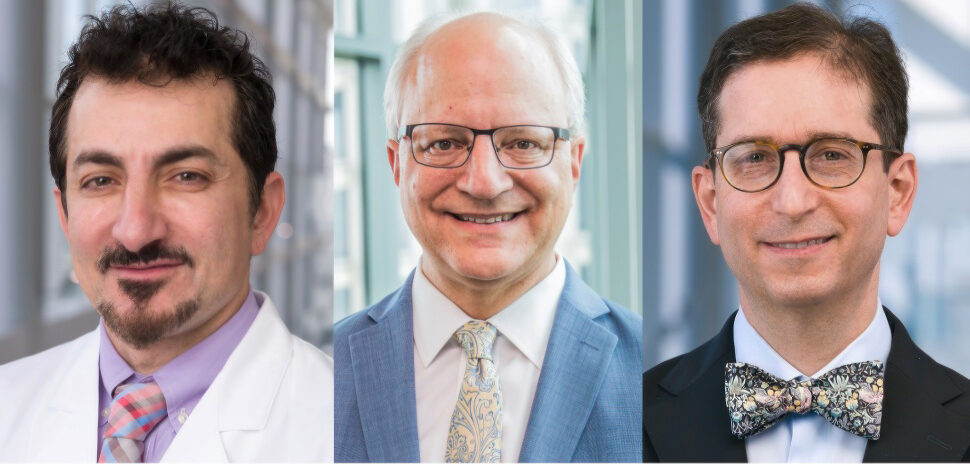
The new federal Alzheimer's hub joins an elite network of 37 centers nationwide. Scientists from UT Southwestern, UT Arlington, and UT Dallas will decode dementia by exploring hypertension's role, analyzing voice patterns with AI, and creating virtual patient models.
-
![Organoids without blood vessels can't grow larger than sesame seeds—about 3 millimeters—before dying from lack of oxygen and nutrients. UNT and Stanford researchers say they've solved this problem. Seeds pictured above are not to scale. [Image: Pinchai Puntong/istockphoto]](https://s24806.pcdn.co/wp-content/uploads/2025/08/Sesame-Seed-organoid-science-iStock-1487667097-970x464.jpg)
Scientists at at the University of North Texas and Stanford Medicine have created tiny artificial organs called organoids with fully formed blood vessel networks. The stem cell-based breakthrough could transform drug testing and disease research while reducing the need for animal models—and expand possibilities for regenerative medicine.