MORE►
Intellectual Property
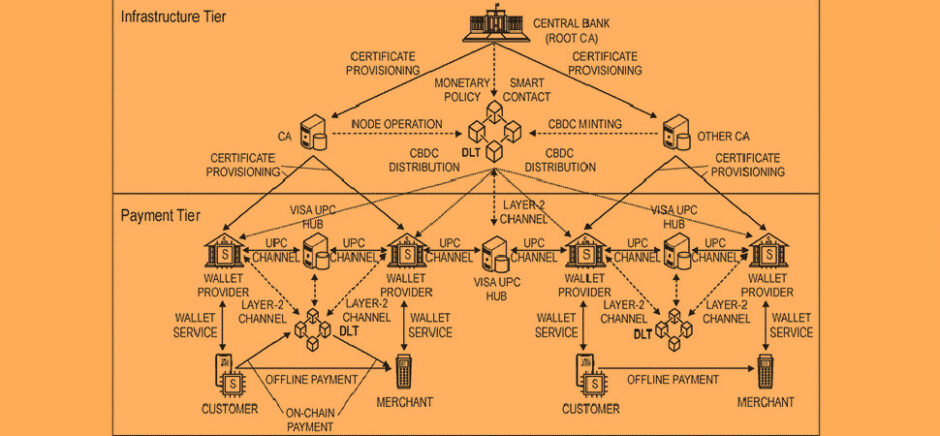
Visa's newly granted patent describes a way for two devices to complete a payment without an internet connection, using cryptography to verify each transaction. According to the patent, a device determines whether a payment "amount is less than an offline amount stored in the secure element," updates that stored balance, and returns a cryptographically signed "interaction response message" to the other device. Dallas-based Mustafa Ozdayi is among 12 inventors named on the patent. [Composite image: Sources, U.S. Patent No. 12,647,284-B2, Fig. 7; DI Studio]
Patented: Visa’s Offline Cryptographic Payments and More North Texas Inventive Activity
by Dallas Innovates | Staff Report | Jun 24, 2026
Dallas-Fort Worth ranked No. 10 for patent activity out of 250 metros for the week of June 2 with a total of 129 patents granted.

by Dallas Innovates | Staff Report |
Jun 10, 2026
Dallas-Fort Worth ranked No. 11 for patent activity out of 250 metros for the week of May 19 with a total of 129 patents granted.
MORE►
by Dallas Innovates | Staff Report |
Jun 3, 2026
Dallas-Fort Worth ranked No. 9 for patent activity out of 250 metros for the week of May 12 with a total of 134 patents granted.
MORE►
by Sandra Engelland |
Jun 2, 2026
Quintin Cassady, a former general counsel at Galderma Laboratories, will lead the Dallas law firm's Fort Worth office. He has more than 30 years of experience advising global pharmaceutical, biotechnology, medical device, and consumer product companies on complex litigation, mergers and acquisitions, intellectual property strategy, compliance, and corporate growth initiatives, the firm said.
MORE►

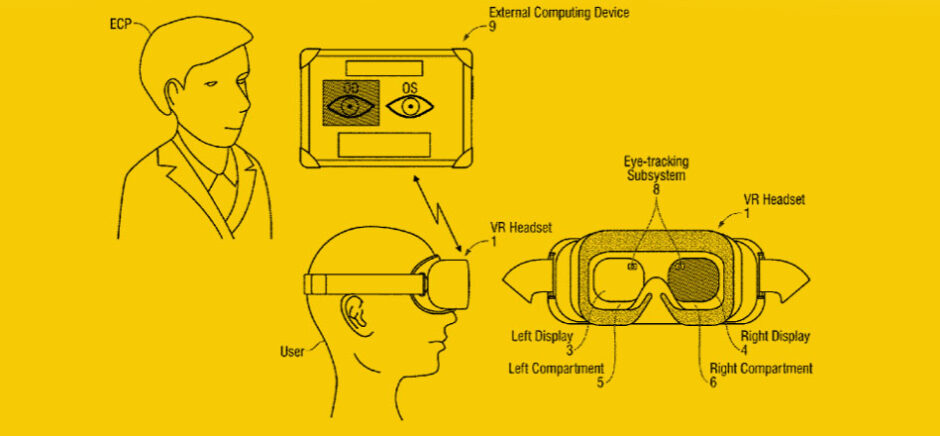
Dallas-based Verily Health Inc.'s newly granted patent describes a virtual-reality headset designed to automate the pupil-response exam an eye care professional typically performs by hand with a penlight, using an infrared eye-tracking subsystem and light-sealed compartments over each eye to measure how the pupils react to controlled light stimuli. According to the patent, the manual version of the test produces results that "vary by practitioner," and Verily's system is designed to improve the "sensitivity, consistency, and ease" of conducting it, as well as to flag asymmetric pupil sizes — anisocoria — alongside afferent pupil defects. Fig. 1 shows the system in use: a user wears the headset while a clinician runs the test from a tablet. [Composite image: Sources, U.S. Patent No. 12611100, Fig. 1; DI Studio]
Patented: Verily’s VR Headset Eye Tests and More North Texas Inventive Activity
by Dallas Innovates | Staff Report | May 20, 2026
Dallas-Fort Worth ranked No. 9 for patent activity out of 250 metros for the week of April 28 with a total of 127 patents granted.
MORE►
by Dallas Innovates | Staff Report |
May 13, 2026
Dallas-Fort Worth ranked No. 9 for patent activity out of 250 metros for the week of April 14 with a total of 109 patents granted.
MORE►
by Dallas Innovates | Staff Report |
Apr 29, 2026
Dallas-Fort Worth ranked No. 10 for patent activity out of 250 metros for the week of March 31 with a total of 110 patents granted.
MORE►

by Dallas Innovates | Staff Report |
Apr 15, 2026
Shorter patent application wait times translate to company value, according to USPTO Director John Squires.
MORE►
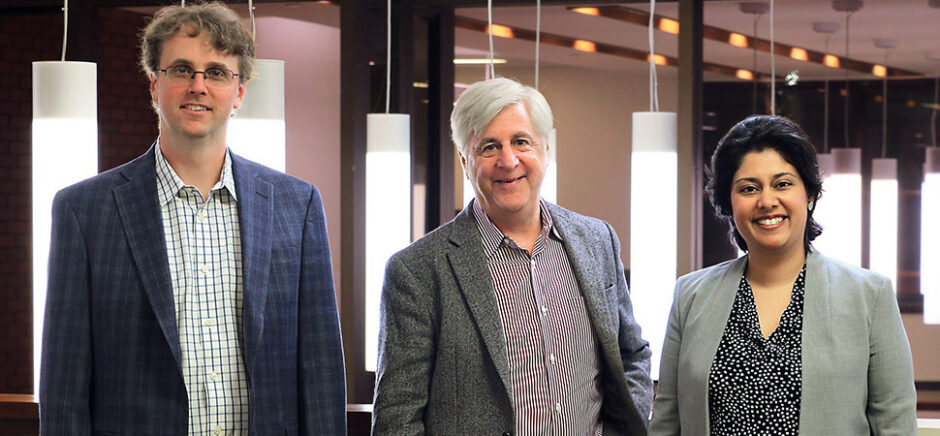
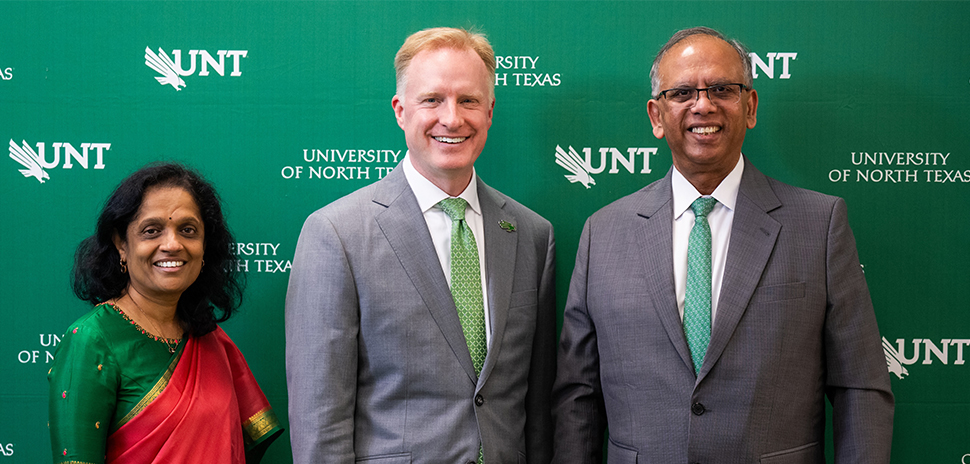
Charles Herder (left) and Tina Srivastava (right), co-founders of California-based privacy company Badge Inc., are named on U.S. Patent No. 12,574,371 for a system that authenticates users by splitting biometric data into “shards” stored across multiple servers, so no single location holds the complete identifier. Both founders have innovation ties to Dallas. Pictured with them is Dan Kaufman (center), a cybersecurity veteran known as “DARPA Dan,” who joined Badge in 2024 as SVP of AI and cybersecurity. The company, which emerged from stealth in 2024, was named to TIME’s Best Inventions of the Year and Fast Company’s Innovation Team of the Year in 2025. [Photo: Badge Inc.]
Patented: Badge Inc.’s Privacy-Preserving Biometric Authentication, Plus More North Texas Inventive Activity
by Dallas Innovates | Staff Report | Apr 8, 2026
Dallas-Fort Worth ranked No. 8 for patent activity out of 250 metros for the week of March 10 with a total of 155 patents granted.
MORE►
by Dallas Innovates | Staff Report |
Apr 1, 2026
Dallas-Fort Worth ranked No. 10 for patent activity out of 250 metros for the week of March 3 with a total of 102 patents granted.
MORE►
by Dallas Innovates | Staff Report |
Mar 4, 2026
Dallas-Fort Worth ranked No. 10 for patent activity out of 250 metros for the week of Feb. 3 with a total of 103 patents granted.
MORE►

by Dallas Innovates | Staff Report |
Feb 11, 2026
Dallas-Fort Worth ranked No. 8 for patent activity out of 250 metros for the week of Jan. 13 with a total of 142 patents granted.
MORE►


The Board of Regents of the University of Texas System, Stanford University, and the U.S. Department of Veterans Affairs have received a newly granted patent for a method that uses machine learning to help identify which people with depression are likely to respond to antidepressant treatment. The patent lists Dallas-based Madhukar Trivedi among its inventors and is assigned to the three institutions. [Composite illustration: Sources, USPTO Patent #12490933; DI Studio]
Patented: Treatment of Depression Using Machine Learning and More North Texas Inventive Activity
by Dallas Innovates | Staff Report | Jan 14, 2026
Dallas-Fort Worth ranked No. 11 for patent activity out of 250 metros for the week of Dec. 9 with a total of 100 patents granted.
MORE►
by Dallas Innovates | Staff Report |
Jan 7, 2026
Dallas-Fort Worth ranked No. 9 for patent activity out of 250 metros for the week of Dec. 2, 2025, with a total of 134 patents granted.
MORE►
by Dallas Innovates | Staff Report |
Dec 31, 2025
Dallas-Fort Worth ranked No. 10 for patent activity out of 250 metros for the week of Nov. 25 with a total of 135 patents granted.
MORE►
by Dallas Innovates | Staff Report |
Dec 24, 2025
Dallas-Fort Worth ranked No. 8 for patent activity out of 250 metros for the week of Nov. 18 with a total of 159 patents granted.
MORE►