A root canal may take an hour, but waiting for a permanent crown often takes weeks.
Now, technology from a University of Texas at Dallas team could reduce the wait to just hours by replacing the multi-visit process typically required for zirconia restorations, a material the university calls the “gold standard” for permanent dental work. While some same-day crowns are available today, they’re typically made from ceramic resins, not all-ceramic zirconia.
In an announcement on Wednesday, UT Dallas said researchers have cracked a major manufacturing bottleneck that’s kept permanent, 3D-printed dental crowns out of dental offices.
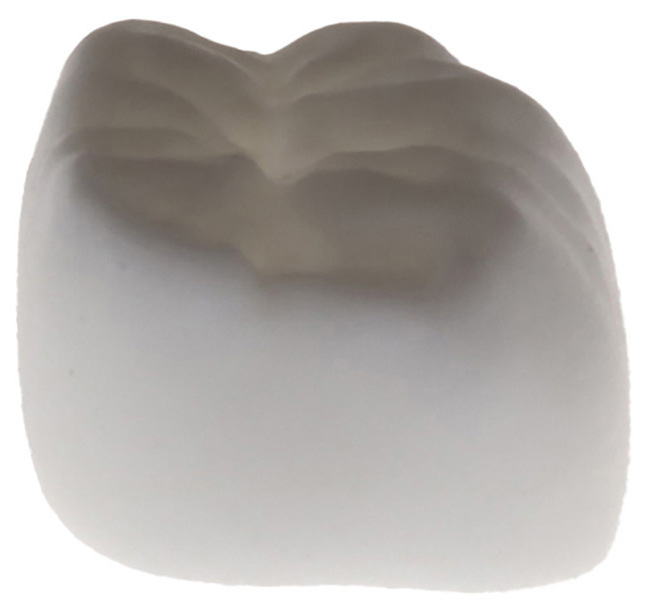
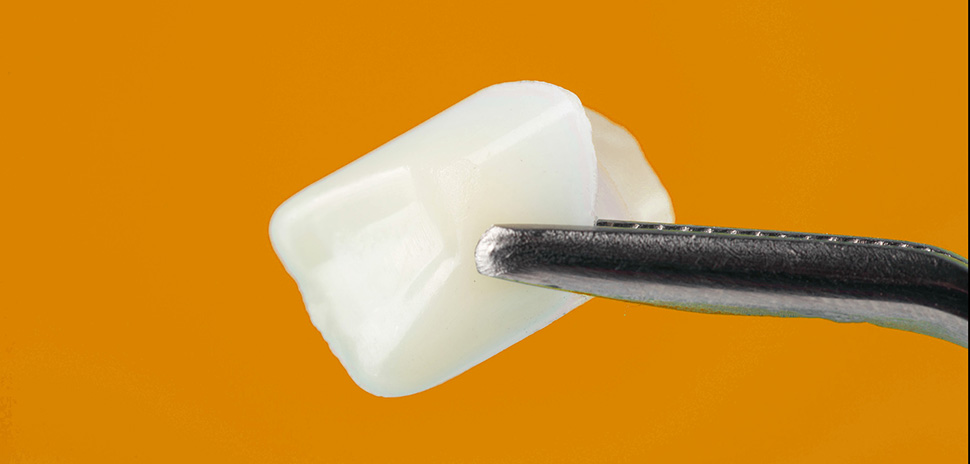
A finished dental crown produced using a 3-D printing method developed by UT Dallas researchers. [Photo: UTD]
Developed with partners at Pan-AM Dental Laboratory and Arlington prosthodontist Amirali Zandinejad, the breakthrough could apply to a wide range of restorations, including crowns, bridges, and veneers. The technology still requires clinical validation and regulatory approval before commercial use, the university said.
“We are excited to be advancing the commercialization of chair-side 3D-printed, all-ceramic zirconia permanent dental restorations,” said Majid Minary, professor of mechanical engineering in the Erik Jonsson School of Engineering and Computer Science at UT Dallas, in a statement.
Minary said the same-day, custom-printed approach offers “greater personalization, faster treatment, and the convenience of receiving a permanent restoration in a single visit.”
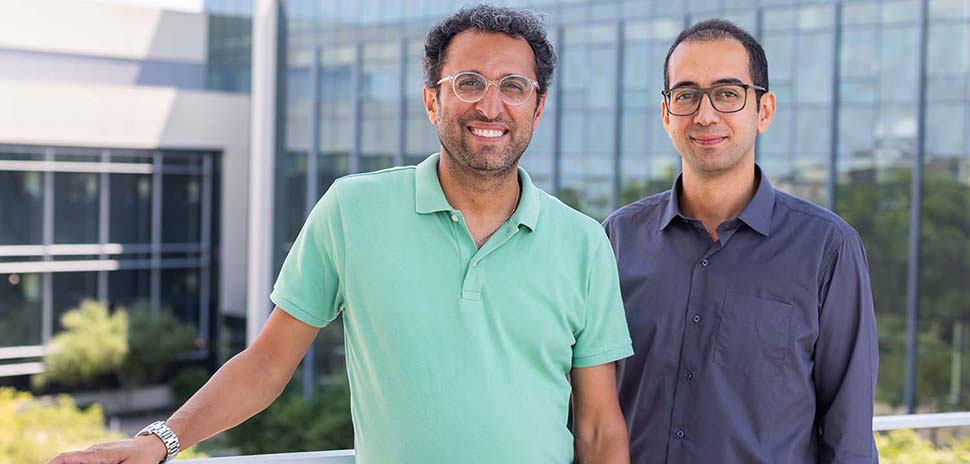
Dr. Majid Minary (left) and mechanical engineering doctoral student Mahdi Mosadegh [Photo: UTD]
NSF grant backs commercialization
To help bring it to market, UT Dallas and its collaborators recently received a $550,000 grant from the National Science Foundation through its Partnerships for Innovation–Technology Translation program.
The commercialization effort also involves Grand Ledge, Michigan-based 3DCeram Sinto Inc., according to UT Dallas. The U.S. Air Force Office of Scientific Research also supported the research.
Why zirconia matters
Zirconia is a cermic material widely used in permanent dental work for its strength, durability, and biocompatibility, UT Dallas said. But until now, patients who wanted zirconia crowns had to wait—because the material couldn’t be used in same-day procedures.
Traditional zirconia crowns are milled from solid blocks in off-site labs in a process that typically requires multiple visits.
Milled zirconia also comes with trade-offs: limitations in design complexity and risks of micro-cracking during fabrication, according to UT Dallas. The university says 3D printing offers a better path forward, with improved customization, color-matching, and a faster, more efficient process that could reduce both cost and material waste.
The manufacturing bottleneck—cut to 30 minutes
Printing the crown is just the start, and a complex process on its own. But the real challenge came in what followed: a time-intensive thermal phase that hardens the material into a durable, permanent restoration.
The process involves “debinding,” which removes the plastic binder, followed by “sintering,” which hardens the material at extremely high temperatures. But traditional debinding takes anywhere from 20 to 100 hours—too long for same-day dentistry.
“Debinding has been the bottleneck in the process,” Minary explained. “It must be done very slowly. If you speed it up, the polymer being burned off turns into gas, and if that gas cannot escape, the crown may crack or fracture.”
Minary’s team cut the debinding time to under 30 minutes with a new method they developed. The team’s research appears in the September issue of Ceramics International, a peer-reviewed materials science journal.
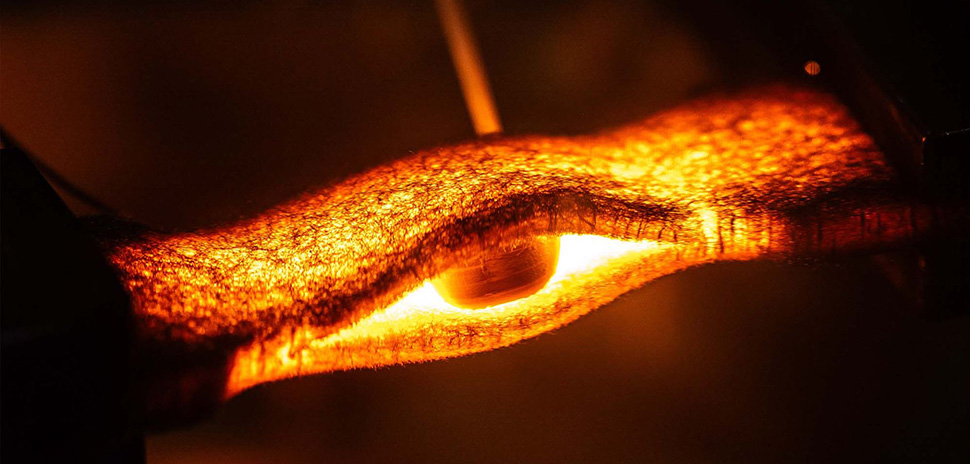
A dental crown is produced in a method developed by University of Texas at Dallas researchers. The approach combines enhanced heat transfer with the use of porous graphite felt, which can reach temperatures above 2,550 degrees Fahrenheit. [Photo: UTD]
The team includes mechanical engineering doctoral student Mahdi Mosadegh, who served as first author on the paper; Moein Khakzad; chemistry doctoral student Zahra Sepasi; mechanical engineering graduate student Kalyan Nandigama; and Golden Kumar, associate professor of mechanical engineering.
The team uses porous graphite felt—a heat-conductive material—to speed up debinding while allowing gas to escape, minimizing the risk of cracks, UT Dallas says.
“The combination of all of these features is what makes it work,” Minary said in the announcement. “With our technology, if a practitioner wants to offer a 3D-printed zirconia crown chair-side, they could provide it to a patient within just a few hours.”
Don’t miss what’s next. Subscribe to Dallas Innovates.
Track Dallas-Fort Worth’s business and innovation landscape with our curated news in your inbox Tuesday-Thursday.
R E A D N E X T
-

North Texas has plenty to see, hear, and watch. Here are our editors' picks. Plus, you'll find more selections to "save the date."
-

The southern half of Dallas County is home to just over 1.05 million residents. That’s about 40% of the total number of people who call Dallas County home—and roughly 200,000 more than the entire population of San Francisco. Coupled with the fact that Dallas-Fort Worth is emerging as a top life science market, as documented in a 2023 CBRE report, you can see why the DeSoto Development Corp. is including an 80-acre Life Sciences Innovation Core among its major projects. “In terms of economic development, research shows that it’s more effective when it happens regionally,” says Matt Carlson, DDC's chief…
-
 North Texas Innovation Is Boundary‑Breaking. Nominations for the Awards That Prove It Close Sept. 12
D CEO and Dallas Innovates have expanded The Innovation Awards 2026 with more individual and company categories this year. Now is your chance to be part of the region’s defining recognition for innovators.
-
University of Texas at Arlington reported its projects contributed $59 million to the national economy last year, an increase of 39% from 2023, according to a new report from the Institute for Research on Innovation and Science (IRIS).
-
Backed by the Department of Defense and $200 million in private capital, the new facility helps companies prototype and scale battery technologies for both commercial use and national defense. The launch comes at a time when supply chain independence is a growing priority. Government and industry leaders recently got a first look.