Irving-based Frontier Infrastructure Holdings has partnered with the University of Wyoming’s School of Energy Resources to complete drilling operations for a second deep characterization well at the Sweetwater Carbon Storage Hub in Wyoming, reaching a total vertical depth of 18,437 feet. That makes it the deepest Class VI carbon storage well ever drilled in the United States, the company said.
Frontier, a leading developer of low-carbon infrastructure across the Mountain West and Texas, is a portfolio company of Dallas-based Tailwater Capital. It said the successful drilling is a key step in advancing commercial-scale carbon sequestration in Wyoming.
“Successfully drilling and testing a second well on this project has confirmed our preliminary interpretation of the reservoir and is a major step forward to validate the region’s storage potential,” Frontier President and co-CEO Robby Rockey said in a statement. “This deeper well gives us a more complete picture of the subsurface, reinforcing our commitment to building scalable, practical carbon solutions for Wyoming’s key industries.”
Aiming to enable permanent carbon storage underground
Frontier said that preliminary data from the well is highly encouraging, showing geologic similarities to a proven acid gas injection site just over 25 miles north. It said the results further validate the potential of the SCS Hub as a large-scale, permanent carbon storage facility.
The SCS Hub is part of the U.S. Department of Energy’s CarbonSAFE Initiative and is co-led by SER and Frontier.
Frontier said the project seeks to establish a commercial-scale carbon capture, utilization, and storage hub in Sweetwater County, capable of delivering long-term, secure CO₂ storage for industrial emitters across the region.
The J1-15 well initially was drilled to access the Nugget Sandstone formation, yielding 147 feet of core, Frontier said.
After successfully drilling the project’s first well (SCS-1), the team then extended J1-15 to reach the Madison Limestone, another high-priority formation. According to Frontier, that dual-target strategy is central to understanding the full storage capacity of the hub.
‘Developing world-class carbon infrastructure’
The company said that geological evaluation is being led by SER’s Center for Economic Geology Research (CEGR). The team has collected core samples, well logs, and water from the site, which will undergo detailed analysis to assess reservoir characteristics and seal integrity, Frontier said.
“Securing Class VI permits and executing a drilling program to this depth required meticulous planning and coordination with multiple regulatory bodies,” Alicia Summers, Frontier’s chief development officer, said in a statement. “The geological data we’re seeing reinforces why we selected this location and validates our technical approach to developing world-class carbon storage infrastructure.”
The technical results support this strategic approach, Frontier said.
“The decision to deepen the well to the Madison Limestone has proven successful,” Zunsheng “John” Jiao, program manager at CEGR and co-principal investigator of the project, said in a statement. “The logging data confirms a continuous zone of strong porosity and flow—indicators of excellent storage potential.”
Frontier said its project team is particularly optimistic about the Madison Limestone, a formation also utilized in North America’s largest CCUS operation located 25 miles to the North of the SCS Hub.
“We’ve seen what the Madison can deliver through Shute Creek,” Rockey said. “Now we’re applying those learnings here, with results that are very promising.”
Pioneering industrial decarbonization
Along with fieldwork, the SCS Hub continues to progress toward key regulatory and engineering milestones, Frontier said. The next phase will focus on detailed modeling, permitting, and preparation for eventual injection operations.
“I’m proud of our team and partners for reaching this critical point,” CEGR Director Fred McLaughlin said in a statement. “The data collected from this well is essential to confirming the feasibility of the SCS Hub and advancing Wyoming’s position in the emerging carbon economy.”
Frontier Infrastructure Holdings specializes in integrated power generation and carbon capture and storage projects and is at the forefront of industrial decarbonization, providing scalable, permanent carbon storage and behind-the-meter power solutions to support growing regional energy demand.
Tailwater Capital, an energy infrastructure private equity firm, has raised more than $5 billion in committed capital since inception and the team has executed more than 285 transactions representing over $27 billion in value.
Don’t miss what’s next. Subscribe to Dallas Innovates.
Track Dallas-Fort Worth’s business and innovation landscape with our curated news in your inbox Tuesday-Thursday.
R E A D N E X T
-
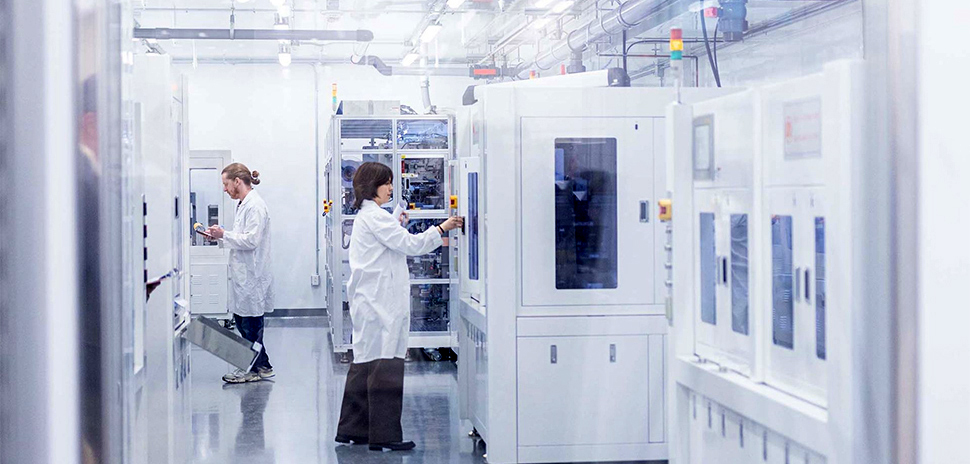
Backed by the Department of Defense and $200 million in private capital, the new facility helps companies prototype and scale battery technologies for both commercial use and national defense. The launch comes at a time when supply chain independence is a growing priority. Government and industry leaders recently got a first look.
-
DirectH2 said the funding will accelerate the development and commercialization of its cutting-edge hydrogen solutions in collaboration with Houston-based Rice University—addressing critical challenges in the clean energy sector.
-
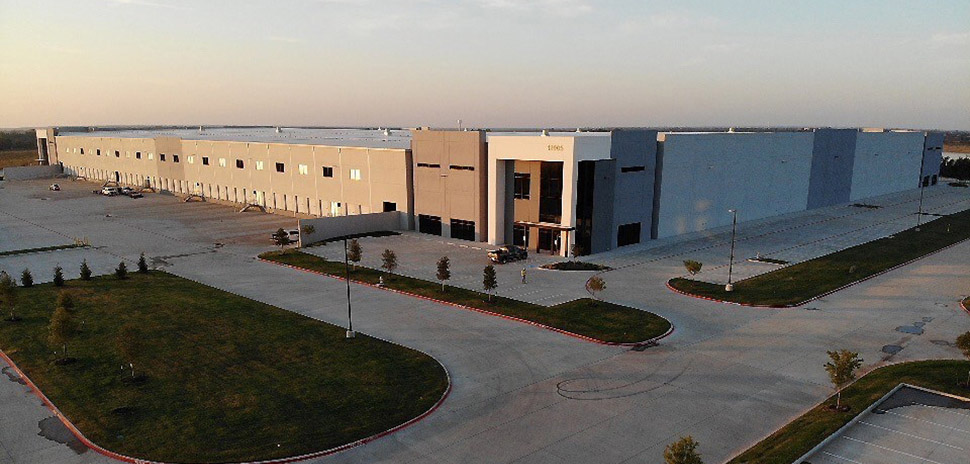
The new plant in Mesquite—the first in North America for Xiamen, China-based Hithium—is slated to begin mass production in late 2025, with an annual capacity of 10GWh for battery modules and systems. The facility will create "nearly 200 high-quality jobs," Hithium said, and will serve as "a cornerstone of domestic energy storage production."
-

Caban's battery storage and energy management technologies have been deployed in 12 countries worldwide, enabling businesses to enhance their energy resilience while meeting ambitious sustainability goals.
-
Dallas-based Cresta Fund Management said its second investment in Lapis reflects its continued conviction in the company's leadership and strategy to develop bespoke carbon capture solutions for high-intensity emission sources.