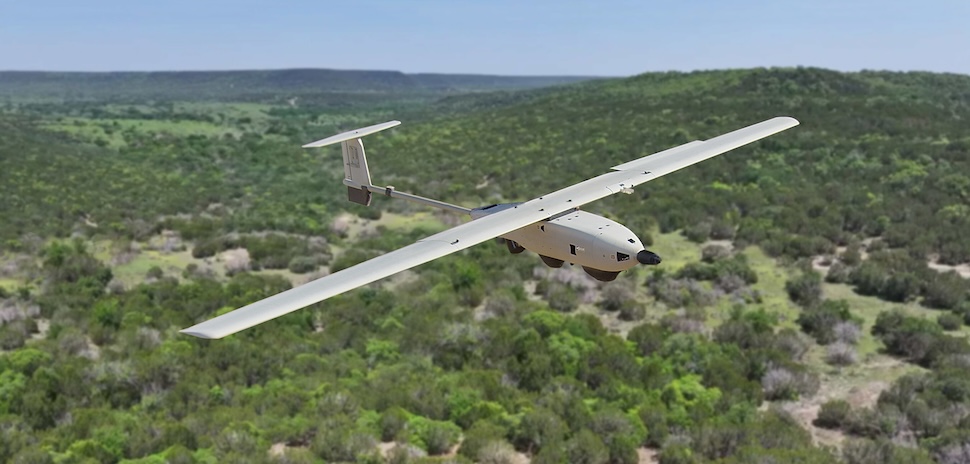
Fort Worth-based Lockheed Martin Aeronautics has announced a successful live demonstration of “AI-driven mission contingency management” on a Stalker XE Block 25 unmanned aerial vehicle and an Alta X 2.0 drone modified by Drone Amplified. The test demonstrates “how AI can automatically adjust an unmanned mission when an unexpected problem occurs, advancing the shift towards more autonomous unmanned operations,” the company said.
The test by Lockheed Martin Skunk Works simulated multiple variations of fuel contingencies for the two drones in flight. “Within seconds,” the company said, the ground command-and-control system’s AI analyzed the situation, generating re-plan options and displaying them to the operator.
Once the operator selected a preferred option, the AI automatically reassigned the Stalker’s mission tasks to the Alta X and commanded the Stalker to return to base, the company said, adding that by letting the AI agent handle the unexpected contingency, the operator was able to resolve the problem quickly “while staying focused on other critical mission duties.”
Adding to the test’s difficulty, the Stalker UAV contributed its mission data to a unified C2 node that also managed an unmanned ground vehicle (UGV) in Kansas, with support from UAVs provided by Fulcrum, proving unmanned‑air‑and‑ground control.
Together, the systems showed how a single mobile command node can mutually support and direct multiple geographically separated drone meshes “in mounted, dismounted, and below-the-noise configurations,” Lockheed Martin said.
‘From the lab to the battlefield’

OJ Sanchez, VP and general manager of Lockheed Martin Skunk Works [Photo: OJ Sanchez/LinkedIn]
“This demonstration proves AI can move from the lab to the battlefield, delivering a multitude of capabilities ranging from autonomous decision-making to rapid data flow between unmanned vehicles across air, ground and synthetic environments,” OJ Sanchez, the DFW-based VP and general manager of Lockheed Martin Skunk Works, said in a statement.
“By fusing AI‑enabled UAV replanning with UGV capabilities, we give warfighters the safety, speed and confidence they need to act first in contested environments,” he added.
The Skunk Works team conducting the test also leveraged Lockheed Martin’s STAR.SDK solution, which helps developers create and deploy AI services “quickly and efficiently” so they can focus on the mission at hand. the company said. STAR.SDK, part of Lockheed’s broader STAR.OS platform, was used to connect the contingency application to a user interface, enabling operators to interact with a chat assistant that provided re-tasking options.
The company said its STAR.OS solution enables different AI systems to work together seamlessly—including unmanned systems in the air and on the ground.
Lockheed Martin said the demonstration reflects its ongoing commitment “to deliver autonomous capabilities and open architecture that expands multi‑domain integration and empowers America’s warfighters and allies.”
Don’t miss what’s next. Subscribe to Dallas Innovates.
Track Dallas-Fort Worth’s business and innovation landscape with our curated news in your inbox Tuesday-Thursday.
R E A D N E X T
-

Ready to channel your inner Oliver, Charles, and Mabel from Hulu's "Only Murders in the Building"? You'll get the chance starting Feb. 8 when Nashville-based The Escape Game debuts its escape room experience in North Texas.
-
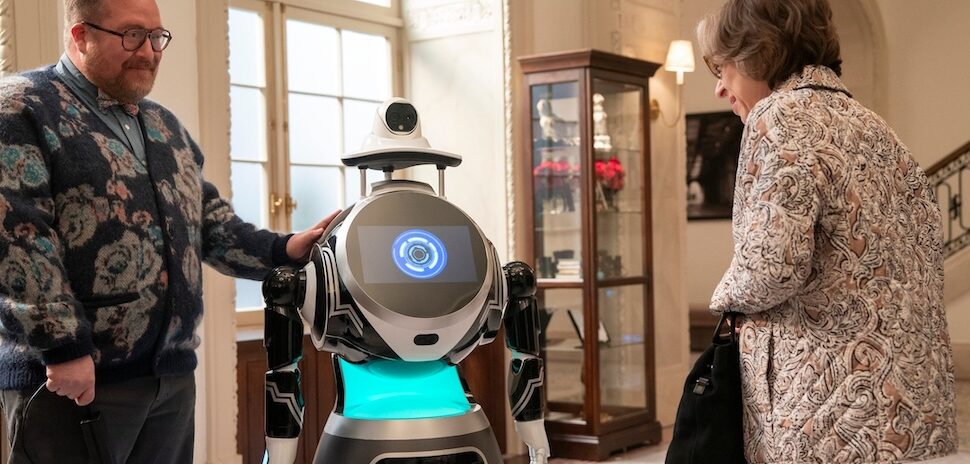
If you worry that robots may be coming to replace us, you may have thought at least actors were safe. Think again. The newest cast member on "Only Murders in the Building" is a cloud-based, intelligent humanoid robot that can man a doorman's desk like nobody's business.
-

Editor’s update: Sky Elements Drones, which was set to perform in Dallas on Dec. 31, has “informed Reunion Tower that they will not be able to fly their New Year’s Eve show," Reunion Tower President Dusti Groskreutz said in a statement on Thursday, Dec. 26. “They are doing this out of an abundance of caution following a recent incident as they carefully review their processes for future shows,” he added. The decision follows a Dec. 21 event in Orlando, Florida, where some of the North Texas company's drones collided mid-air and fell during a light show. Earlier this week, Sky…
-
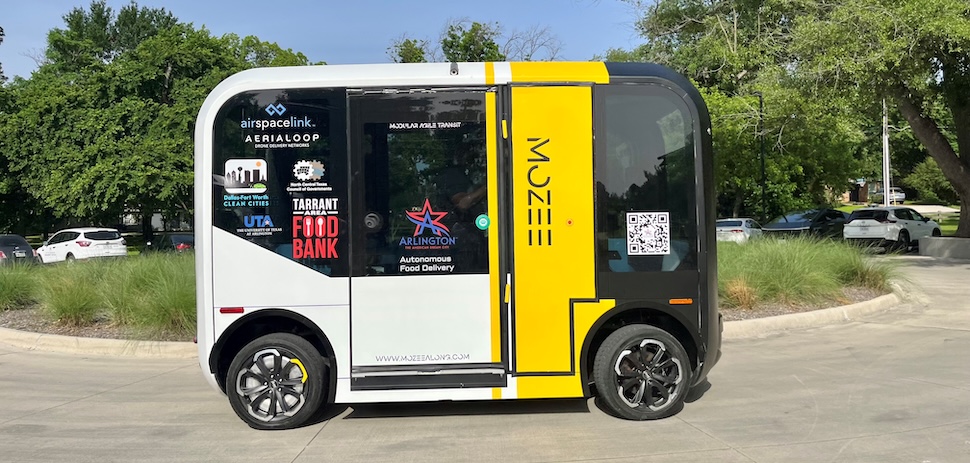
Autonomous ground vehicles from Arlington-based Mozee and delivery drones from Miami's Aerialoop are fanning out across Arlington this week, delivering around 150 boxes of nonperishable food from the Tarrant Area Food Bank to participating Arlington households.
-

Sarah Martin has more than 25 years of global leadership in manufacturing and technology, with her last 13 years spent at Honeywell International.