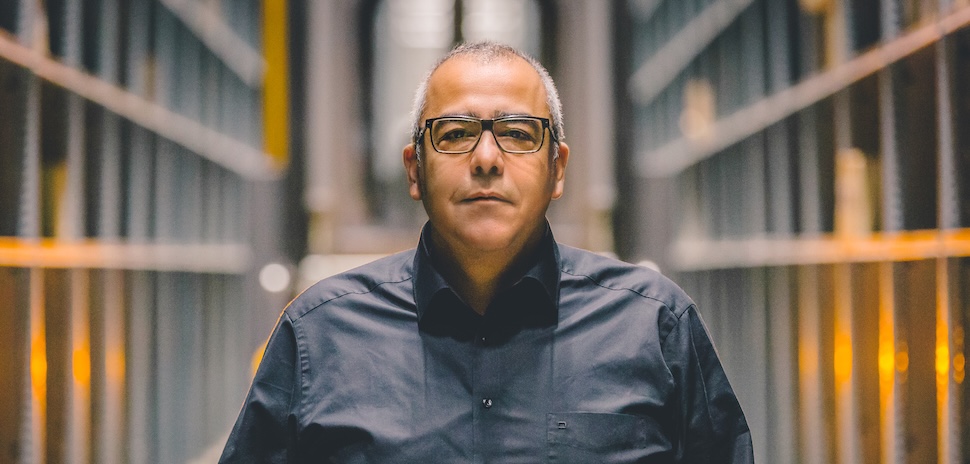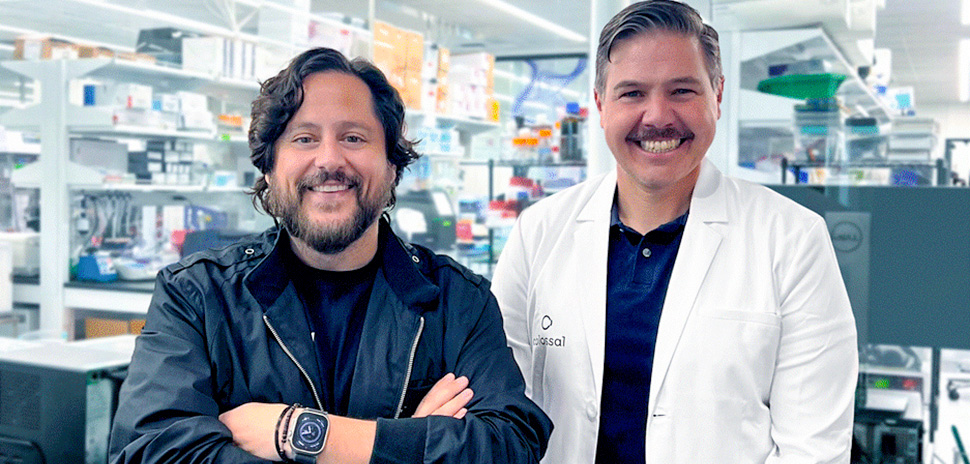
Renowned Australian de-extinction scientist Andrew Pask has been appointed chief biology officer of Dallas-based Colossal Biosciences.
Pask is known for his expertise in de-extinction science, developmental genetics, and conservation technologies. He leads the Thylacine Integrated Genomic Restoration Research Lab (TIGGR) at the University of Melbourne in Australia.
“Andrew has been a foundational voice in the science of de-extinction,” Dallas-based Ben Lamm, co-founder and CEO of Colossal, said in a statement. “His deep scientific insight, bold vision, and passion for conservation are embedded in Colossal’s DNA. We’re thrilled to welcome him to this role. This is a strategic time for Colossal as we broaden our activities and collaborations in Oceania. Australia’s incredible biodiversity offers unique opportunities for innovation in de-extinction and biological research. Having a presence there will help Colossal achieve our goals of de-extincting the thylacine and working to restore and protect endangered species on the continent.”
‘The forefront of de-extinction research’
Historically, Colossal has funded a portion of the TIGGR lab, but under a new partnership with the University of Melbourne, the TIGGR lab will become part of Colossal Australia and will expand to focus fully on Colossal initiatives aimed at leveraging the region’s unique biodiversity.
Colossal said that in his new role, Pask will oversee Colossal Australia, global embryology, and all exogenous development systems, and report to Colossal Chief Science Officer Beth Shapiro.
Pask, who has been an adviser to Colossal since early 2022, now will be full-time at Colossal and focused on its core mission while overseeing the global developmental biology strategies for all de-extinction projects, the company said. All Colossal-affiliated research activities at the University of Melbourne, including the thylacine de-extinction project, the Northern quoll cane toad resistance project, native frog and bird conservation projects, and artificial womb development, will be consolidated into Colossal Australia, marking a formal global expansion and solidifying the partnership between Colossal and the University of Melbourne—the most prestigious university in Australia, Colossal said.
“This is an extraordinary opportunity to help shape the future of de-extinction and species preservation science,” Pask said. “Colossal is bringing together the brightest minds, the boldest ideas, and the most powerful tools in biotechnology. I’m thrilled to help lead this team at the forefront of de-extinction research, not just to bring back lost species, but to apply those technologies in real-time to save those still with us.”
Expert in Australian fauna
Colossal said that Pask’s work has redefined how scientists understand and protect Australia’s unique and endangered fauna.
Pask has received international acclaim for his contributions to marsupial biology, including understanding their evolution and adaptation, and is one of the pioneers of de-extinction technologies. With more than two decades of experience in developmental biology, Colossal said that Pask is at the forefront of advancements in marsupial assisted reproductive technology, stem cell biology, and advanced embryology techniques.
Colossal said that Pask’s scientific excellence, leadership, and high-impact research has earned him consecutive highly competitive fellowships and awards throughout his career.
In Australia, Pask received prestigious National Health and Medical Research Council Fellowships, the Australian Research Council Future Fellowship, and the University of Melbourne’s flagship R@MAP Fellowship. Pask also is an Emerging Researcher Award recipient in the U.S., a Fellow of the Society for Reproductive Biology, and winner of the University of Melbourne’s top two research awards.
“Andrew’s pioneering work in marsupial biology has already been accelerating our thylacine de-extinction program” Shapiro said. “He brings an unmatched understanding of the biological systems that we’re working to restore, as well as the creativity necessary to drive real-world impact while solving some of the hardest problems in biology today.”
Cutting-edge conservation science
Colossal said that Pask’s appointment comes at a pivotal moment in its growth, as the company expands its de-extinction and conservation pipelines across continents, ecosystems, and species.
“Andrew’s innovative and rigorous approach to developmental biology has transformed the scientific landscape around marsupials and inspired new possibilities for synthetic biology,” Prof. George Church, co-founder of Colossal, said in a statement. “His leadership and experiences are paramount for Colossal’s de-extinction pipeline and developmental biology needs.”
Colossal Australia will focus on research initiatives targeting native Australian species, with a mission to bring back extinct animals including the thylacine and to help restore ecological balance. Australia is the ideal host country for this extension of Colossal Biosciences, as it is both an epicenter of biodiversity loss with the highest rate of mammal extinctions in the world and a leader in applying cutting-edge conservation science with a goal to end species and population extinction as the effects of climate change and urbanization increasingly threaten native species.
Don’t miss what’s next. Subscribe to Dallas Innovates.
Track Dallas-Fort Worth’s business and innovation landscape with our curated news in your inbox Tuesday-Thursday.
R E A D N E X T
-
![The South Island giant moa towered over New Zealand's forests for millions of years before becoming extinct within a century of Polynesian settlement around 1400 CE. Colossal Biosciences plans to resurrect the 500-pound birds using ancient DNA extracted from cave deposits and artificial egg technology. [Source image: Colossal Biosciences]](https://s24806.pcdn.co/wp-content/uploads/2025/07/Colossal-Moa.jpg)
The Dallas decacorn is scaling its de-extinction pipeline with indigenous leadership, a New Zealand subsidiary, and economic models for species preservation, including ecotourism opportunities. Filmmaker Sir Peter Jackson helped connect the collaborators, Colossal CEO Ben Lamm says.
-
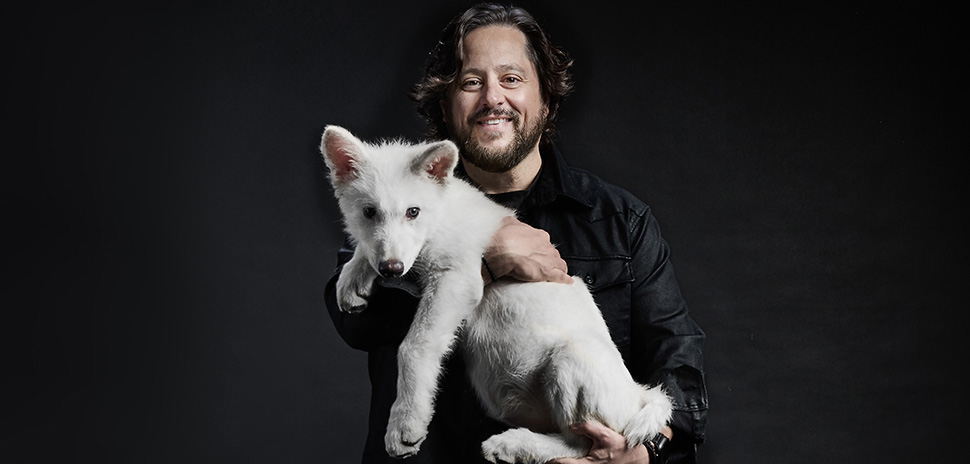
In one of his first deep interviews since Colossal's dire wolf debut made global noise, Ben Lamm joins the TechStuff podcast to talk mammoths, backlash, and why he's not here to play it safe.
-

Fort Worth-based marketing agency The Starr Conspiracy has officially rebranded as TSC, signaling a new era with fresh leadership. CEO Ashley Bernard is steering the agency toward innovation, AI investment, and cutting-edge marketing strategies, with the rebrand unveiled at the 2024 HR Technology Conference & Exposition.
-

“Game of Thrones” made them famous, but the prehistoric dire wolves were real—and, according to Colossal Biosciences, have now returned after 12,500 years in what it calls the world’s first successful de-extinction. The work goes beyond headlines: It could change how we save endangered species. Meet Romulus, Remus, and Khaleesi in a video—and hear dire wolf howls for the first time in more than 12 millennia.
-
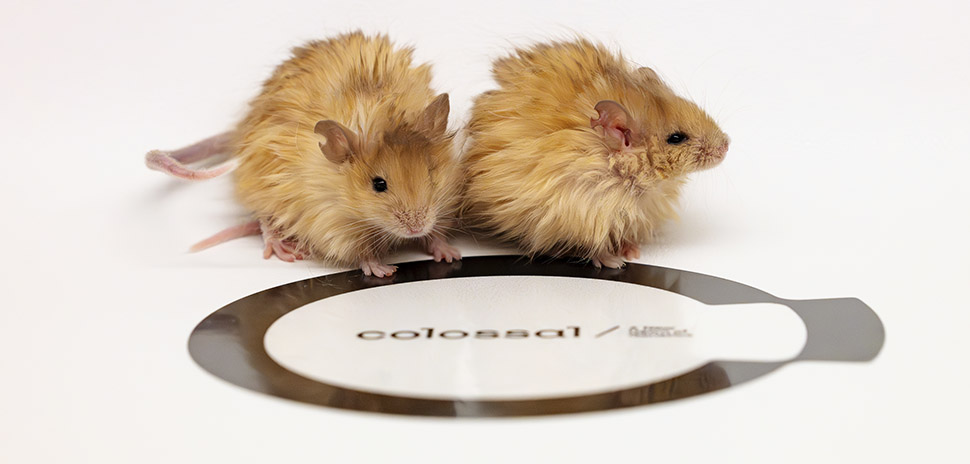
Before Colossal Biosciences can "de-extinct" the woolly mammoth, some small steps are in order. They've now been taken by the Colossal Woolly Mouse—a gene-edited creation with "dramatically altered coat color, texture, and thickness reminiscent of the woolly mammoth’s core phenotypes."