MORE►
Discovery
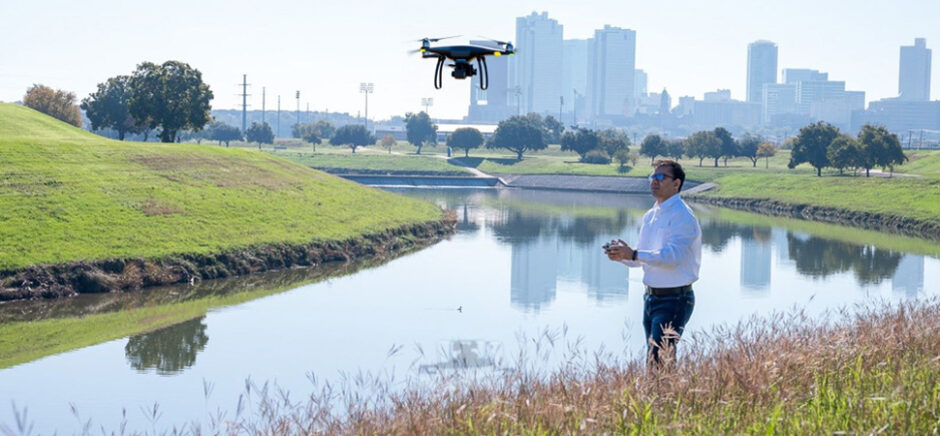
“Too often after major flood disasters, the public conversation stops at sirens and dashboards,” says Adnan Rajib. The UT Arlington researcher is tracking floodplain changes that guide recovery and build resilience in a new study. [Photo: UTA]
University’s H2I Lab Pushes for Standardized Floodplain Tracking After Texas Mapping Work
by Lance Murray | Nov 24, 2025
Civil engineering assistant professor Adnan Rajib, whose lab created what UT Arlington calls the first global estimate of floodplain loss in 2023 and later built real-time maps of July’s deadly Hill Country floods, leads new research proposing fixes for inconsistent floodplain tracking.

by Lance Murray |
Oct 21, 2025
The system's open-source framework integrates more than 50 specialized AI models to autonomously analyze, plan, and restore images, "mirroring the decision-making process of a professional editor."
MORE►
by Quincy Preston |
Oct 16, 2025
Permanent crowns custom printed in all-ceramic zirconia could soon be a chair-side reality for dental patients, thanks to University of Texas at Dallas researchers. Backed by a $550,000 National Science Foundation grant, the team is working to commercialize the technology.
MORE►

by Quincy Preston |
Oct 15, 2025
Researchers at UTSW identified a set of neurons in the "brain's timekeeper" that may drive nighttime snacking—and in mice, control up to 7% of body weight. The discovery could pave the way for new weight-loss strategies.
MORE►

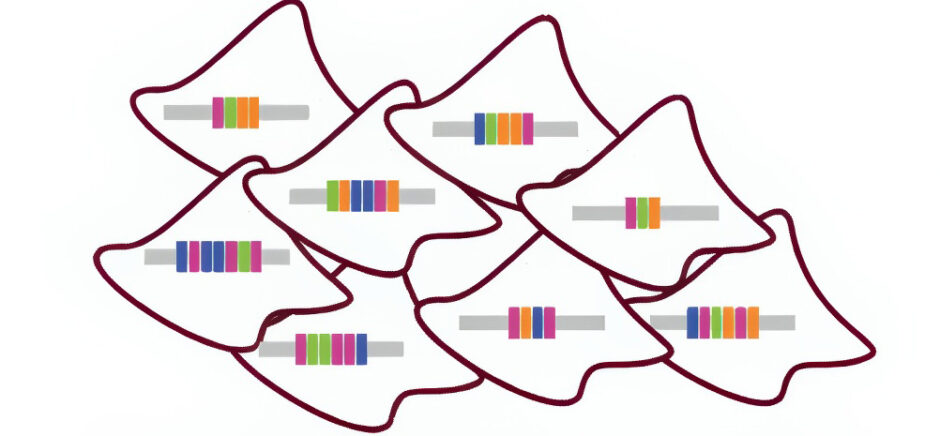
Researchers at UT Dallas used an enzyme called TdT to create unique genetic "fingerprints" inside living cells—a breakthrough in biosecurity that could help biotech companies verify cell identity and prevent counterfeiting. The technique, published in Advanced Science, increases randomness in DNA repair to generate one-of-a-kind markers. This cropped image shows a key step—Pol X’s role in the process. [Source: Figure 1, TdT (1D) PUF/Advanced Science]
UT Dallas Researchers ‘Barcode’ Engineered Cells with Patent-Pending Tech to Protect Biotech IP
by Maddie Preston | Sep 27, 2025
The UTD team’s approach adapts a chip-security technique to biology. The breakthrough gives biotech companies a new way to prevent costly misidentification and protect intellectual property.
MORE►
by Maddie Preston |
Sep 26, 2025
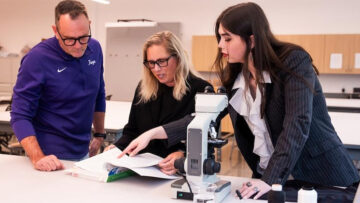
In a published study, Adelaide Lovett traced how synthetic fibers shed microplastics that can end up in human organs. She also co-designed astronaut gear to guard against lunar dust—a project that earned a NASA innovation award.
MORE►
by Lance Murray |
Sep 26, 2025
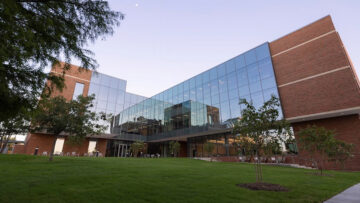
In Stephenville—about 70 miles southwest of Fort Worth—the new facility adds labs, research space, and clinical classrooms as part of a broader push to expand rural healthcare education across Texas.
MORE►
by Lance Murray |
Sep 18, 2025
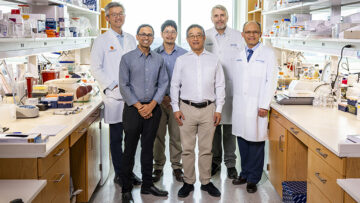
UT Southwestern in Dallas will lead three liver cancer projects on prevention, recurrence, and immunotherapy. It joins Mayo Clinic and MD Anderson as a national NCI SPORE site, a program that moves discoveries into clinical trials.
MORE►

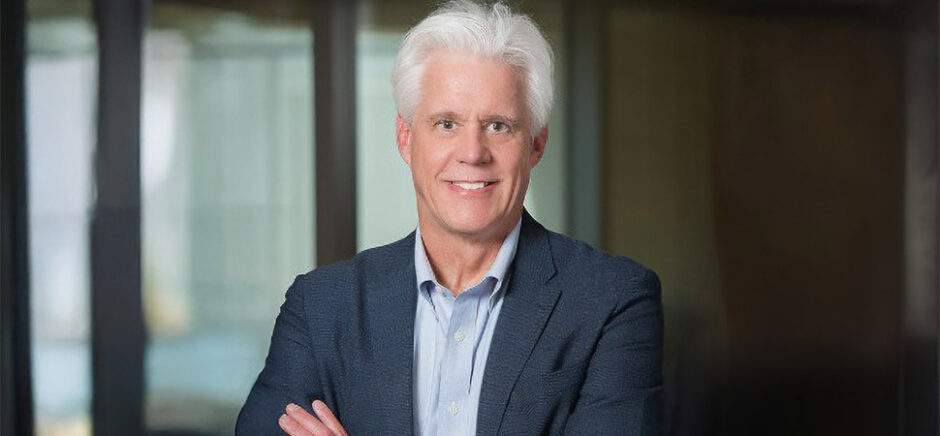
Eric Olson, Ph.D. [Photo: UTSW]
UTSW Molecular Biologist Wins Prestigious Columbia Prize for Work on Duchenne Muscular Dystrophy
by Lance Murray | Sep 9, 2025
Eric Olson has spent decades dedicated to what he calls “the biggest prize of all”: a cure for the devastating disease. Nearly half of the scientists awarded Columbia’s Horwitz Prize over the past 58 years went on to win a Nobel, UTSW said.
MORE►
by Quincy Preston |
Sep 3, 2025
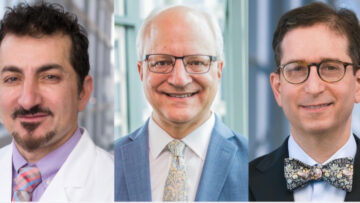
The new federal Alzheimer's hub joins an elite network of 37 centers nationwide. Scientists from UT Southwestern, UT Arlington, and UT Dallas will decode dementia by exploring hypertension's role, analyzing voice patterns with AI, and creating virtual patient models.
MORE►
by Lance Murray |
Aug 29, 2025
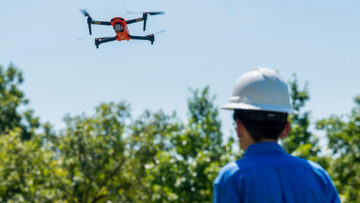
UTA’s Dianqi Han has developed a remote system that uses millimeter-wave radar to spot signs of hardware trouble—like damaged propellers—without modifying the drone itself.
MORE►

by Lance Murray |
Aug 27, 2025
TruWeather Solutions said the initiative deployed across Hillwood's AllianceTexas will support the safe and reliable growth of next-gen transportation technologies, ranging from drone delivery to autonomous trucking and electric vertical takeoff and landing (eVTOL) aircraft.
MORE►
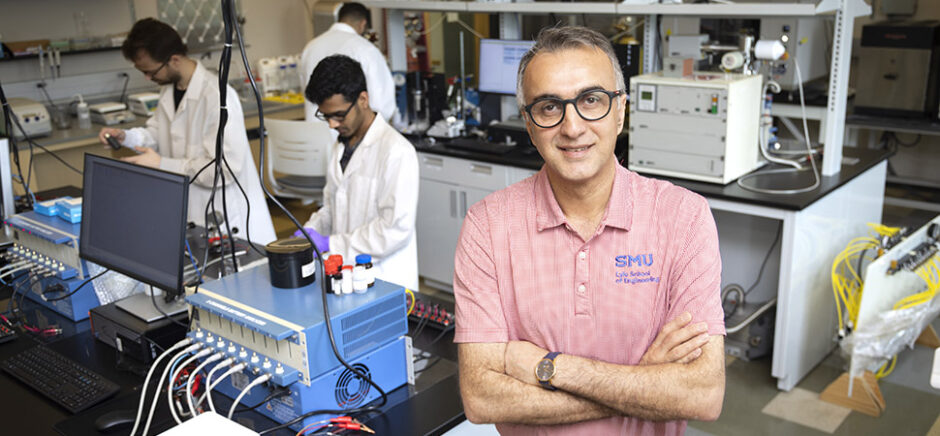
Amin Salehi-Khojin, the inaugural William T. Solomon Chair of Mechanical Engineering at SMU, led a team of researchers who created the material. [Photo: SMU]
SMU-Led Team Develops Nanomaterial to Withstand 1,000°C Heat—But 3D Print at Room Temperature
by Lance Murray | Aug 24, 2025
The breakthrough could impact industries from aerospace to energy. “This new method can revolutionize the material science field,” says lead researcher Amin Salehi-Khojin.
MORE►
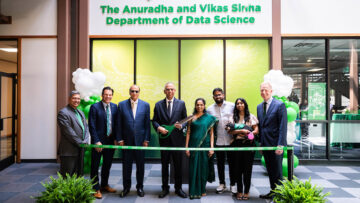
by Lance Murray |
Aug 23, 2025
Broadcom executive Vikas Sinha and his wife, Anuradha, have invested more than $5 million in UNT’s data science program, aiming to fuel opportunity in a field “at the heart of the job market.”
MORE►
![Organoids without blood vessels can't grow larger than sesame seeds—about 3 millimeters—before dying from lack of oxygen and nutrients. UNT and Stanford researchers say they've solved this problem. Seeds pictured above are not to scale. [Image: Pinchai Puntong/istockphoto]](https://s24806.pcdn.co/wp-content/uploads/2025/08/Sesame-Seed-organoid-science-iStock-1487667097-360x203.jpg)
by Maddie Preston |
Aug 21, 2025
Scientists at at the University of North Texas and Stanford Medicine have created tiny artificial organs called organoids with fully formed blood vessel networks. The stem cell-based breakthrough could transform drug testing and disease research while reducing the need for animal models—and expand possibilities for regenerative medicine.
MORE►
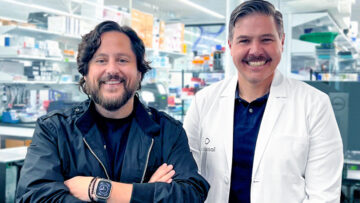
by Lance Murray |
Aug 20, 2025
Andrew Pask is known for his expertise in de-extinction science, developmental genetics, and conservation technologies. He leads the Thylacine Integrated Genomic Restoration Research Lab (TIGGR) at the University of Melbourne in Australia.
MORE►