Two more carriers are putting driverless heavy-duty trucks on the busy Interstate 35 shipping route from Dallas to Laredo.
Pittsburgh-based Aurora Innovation has signed agreements with Buckeye, Arizona-based Value Truck and Brampton, Ontario-based Charger Logistics to deploy its second-generation driverless truck. The two companies plan to use the Aurora Driver to move freight more efficiently, bolstering their operations in the Southwest. In addition to Dallas-Laredo, Value Truck will also use the technology between Fort Worth and Phoenix.
Aurora says Laredo is the busiest land port in the Western Hemisphere, handling roughly 40% of all freight moving between the U.S. and Mexico. Nearshoring efforts across supply chains are driving volume even higher.
“Freight volume on routes like Dallas-Laredo is growing faster than available capacity, and that gap is exactly what the Aurora Driver is built to close,” said Zac Andreoni, vice president of business development at Aurora, in a statement.
North Texas becomes a hub for driverless trucks

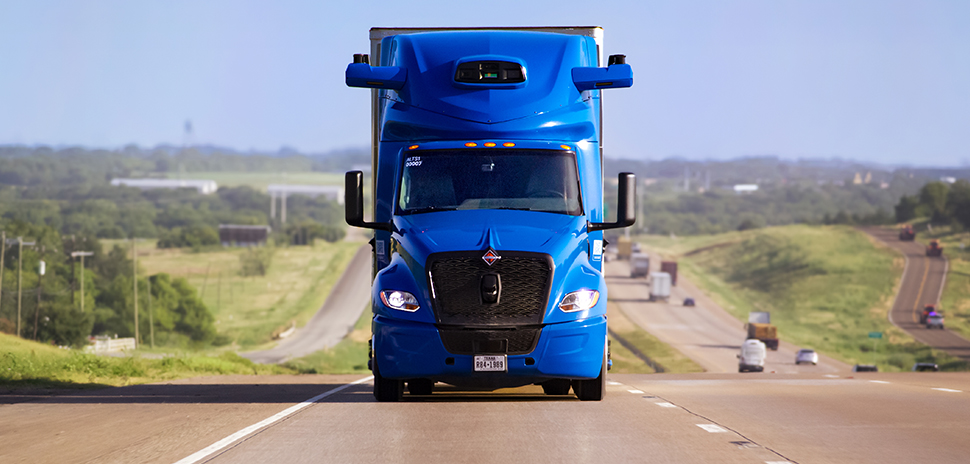
Pittsburgh-based Aurora Innovation launched its commercial driverless trucking service in 2025. [Photo: Aurora Innovation]
Aurora officially launched its first commercial-ready terminal for autonomous trucks in Palmer in April 2023. At the time, its trucking service pulled freight between Dallas and Houston for pilot customers including FedEx, Schneider and Uber Freight.
The company started its first driverless Class 8 commercial trucking delivery between Dallas and Houston in April 2025. CEO Chris Urmson sat in the back of the driverless cab for the first trip. (At present, all of its trucks have a human in the backseat of the cab, but the company is working toward trucks that operate without any human presence.) Aurora says it is on track to end the year with 200 driverless trucks in operation.
Aurora added nighttime runs between the two cities in July 2025 and has continued to grow its regional operations. Its second route, between Fort Worth and El Paso, opened in October 2025. It has since added routes between El Paso and Phoenix, Fort Worth and Phoenix, and Dallas and Laredo.
The two new deals
Driverless trucks can cut transit times significantly compared to operations that depend on human drivers with mandatory rest breaks.
Charger Logistics said in a statement that it plans to use Aurora’s technology to improve service and add capacity for customers moving temperature-controlled, pharmaceutical and other “mission-critical” freight, along one of its busiest U.S. freight corridors.
“Autonomous trucking represents a transformational opportunity for the freight industry,” Charger Logistics President Andy Khera said.
Value Truck CEO Joe Skoog described its Phoenix to Fort Worth and Laredo to Dallas routes as “the starting point, not the finish line. Together, we intend to build one of the most advanced transportation networks across North America.”
Aurora’s growth
Earlier this month, Aurora launched its second-generation Aurora Driver, which combines its software with a new truck platform. During its second-quarter earnings call July 29, Urmson said the new technology is a big step forward.
“This milestone officially moves Aurora into the start of our commercial scaling phase,” he said. The Aurora Driver has a solid safety record, he added, and the new hardware should improve driver reaction time and reduce costs.
Scaling is still expensive. The company reported second-quarter revenue of $2 million and a net loss of $270 million. It used roughly $225 million in operating cash during the quarter. It ended June with nearly $1.2 billion in cash and short-term investments.
In its earnings release, the company reaffirmed its full-year revenue outlook of $14 million to $16 million. CFO David Maday said the company expects to use $190 million to $220 million in cash per quarter through 2026.
Urmson said Aurora’s work with San Antonio-based Detmar Logistics shows the versatility of its technology, as it deployed driverless operations without a person behind the wheel between Detmar’s facility in Midland and Capital Sand mining in Monahans along Interstate 20.
“We expect to be expanding into the Sun Belt through the year-end,” Urmson said, adding that the company hasn’t been specific about the number of routes.
He said the company has started supervised testing of way station navigation and on-route fueling, two of the steps that will eventually enable “seamless” nationwide driverless trucking. It’s also piloting third-party fueling at truck stops, where truck stop staff fuel a truck as the Aurora Driver navigates in and out of the fuel area.
Aurora says Volvo plans to begin driverless operations on its autonomous trucks in the first quarter of 2027. In addition to a memorandum of understanding from Iowa-based Hirschbach for 500 trucks, Aurora is in discussions with other customers for its “driver as a service” model for 2027 and beyond.
Urmson declined to name the new prospective customers, but said Aurora is confident that as its technology becomes more widely used and recognized, it will continue to add new customers.
“This technology is so impactful, transformational, improving safety, improving fuel economy, improving utilization, for customers, that if you’re not using our stuff in the next five years, you just won’t be competitive in long-haul [trucking],” he said. “We’re excited for that.”
Don’t miss what’s next. Subscribe to Dallas Innovates.
Track Dallas-Fort Worth’s business and innovation landscape with our curated news in your inbox Tuesday-Thursday.
R E A D N E X T
-
Hillwood’s 27,000-acre AllianceTexas development has long served as a proving ground for what’s next in logistics. Now, through decades of public-private partnership, the creation of a Smart Port, and the integration of forward-thinking policy, AllianceTexas is helping define the future of freight by positioning North Texas to lead in the algorithmic age of supply chain infrastructure.
-

You'll find deadlines coming up for a new accelerator program; and many more opportunities.
-
PCCI has spent more than a decade designing, developing, implementing, and "rigorously monitoring" AI in the complex clinical environment of Dallas' Parkland Health. Now it's partnering with North Carolina-based Vega Health to make five of PCCI’s clinically validated AI models available to health systems nationwide.
-

Built by venture studio Nexrage Studios, the free app turns Dallas-Fort Worth into a Pokémon Go-style hunt, sending fans to local restaurants, shops, and attractions to collect virtual rewards. The region-wide experience is a collaboration with the North Texas FIFA World Cup Organizing Committee, says SeekAR advisor Dan Sinawat.
-

CFT said the new funding will help improve student outcomes by reducing absenteeism, connecting under resourced youth to opportunities and support, and improving access to high-quality education and workforce pathways.
-

Joining a peer cohort with members from 23 countries around the world, the University of North Texas said it will focus on "reimagining the future of the public research university" by concentrating on academic restructuring and integrating interdisciplinary experiential learning throughout the curriculum.
-
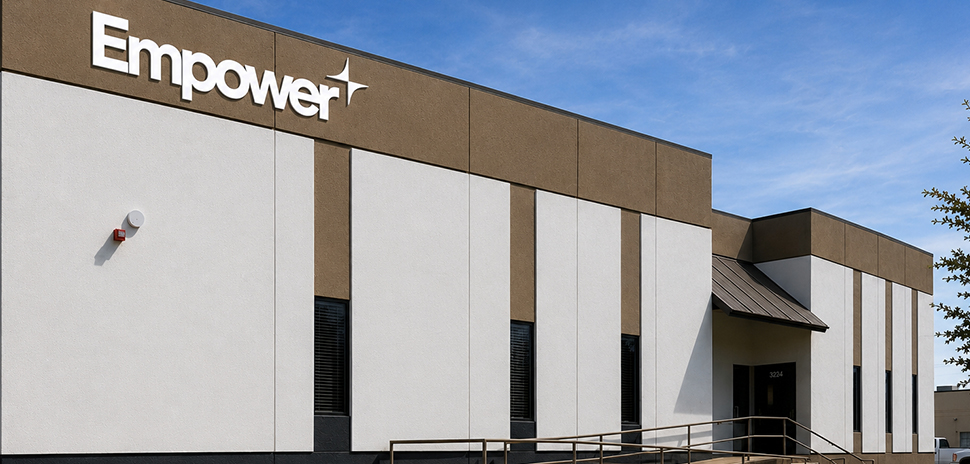
Addison-based Empower EIT relocated to North Texas in May. It uses proprietary technology to turn brine into battery-grade lithium carbonate and aims to commercialize the process by 2027.
-

With leadership backgrounds in food service distribution, grocery chains, hospitality and community service, the new board members bring insights and passion at ‘a time of both great need and opportunity.’
-

Principal Mineral co-founder and CEO Adam Johnson said that the acquisition "strengthens the manufacturing capabilities that underpin advanced electronics, helping reduce supply-chain vulnerabilities while ensuring customers have reliable access to the materials needed for aerospace, communications and satellites, AI infrastructure, and energy applications."
-
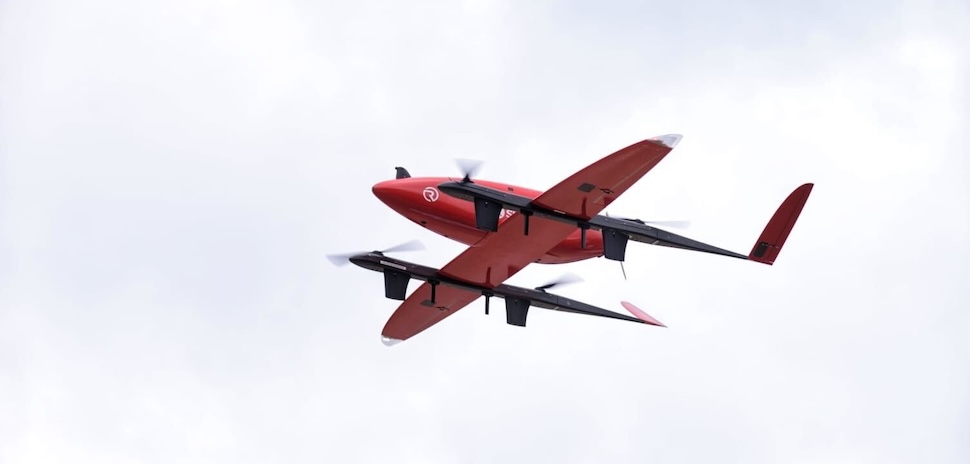
XTI, which recently relocated from Colorado to a new HQ near Addison Airport, said its Florida-based Drone Nerds division is collaborating with Switzerland-based RigiTech on delivery drones with a range of up to 62 miles.