Southlake-based Renewal Fuels Inc., an OTC-listed company operating as American Fusion, is formalizing its leadership team as it focuses on developing its fusion energy technology. In recent weeks, it has named a new chief technology officer, chief operating officer, and chief electrical & power systems officer at its Kepler Fusion Technologies subsidiary.
Renewal Fuels is rebranding around fusion. In January 2026, the company filed to change its legal name to American Fusion Inc. to reflect its focus on developing Kepler’s Texatron fusion platform. Kepler Fusion Technologies, based in Midland, became a wholly owned subsidiary of the Southlake company after its merger closed in December 2025.
Kepler is developing a Texatron‑branded fusion power system that the company says is designed to deliver “continuous, zero-emissions baseload electricity with virtually no radioactive waste.”
Renewal Fuels describes Texatron as a compact, modular unit intended for use at industrial sites, data centers, and other grid‑constrained or hard‑to‑serve locations. The system is in the development stage, according to the company’s technical and investor materials.
In December, a company announcement noted that Kepler’s proprietary aneutronic approach “simplifies engineering requirements and reduces the regulatory burden typically associated with nuclear technologies, potentially accelerating the path to market.”
Renewal Fuels said Kepler’s business model centers on a power-as-a-service framework. It plans to own and operate its fusion units and sell electricity to industrial and commercial customers under long-term power purchase agreements, starting at a baseline rate of 6.25 cents per kilowatt-hour.
New CTO to help lead the push to commercialize the Texatron aneutronic fusion platform
Earlier this month, the company named longtime Kepler scientist John E. Brandenburg, Ph.D., as chief technology officer of Kepler Fusion Technologies, effective immediately.
Brandenburg is a senior plasma physicist with more than four decades of experience in fusion energy, advanced propulsion, and applied plasma physics and will help lead the push to commercialize the Texatron aneutronic fusion platform, according to the company.
Since February 2019, he has served as lead scientist and technology architect at Kepler Aerospace Ltd. and Kepler Fusion Technologies, where the company says he has played a pivotal role in developing the Texatron compact toroidal fusion concept and advancing theoretical research, proof‑of‑principle plasma confinement work, and fusion‑based clean energy systems development.
Kepler Fusion Technologies CEO Brent Nelson described Brandenburg as “one of the most accomplished plasma physicists working in fusion energy today,” saying his mix of national‑lab experience and hands‑on work on Texatron makes him well‑suited to guide the technology toward commercial deployment. In a statement, Nelson said Brandenburg’s “deep understanding of plasma confinement and practical engineering is exactly what we need at this stage.”
Brandenburg’s career includes senior scientific roles at Lawrence Livermore National Laboratory, Sandia National Laboratories, The Aerospace Corporation, the Florida Space Institute at Kennedy Space Center, and Orbital Technologies Corporation (ORBITEC). He has also held U.S. government security clearances tied to defense and energy research programs, Renewal Fuels said.
Focus on fusion
Brandenburg’s fusion credentials are rooted in national‑lab work. At Lawrence Livermore National Laboratory, he conducted research on magnetically confined thermonuclear fusion and modeled inertial confinement fusion pellet designs, and at Sandia National Laboratories he worked on relativistic electron beam physics and plasma interactions for defense applications.
Per the company, he is the inventor or co‑inventor on multiple issued U.S. patents covering plasma reactors, propulsion systems, hydrogen and ammonia processing, and persistent ionization plasma generation.
New COO to build operations for commercial deployment
Renewal Fuels also named Dwight Cartwright as chief operating officer and a member of the company’s board of directors.
As chief operating officer, Cartwright will oversee day‑to‑day operations, operational planning, manufacturing and supply chain readiness, infrastructure development, safety and quality systems, and organizational execution as the company works toward commercial deployment of Texatron.
Renewal Fuels chairman and CEO Richard Hawkins said Cartwright’s background in leading complex operations, managing risk, and building durable systems “strengthens our leadership team at a critical stage” and brings the “operational rigor” the company says it needs to support its long‑term objectives.
Kepler CEO Nelson said he has worked closely with Cartwright and has seen “the depth of his operational judgment and execution discipline,” adding that Cartwright “understands how to build organizations that can support complex technology programs at scale.”
As the company moves from development toward deployment, Nelson said, Cartwright’s experience is intended to help ensure the company’s “operational foundation matches the ambition of its technology.”
New power systems chief to lead grid integration
The company also named Travis Yakimishyn as chief electrical & power systems officer. Yakimishyn has been part of Kepler’s engineering efforts since November 2021, serving as an electrical engineering advisor and consultant, and brings experience in electrical infrastructure, grid interconnection, substation design, and high‑voltage power systems, the company said.
Nelson said Yakimishyn has been “instrumental in bridging advanced plasma physics with utility‑scale electrical engineering,” adding that his deep expertise in high‑voltage systems and infrastructure deployment strengthens Kepler’s ability to move Texatron from advanced development into commercial operation.
Over his career, Yakimishyn has led and supported complex electrical engineering initiatives involving transmission systems, substation configuration, system protection, load‑flow analysis, and interconnection planning, including direct work with utilities and regulators, the company said.
Practical steps in commercial deployment
In his new role, Yakimishyn will oversee the electrical architecture and grid‑integration strategy for Kepler’s Texatron aneutronic fusion platform. Per the company, his responsibilities include advancing scalable electrical design standards, coordinating interconnection pathways, aligning protection and control systems with commercial deployment requirements, and ensuring that its power systems are engineered for long‑term operational stability as development progresses toward commercialization.
Hawkins pointed to Yakimishyn’s experience with energy facilities engineering and with the company’s Texatron development.
“Institutional investors and infrastructure partners evaluate energy platforms based on execution capability as much as innovation. Travis brings both world-class engineering credentials and six years of hands-on Texatron development experience,” Hawkins said. “He brings real-world power systems expertise that aligns directly with where Kepler is headed.”
He added, “As we continue advancing our patent portfolio and regulatory readiness initiatives, strengthening the electrical and grid integration side of the business is essential. His appointment reflects our focus on building a team capable of executing at commercial scale.”
Fusion technology patents in the pipeline
In December, Kepler Fusion Technologies CEO Nelson noted the company’s more than 238 patents in the pipeline related to its fusion technology and the “disruptive potential” of what it’s building.
“We’re currently interviewing top candidates for independent board positions and completing the necessary steps for a listing on a major exchange,” he said. “Given our Texas headquarters and focus on the energy sector, we believe the newly launched Texas Stock Exchange may be particularly well suited for a company like ours.”
Quincy Preston contributed to this report.
Don’t miss what’s next. Subscribe to Dallas Innovates.
Track Dallas-Fort Worth’s business and innovation landscape with our curated news in your inbox Tuesday-Thursday.
R E A D N E X T
-
Founded in 2021, the Irving-based water and wastewater solutions provider expanded through multiple acquisitions and new product lines.
-

Jackson Moses was named to Business Insider’s Seed 100: The Best Early-Stage Investors of 2025 in May. Today, the Dallas-based venture capitalist shared Voyager Technologies’ IPO surge—with a message for defense tech holdouts, in a LinkedIn post.
-

Phoenix-based For The Record has developed its platform to deliver “legal grade” speech-to-text and real-time, multilingual transcription technology powered by artificial intelligence.
-
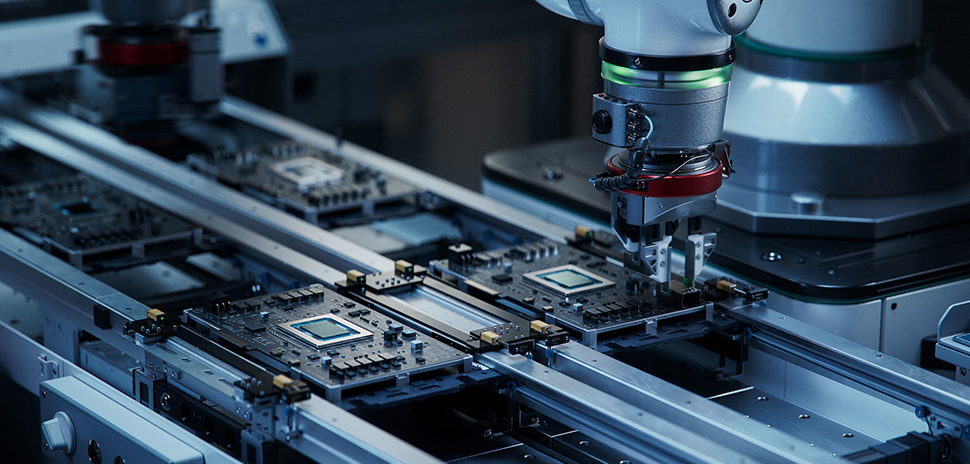
Siemens said the acquisition will empower customers with "a truly integrated digital thread from [printed circuit board] design engineering to manufacturing," enabling earlier defect detection, reduced costs, accelerated time-to-market and improved product quality and reliability.
-

By bringing Amper's FactoryOS platform into ECI, "we can connect shop floor intelligence with our ERP systems in a way not previously possible," said ECI CEO Trevor Gruenewald, giving customers "a unified, end-to-end view of their operations."