

 A few years ago, the digital leadership team of a globally recognized motorcycle brand reached out to us after completing a major digital refresh. They had followed every recommended best practice. The website was redesigned, the commerce platform upgraded, and the mobile experience streamlined. Traffic and engagement were strong, creating clear momentum.
Yet product sales were not accelerating as expected. Conversions lagged, loyalty adoption scaled slowly, and promotional performance was inconsistent across channels. This was not a reflection of effort or capability, but of the growing complexity of modern digital commerce ecosystems.
That is where we stepped in. The challenge was not the level of investment, but the ability to manage complexity at scale. By applying a product-led perspective, we aligned systems and customer journeys end to end, helping the organization turn a strong digital foundation into a more confident, predictable, and growth-ready commerce ecosystem with improved conversion performance.
When Experience Looks Modern but Feels Fragile
The same pattern was repeated while working with a global lifestyle brand whose digital ecosystem spanned commerce, content, community, live events, and an extensive physical partner network. Each system performed well on its own, but because they evolved independently, the overall experience felt fragmented rather than unified.
The issue was not talent, effort, or intent. It was coherence.
Digital ecosystems don’t usually break because someone made one terrible decision, but because a hundred sensible decisions were made separately. A content system gets upgraded, commerce gets re-platformed, loyalty evolves in its own lane, and mobile is treated like a separate product. Over time, the customer journey becomes a relay race across systems that were never designed to run as one.
Rather than jumping straight to features, we stepped back and treated the entire ecosystem as a product portfolio. By mapping end-to-end customer journeys and re-engineering how the underlying systems supported them, something important shifted. Sales and conversions improved, and teams grew more confident.
The gains were not dramatic overnight, but they were durable. And in enterprise commerce, durability matters.
The Human Touch Isn’t a Soft Skill – It’s a Retention Strategy
Here’s the part most leaders underestimate: digital experience is not only about winning customers. It is about keeping them.
Retention doesn’t happen because your experience is “good.” It happens because your experience is dependable. It makes people feel understood, helps them recover when things go wrong and respects their time, especially when they don’t have much of it.
That’s why the human touch becomes more important, not less, in the age of AI. AI can help you scale. But trust is what makes customers stay. We have seen this play out in very different environments.
In healthcare, for example, we built a corporate digital solution for a leading U.S.-based homecare services provider. When the end-user is a caregiver making decisions about whether to sign up to serve a senior or not, the experience must do more than look modern. It must feel clear, stable, and reassuring. In moments like that, “human-centered design” starts becoming a responsibility.
In the nonprofit world, we worked on a mobile app for a global men’s health organization that thrives on participation, challenges, and community energy. A mission-led digital experience can’t feel robotic or transactional. It must motivate, encourage, and create belonging, because people don’t show up for a cause because an app is efficient. They show up because something about the experience makes it personal.
And in the world of lifestyle and commerce, we have been a digital partner to one of the largest global lifestyle brands, supporting everything from UX research and UI design to strategic consulting and digital commerce. In ecosystems like that, digital isn’t just a storefront. It’s a living relationship between a brand and its loyal users, shaped through community, content, loyalty, and events. When that relationship feels seamless, customers stay connected.
Digital Markets Favor Scale Over Change
The United States is one of the most mature digital markets in the world. Customer expectations are shaped not by category peers, but by the best experience they have had anywhere.
At the same time, many enterprises are still running on technology foundations assembled for a slower, simpler era. Over the last decade, digital transformation has largely meant improving what customers see: better design, richer content, smarter personalization, faster sites.
Those investments matter, but they have also masked a deeper issue. What’s holding many digital programs back today isn’t a lack of innovation at the surface. It’s the accumulation of engineering decisions underneath that were never revisited as the ecosystem grew.
How Complexity Creeps In
Most commerce stacks became fragile incrementally. Each new system solved a real business problem. Over time, those systems were rarely re-engineered into a cohesive whole.
The result is familiar. Customer journeys now span content, commerce, identity, analytics, and fulfillment. When those systems don’t behave like one product, friction becomes inevitable. Teams stop experimenting because every change feels risky. Launches start requiring more coordination than creativity. Growth slows quietly, even when traffic is strong.
These are often framed as marketing problems. In reality, they are engineering ones.
Stress Tests Reveal the Truth
To understand the limits of a digital experience, look at what happens during peak moments. Seasonal spikes, major promotions, global launches, and regional campaigns are now routine.
This is where you see whether your digital ecosystem has been engineered for performance, resilience, and change. Or whether teams have learned to work around the stack with caution, hoping nothing breaks.
The difference shows up in confidence. One team sees peak season as an opportunity, while another treats it like a disaster recovery drill.
What AI Changes And What It Doesn’t
AI is going to accelerate how fast we can ship experiences. It will help teams analyze behavior, generate content, automate testing, and personalize journeys. But AI will not automatically make digital experiences feel human.
In fact, the risk is the opposite. When organizations lean too hard on automation, they can unintentionally remove the very things customers value most: clarity, warmth, and the feeling that someone actually thought about their situation.
The best teams will use AI to reduce mechanical load, so they can invest more energy in what customers remember: the moments of friction, of doubt, and the moments when a customer decides whether to trust you again.
The Way Forward
The most effective organizations we work with have made a subtle shift.
They engineer journeys rather than pages, they treat digital experience as a living product rather than a one-time project, and they stop chasing tools and start building capabilities. Most importantly, they recognize that digital experience is no longer a “front-end” problem. It’s a business system, shaped by design, engineering, operations, and the decisions we make about how human we want our technology to feel.
Fixing eCommerce does not require another redesign trend or platform migration wave. It requires an honest look at the foundations already in place and the willingness to re-engineer them for the realities of modern commerce.
When product engineering leads, eCommerce stops feeling uncertain and starts behaving like a system designed for growth. That is when digital finally begins to work the way businesses always hoped it would.
At Experion, we have seen firsthand how the right product engineering approach can turn digital commerce from something that feels fragile and unpredictable into something dependable, scalable, and built for growth. When commerce ecosystems are treated as living products, engineered end-to-end across experience, data, operations, and technology, teams move from firefighting to building confidently, and customers feel the difference in every interaction.
The most exciting part is that we are still early in this shift. As AI accelerates what is possible, the real winners will be the organizations that pair speed with trust, and automation with a deeply human experience.
If you’re rethinking your eCommerce foundation or wondering why your digital investments still feel uncertain, let’s talk. Reach out to Manoj at [email protected] or visit www.experionglobal.com to explore how Experion can help you engineer digital commerce that’s resilient, customer-first, and ready for what’s next.
Don’t miss what’s next. Subscribe to Dallas Innovates.
Track Dallas-Fort Worth’s business and innovation landscape with our curated news in your inbox Tuesday-Thursday.
R E A D N E X T
-
Bridging the Gap Between Technology and Business Strategy
-
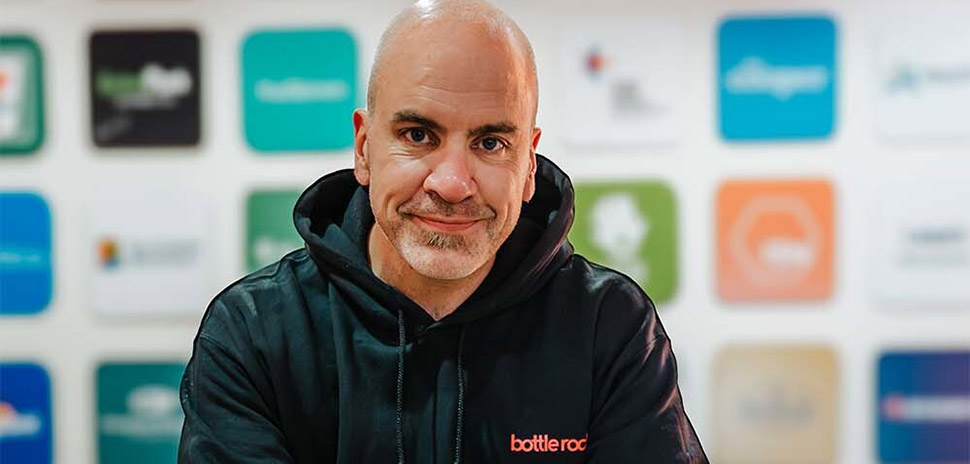
An experienced leader who has built strong client relationships, fostered consistent revenue growth, and led cross-functional teams toward successful business outcomes, Matt Smith takes on the role after eight years of increasing leadership responsibilities at Bottle Rocket, the agency said.
-
 New Digital Twin Solution From Plano-Based Siemens D.I.S. Aims to Drive Next‑Gen Vehicle Development
Siemens Digital Industries Software says its new automotive technology platform for advanced vehicles can cut time to market from months to days.
-

With support from UTA’s Research Enhancement Program, assistant professor Mahmoud Bayat is developing a digital twin platform to help officials adjust evacuation routes on the fly. The platform could inform future systems across cities, counties, and states for what he calls “truly resilient communities.”
-
With more than 25 years of sales experience, leading SaaS and technology companies, and concentrating on customer retention and long-term partnership, John Batdorff joins MarketTime from PushPress, a fitness-industry SaaS platform, where he served as vice president of sales & director of partnerships.