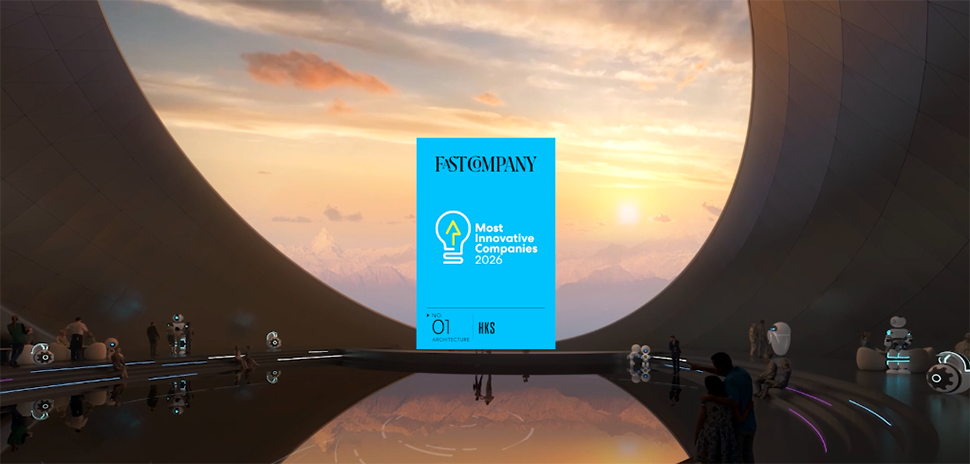
Google. Nvidia. Shopify. … and Dallas-based HKS.
Fast Company’s 2026 list of the World’s 50 Most Innovative Companies—the “best of the best” across industries—puts global tech giants at the top, with Google at No. 1, Nvidia at No. 2, and Shopify at No. 3.
But North Texas has a place on that list, too.
Dallas-based architecture firm HKS (No. 31 overall; No. 1 in Architecture) ranks among the top 50 globally, making it the region’s highest-ranking company on Fast Company’s flagship list.
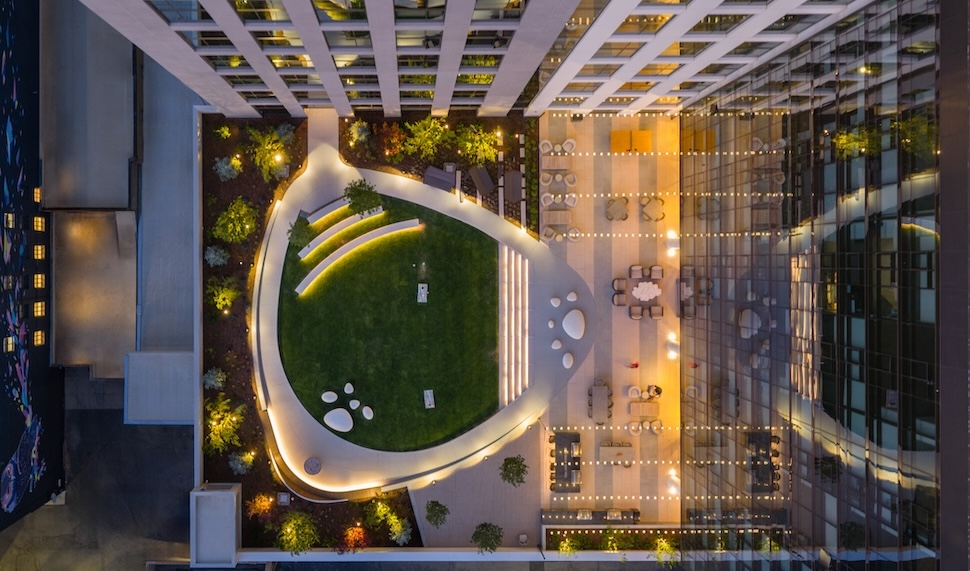
Fast Company cited HKS’ design work for Salt Lake City’s Astra Tower [Photo copyright by Jason O’Rear]
HKS cited for its air quality-enhancing Astra Tower in Salt Lake City
Fast Company’s recognition of HKS was driven by the firm’s work on Astra Tower in Salt Lake City—a residential high-rise designed to address one of the city’s most urgent public health challenges: poor air quality caused by the city’s geography and seasonal inversions.
HKS addressed that with a centralized system that filters Astra Tower’s incoming air to hospital-grade standards before distribution, reflecting a design approach centered on cleaner air, occupant wellness and environmental responsiveness.
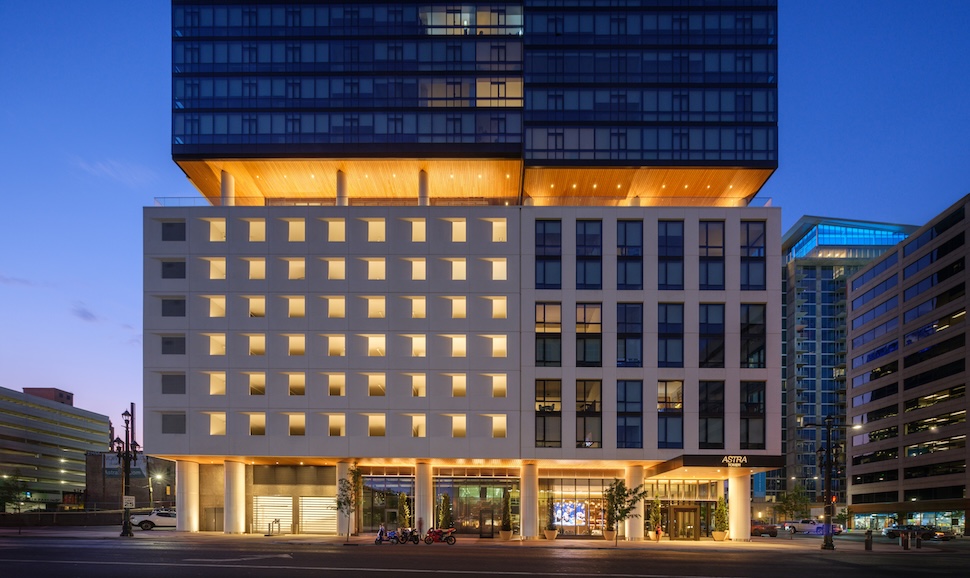
The HKS-designed Astra Tower in Salt Lake City [Photo copyright Jason O’Rear]
And in partnership with Utah Clean Air (UCAIR), Astra Tower communicates real-time air quality to the public via a color-changing “LED crown” and displays in shared spaces—helping residents and the broader community make more informed daily decisions.
“At HKS, we believe every project is an opportunity to make the world better than we found it,” HKS CEO Heath May said in a statement. “Design isn’t just about what happens within a building. It’s about the conditions we create for people, communities, and environments to thrive. This recognition affirms our belief that the most meaningful innovation in architecture is measured by how it strengthens the people we serve.”

Harvey Co-Founders Gabe Pereyra and Winston Weinberg [Photo: Harvey]
Other top 50 companies are also making moves in North Texas. Legal AI firm Harvey (No.17) has recently expanded into the region—and announced a multi-year partnership with the Dallas Mavericks and American Airlines Center, becoming their official and exclusive legal AI partner—underscoring the area’s growing pull for high-growth tech firms.
Other top 50 companies in Texas
Texas, meanwhile, placed three companies in the top 50. Alongside HKS, Austin-based AMD (No. 13; No. 1 in Consumer Electronics) was recognized for transformative tech, and defense startup Saronic (No. 36; No. 1 in Defense Tech) earned honors for its breakthrough launch.
Like HKS, both companies topped their respective categories, reinforcing Texas’ presence not just on the list—but at the top of it.
While Fast Company’s list starts with 50 companies, hundreds of companies also earned a “Most Innovative” nod across 59 industry and thematic categories.
From the Top 50 to 720 “Most Innovative Companies”: Where DFW shows up
In total, seven DFW companies spanning architecture, healthcare, aviation, enterprise software, AI, dining, and digital media appeared across the 2026 list, each recognized for a distinct kind of innovation:
-
HKS (No. 31 overall; No. 1 in Architecture) — The Dallas-based firm’s ranking was driven by its work on Astra Tower in Salt Lake City, a high-rise designed to filter polluted air at scale. Partner Emir Tursic described the city’s air quality as, “You can see it. You can smell it.” Fast Company highlighted the project as a prototype for addressing climate challenges and civic health.
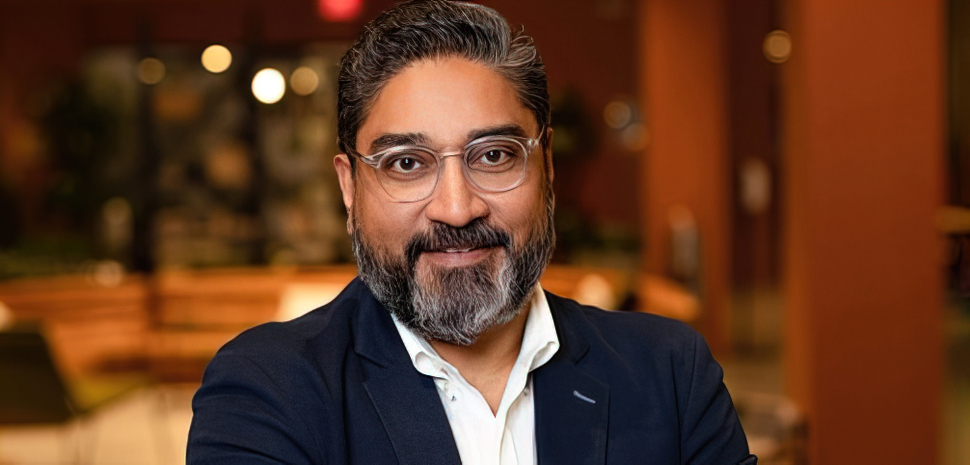
Lantern Pharma CEO Panna Sharma [Courtesy: Lantern Pharma]
-
Lantern (No. 3 in Healthcare) — The Dallas-based healthcare platform was recognized for its specialty care network, helping patients and employers access high-quality surgery, cancer care, and infusion therapy at a lower cost—cutting employer spend by more than 40% by shifting care out of hospital settings—ranking alongside category leaders Theator (No. 1) and SamaCare (No. 2).
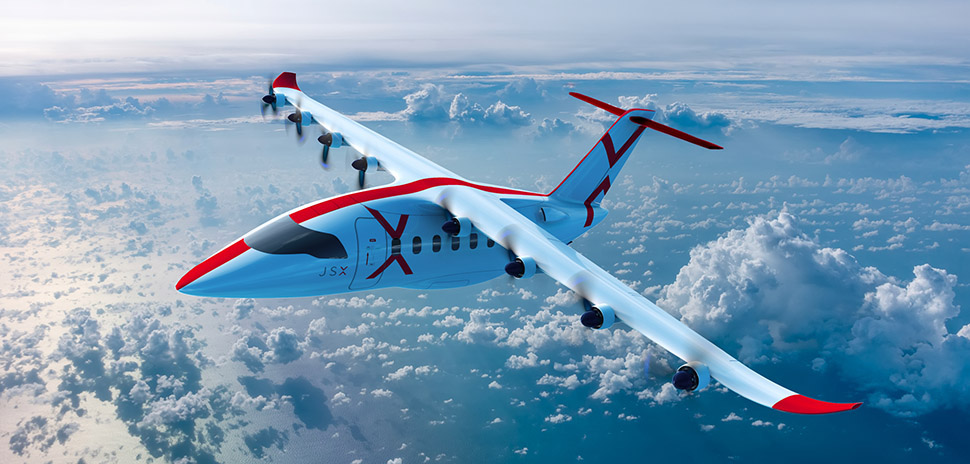
Rendering of the Aura Aero Era 19-seat hybrid-electric aircraft in JSX livery [Photo: Business Wire]
-
JSX (No. 6 in North America) — The Dallas-based air carrier was recognized for its “hop-on” jet service model, which bypasses traditional TSA lines at private terminals to make regional travel more “joyful and simple,” ranking alongside category leaders Databricks (No. 1), Harvey (No. 2), and Vaulted Deep (No. 3).
-
Emburse (No. 13 in Enterprise) — The Plano-based company was recognized for its AI-powered “Expense Intelligence” platform, using predictive insights and dynamic controls to help finance teams move from tracking spend after the fact to managing it in real time, in a category that includes enterprise leaders like Microsoft, IBM, Capital One, and Ribbon—all of which have a significant presence in North Texas.
-
Nice (No. 11 in Applied AI) — The Plano-based company was honored for customer experience automation, including AI platforms that turn customer interactions into “proactive, safe, and intelligent actions,” following its $955 million acquisition of Cognigy and the rollout of agentic AI systems that can resolve complex customer issues autonomously.
Photo: J. Michael Jones/iStock
-
Chili’s (No. 3 in Restaurants) — Headquartered in Coppell, the decades-old chain has “re-upped its relevance” through a combination of savvy marketing and operational overhauls, appearing alongside honorees like DoorDash, OpenTable, QuikTrip, and Toast.
-
Dude Perfect (No. 9 in Media and News) — The Frisco-based sports and entertainment group earned recognition for audience engagement, appearing alongside category leaders Cloudflare (No. 1), TBPN (No. 2), The Onion (No. 3), and The New York Times (No. 7) as it continues to expand its digital-first media platform.
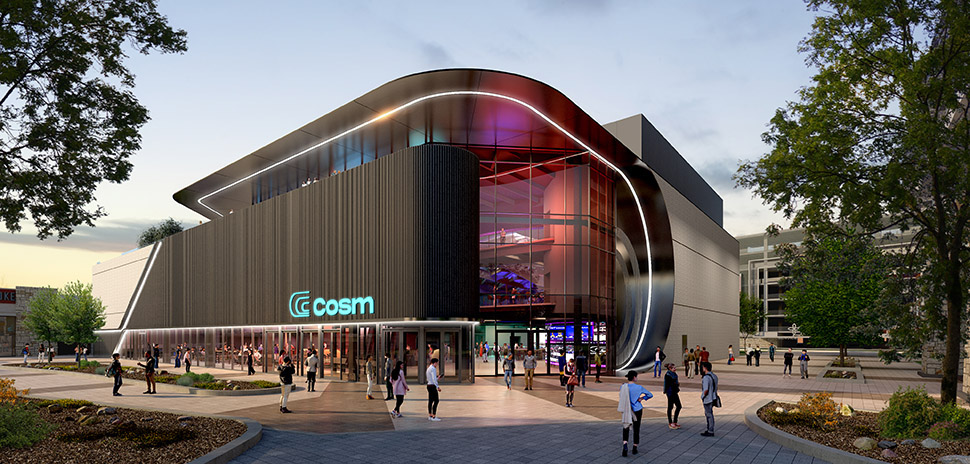
Rendering of COSM Grandscape. [Image: Cosm]
Also on the list: COSM (No. 1 in Augmented and Virtual Reality), known for building “shared reality” venues, including a flagship large-format LED dome at Grandscape, a satellite office in Dallas, where parent company Mirasol Capital is based.
A Texas-wide innovation pipeline
Statewide, Texas landed more than 25 companies and organizations across Fast Company’s rankings.
In addition to Top 50-ranked AMD and Saronic, Austin had a deep bench that included Dell Technologies (No. 1 in Business Services), Indeed (No. 5 in Workplace), Cirrus Logic (No. 9 in Corporate Social Responsibility), FloSports (No. 2 in Sports), Tecovas (No. 4 in Fashion and Apparel), and Virtuix (No. 10 in Augmented and Virtual Reality), among others.
Base Power (No. 3 in Energy)—which expanded to Dallas last August, offering a “simple, all-in-one energy plan” including a whole-home backup battery—highlights how innovation in Austin is increasingly intersecting with infrastructure and energy needs across the state.
Houston added companies like Epique Realty (No. 10 in Business Services), Vaulted Deep (No. 3 in North America), and XGS Energy (No. 7 in Energy), reflecting a strength in real estate models, infrastructure, and next-generation energy systems.
Elsewhere, innovation is emerging across the Lone Star State map: AST SpaceMobile (Midland; No. 10 in Space), Hertha Metals (Conroe; No. 1 in Manufacturing), and Vilore Foods (San Antonio; No. 6 in Emerging Enterprise) each earned recognition in their respective sectors.
In Fast Company’s regional breakouts, Texas A&M’s Nanostructured Materials Lab (College Station; No. 12 in North America) was honored for developing a new class of “self-repairing plastics,” a breakthrough that could reshape how materials are designed and maintained.
From regional air to autonomous everything
Aforementioned Dallas-based JSX—recognized for rethinking regional air travel—is one example of how innovation in the region is reshaping how people move. It’s part of a larger DFW story in transportation.
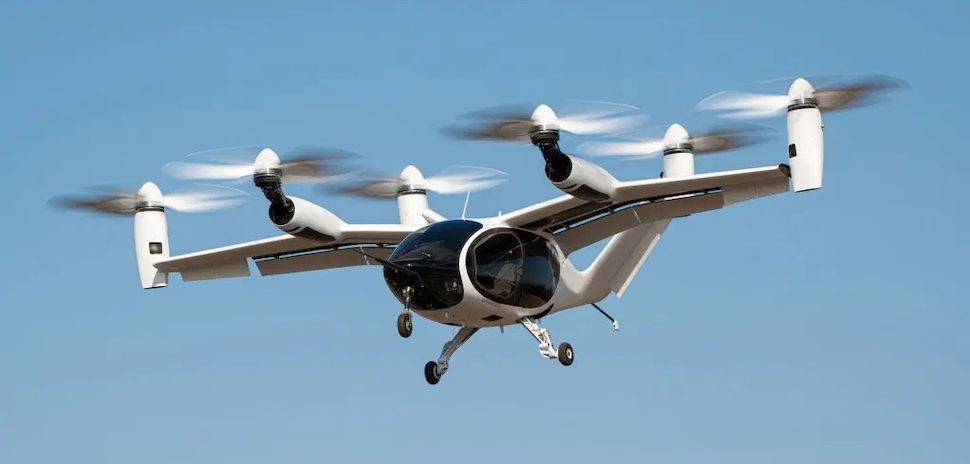
Joby Aviation’s electric air taxi. Joby is one of four industry partners aiming to support regional eVTOL air taxi networks connecting Dallas, Austin, San Antonio, and eventually Houston. [Photo: Joby]
Also in the skies, Santa Cruz, CA-based Joby Aviation (No. 6 in the category) is working with Hillwood’s AllianceTexas on vertiport infrastructure for future electric air taxis, positioning North Texas as an early node in aerial mobility networks. This month Joby was selected for the White House-backed Electric Vertical Takeoff and Landing Integration Pilot Program (eIPP), which includes Texas as one of its early operational states.
Overall, this year’s Fast Company-ranked companies have an unusually high concentration of activity in Dallas-Fort Worth. While they may not have global HQs here, the region has become a primary “living lab” for their technology.
At the infrastructure level, long-standing operational ties anchor that ecosystem. Saint-Ouen-sur-Seine-based Alstom (No. 4 in Transportation), honored for product reimagination, maintains the Skylink automated people mover at DFW International Airport under a contract extending through 2032, connecting the airport’s terminals.

A “digital intersection” with technology by NoTraffic [Image: NoTraffic]
In Arlington, multiple systems are converging at once. Overland Park, KS-based NoTraffic (No. 1) is deploying AI-powered traffic signals across dozens of intersections—including approximately 30 in the Entertainment District ahead of the 2026 FIFA World Cup—to reduce congestion and improve safety, according to WFAA and others.
Meanwhile, Ann Arbor, MI-based May Mobility (No. 2) had a RAPID autonomous transit service pilot partnership with the city and UT Arlington that concluded in May 2025. The city has cited it as a model for integrating AVs into existing public transit networks.
At the same time, North Texas has become a launchpad for some of the most anticipated autonomous deployments of the year.
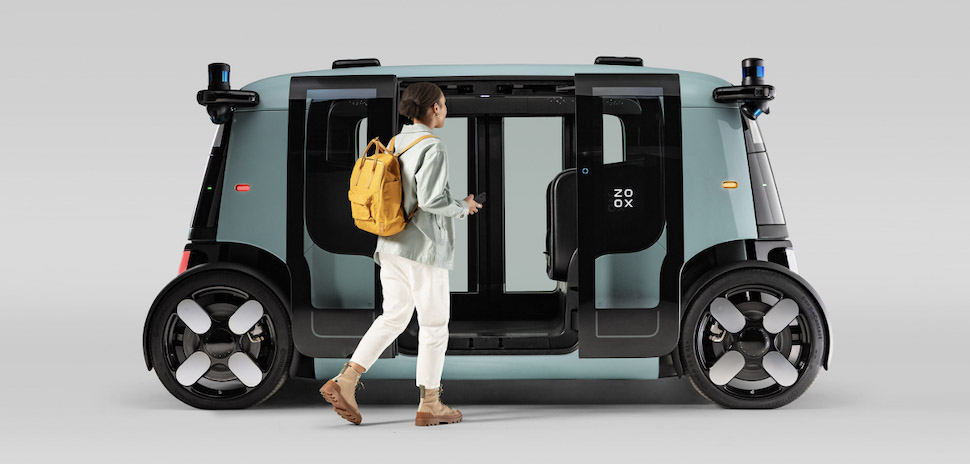
Entering a Zoox robotaxi. [Photo: Zoox]
Foster City, CA-based Zoox (No. 13) expanded robotaxi operations to Dallas in March 2026, mapping complex road networks with a test fleet ahead of its steering-wheel-free vehicle rollout. San Francisco, CA-based Lyft (No. 11) announced the launch of a Mobileye-powered autonomous fleet in the region in 2026, while Mountain View, CA-based Nuro (No. 7) is using Dallas as a core market for its zero-occupant delivery vehicles.
On the ground, Santa Monica, CA-based Veo (No. 5) has embedded its micromobility fleet—e-bikes, scooters, and cargo bikes—across Arlington and the UT Arlington campus to address the “last-mile” challenge.
The region’s influence extends beyond roads into adjacent systems shaping the future of mobility. Teaneck, NJ-based UVeye (No. 3) has deployed its AI-driven vehicle inspection systems—described as “drive-through MRI machines for cars”—across DFW-area dealerships and automotive service providers like Cox Automotive.
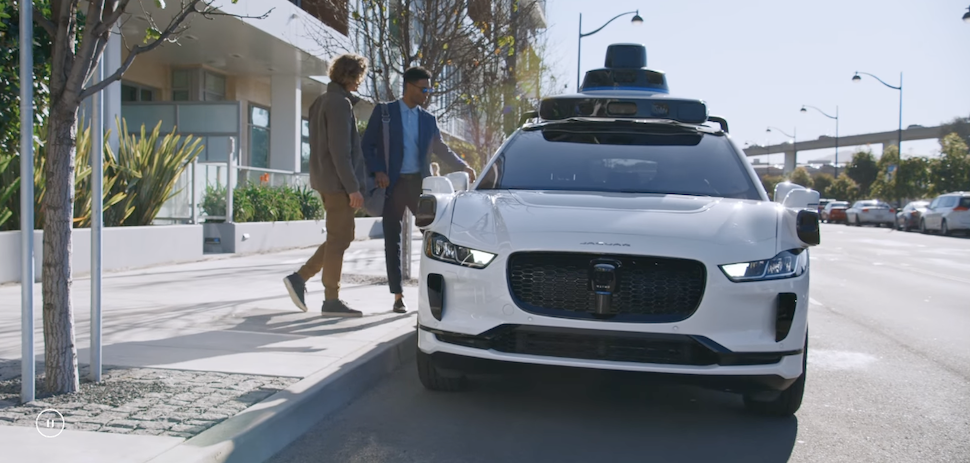
A Waymo robotaxi operating in one of its other service cities. [Video still: Waymo]
And Mountain View, CA-based Waymo (No. 1 in Automotive) officially launched its fully driverless, all-electric robotaxi service in Dallas in February. The service went live on Feb. 24 for “trusted testers” and select waitlist users, with plans to expand to the general public later this year. While the passenger service is new, the company has used the region as a primary testing and operational hub for its autonomous trucking division since 2020.
The big picture
That presence is not happening in isolation.
Across Fast Company’s 2026 rankings, the companies shaping what’s next—from enterprise software and AI to media and infrastructure—are operating in the DFW ecosystem.
In addition to dozens of companies with deep ties to North Texas—like No. 1-ranked Google, with a growing data center footprint in the region, and Walmart, deeply embedded across the region’s logistics and retail infrastructure—the top 50 alone includes brands with a significant presence on the ground, from Starbucks and DoorDash to QuikTrip and IMAX.
You see them in our data centers, logistics networks, and everyday life across the region. More and more, that innovative orbit runs through North Texas.
Don’t miss what’s next. Subscribe to Dallas Innovates.
Track Dallas-Fort Worth’s business and innovation landscape with our curated news in your inbox Tuesday-Thursday.
R E A D N E X T
-

North Texas has plenty to see, hear, and watch. Here are our editors' picks. Plus, you'll find more selections to "save the date."
-

AI seem overwhelming? Just go to office hours.
-
Data scientist Anmolika Singh put Dallas on the global AI Tinkerers map. At the first meetup, more than 30 pros—founders to Fortune 500 technologists—showed up to trade ideas, projects, and solutions.
-
Dallas Innovates, in partnership with the Dallas Regional Chamber, once again is recognizing the most innovative leaders in AI in Dallas-Fort Worth. From visionaries and mavericks to transformers and academics, AI 75's class of 2025 are the AI pacesetters you need to know now.
-
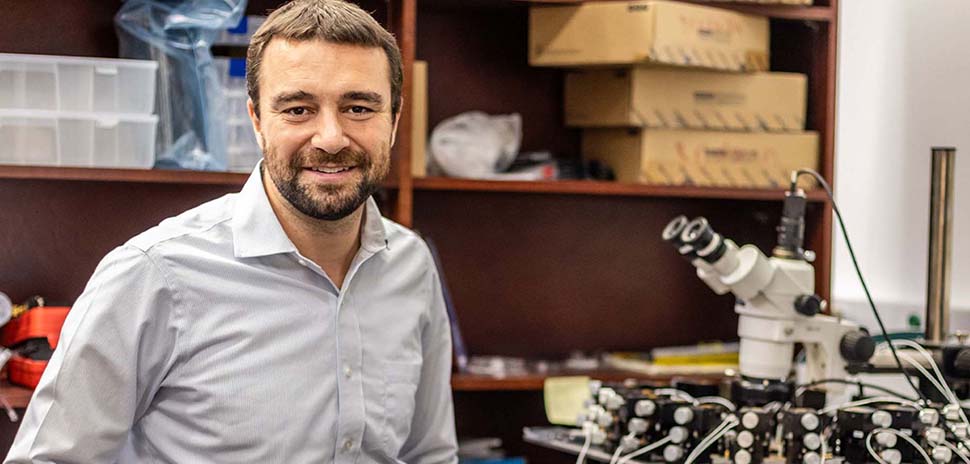
The brain-inspired design could lower the energy and compute costs behind AI training requirements, an increasingly urgent challenge for enterprises.