The current landscape for startup fundraising might be more unforgiving than it was a few years ago, but flexible entrepreneurs may find a lifeline in alternative forms of financing.
That was the message from multiple panelists Aug. 7 at the Future of Venture Forum presentation during the DEC Network’s DFW Startup Week at Southern Methodist University’s Cox School of Business.
The venture forum, which brought together VC leaders, startup founders, and angel networks, was presented by Justworks and the McKinney EDC and MEDC Innovation Fund, in partnership with the North Texas Angel Network and 1845 Venture Studio.
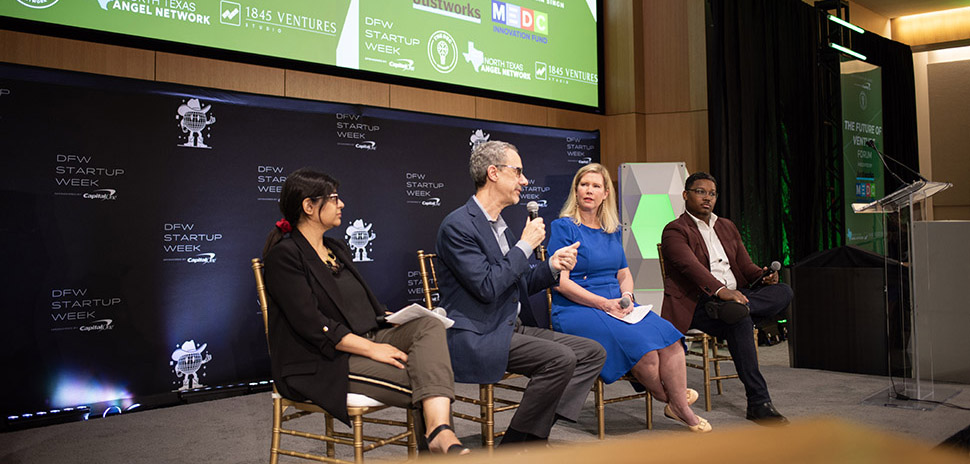
One relatively new but increasingly popular type of alternative financing is the so-called venture studio model, which combines hands-on startup creation with venture investing, attendees learned. During a panel discussion on alternative capital solutions moderated by Annabel Reeves Morgan, a private wealth advisor at Goldman Sachs, Ryan Brown told how his brand-new 1845 Venture Studio is aiming to build up early-stage firms boasting high-potential founders.
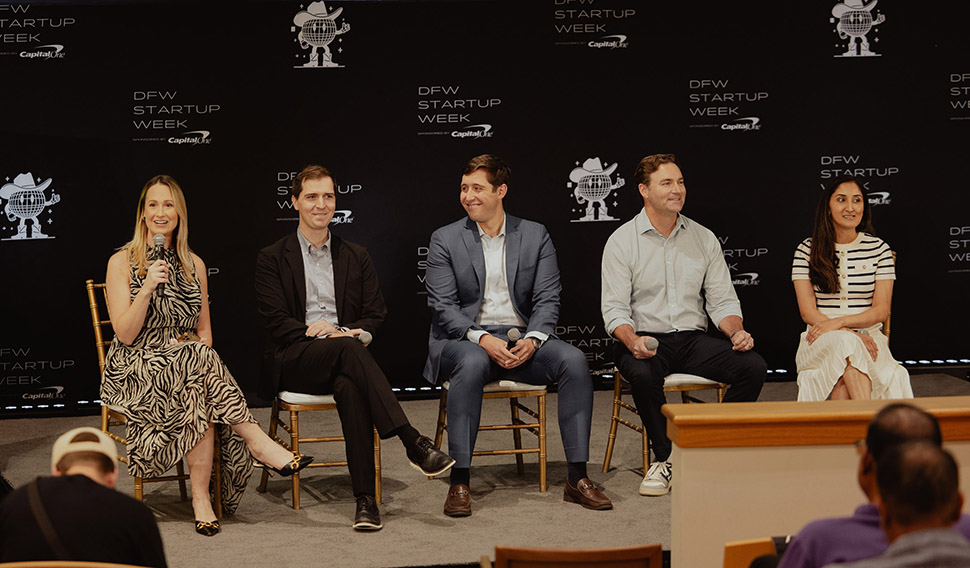
Left to right: Annabel Reeves Morgan, Troy Billett, Tyler Brock, Ryan Brown, and Mav Shafi [Photo: DFW Startup Week]
1845 is a Dallas-based partnership consisting of Brown, the studio’s co-founder and managing partner; co-founder and managing partner Trey Bowles, who’s also founder and managing partner of The Bowles Investment Group; and Wade Myers, the founder of Eagle Venture Fund. The studio co-founds companies with entrepreneurs, then provides “operating muscle” like go-to-market planning and back-office support to grow the concept in exchange for half the startup’s equity. Each deal is independently funded.

1845 Venture Studio co-founder Ryan Brown
While the startup founder gets talent, capital, and experience in exchange for the 50-50 equity split, investors receive the opportunity to increase their funding at every valuation, Brown said. “When you talk about a co-founder studio model, folks start talking about ‘equity, and my company,’ and these sorts of things,” he acknowledged. “But … you start looking at the dilution, right? Uber is the perfect example. The Uber CEO [had] 8.9% of his company when they IPO’d. The AirBnB founder only got 10% equity by the time they IPO’d. So, a studio can actually help with dilution. We’re seeing founders start to have something like 30%, 40% when they exit in the IPO.”
Another sort of “alternative capital solution to equity” for startups and early-stage businesses is venture debt, explained panel member Mav Shafi, a commercial banker at J.P. Morgan. A distinctive option that essentially complements equity financing, venture debt is a loan that requires repayment and does not convert to equity, in contrast to convertible debt, for example. Venture debt may be ideal for high-growth startups with some previous VC funding that are looking to avoid additional ownership dilution, Shafi said.
“You do not owe anything back”
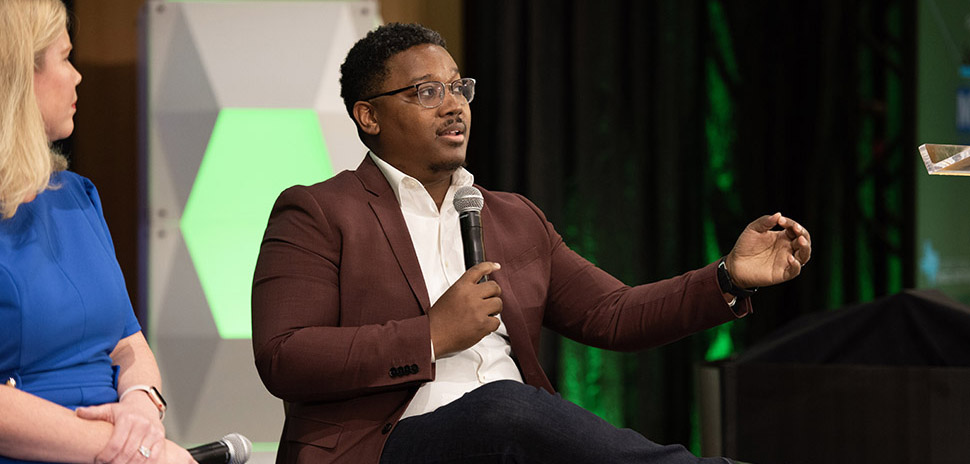
Still another source of alternative capital—government funding—was described by panelists Tyler Brock, founder and CEO of BridgePoint Capital Solutions, and Troy Billett, fund manager with the McKinney Economic Development Corp.
Billett, whose background is in VC, startup incubation, and operational leadership, said McKinney’s 5-year-old MEDC Innovation Fund is offering startups entry-level grants ranging from $50,000 to $200,000. Currently there are 48 McKinney-based companies in the fund’s portfolio, he added, and the city has “essentially committed to deploy at least a million dollars a year into startups for this initial program.” The fund is intended to support rapidly growing startups as they scale, providing some additional grants of up to $500,000.
Brock, a U.S. Air Force veteran who founded Dallas-based BridgePoint to connect the federal government with the private sector, said there are more than 400 agencies soliciting contracts from commercial businesses. Those contracts, he said, include “production funding,” which involves buying and delivering parts; “sustainment funding,” which enables products to remain operable over a period of time; and funding for research and development.
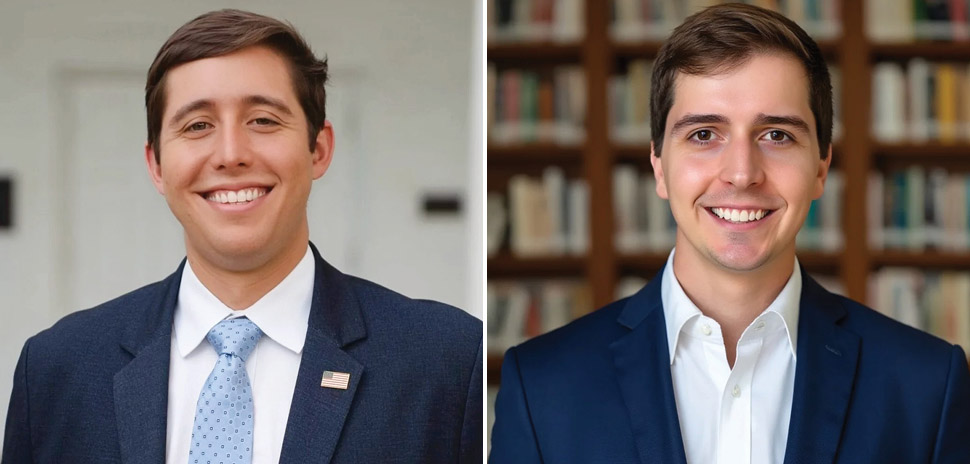
Left: Tyler Brock, founder and CEO of BridgePoint Capital Solutions; Right: Troy Billett, fund manager with the McKinney Economic Development Corp. [Photos: DFW Startup Week]
“The federal government allocates hundreds of billions of dollars every year toward non-diluted government funding,” Brock said. “So, what does that mean for a startup? It means you can progress your R&D initiatives in lockstep with the government and the user. I’m not just talking military; I’m talking the Department of Energy, NASA, DHS. You’re progressing your tech in lockstep with the government requirements. But, all those advancements you can then commercialize, and without diluting yourself. You don’t have to take on boards, you don’t have to give up any of your ownership, you do not owe anything back.”
Bridging a knowledge gap
Benjamin J. Vann, founder and CEO of Dallas-based nonprofit Impact Ventures, cited two additional funding models—revenue-based financing and redeemable equity—that he said could help entrepreneurs who lack access to traditionally structured venture capital.
He shared the methods during a panel discussion on impact investing moderated by Bhavna Kumar, who heads the accelerator at the SMU Cox William S. Spears Institute for Entrepreneurial Leadership.
Benjamin Vann [Photo: Michael Samples]
Revenue-based financing provides businesses with capital in exchange for a percentage of their future gross revenue, Vann said. Redeemable equity, on the other hand, allows founders to redeem or buy back investors’ shares via dividends at predetermined terms.
Because these products offer more flexibility to both investors and entrepreneurs, they can be especially advantageous to minority-led enterprises, who attract only a tiny slice of venture capital, he said.
“I’d like to see more new funds that are adopting some of these principles, because at the end of the day, while capital is out there, I think there’s a knowledge gap on how the folks with capital could leverage their capital more,” Vann said. “Until that knowledge gap is closed, we have to find creative ways to fundraise and recycle capital.”
Salah Boukadoum speaks as panelists discuss impact investing at the Future of Venture Forum. From left: moderator Bhavna Kumar, Boukadoum, Becky Cullum, and Impact Ventures founder Benjamin Vann, who detailed revenue-based financing models for minority-led enterprises. [Photo: Michael Samples]
“Another way to grow your company”
Even a panel focused on the fledgling Texas Stock Exchange framed the new exchange as a sort of “alternative capital” opportunity for startups.
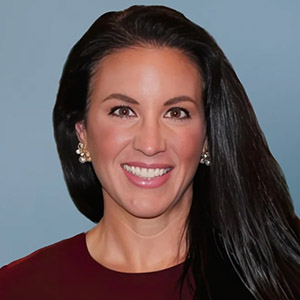
TXSE global managing director Nicole Chambers [Photo: DFW Startup Week]
During a discussion moderated by Bowles, the 1845 Venture Studio co-founder, TXSE global managing directors Nicole Chambers and Jeff Karcher said the fully electronic exchange aims to:
- be approved by the SEC in Q4 2025;
- open for trading in Q1 2026;
- start equity listings in Q3 2026; and
- initiate IPOs by the end of 2026 or early 2027.
Because North Texas is attracting a wide swath of transplanted decision-makers from the VC and private-equity worlds, the new exchange means that “you’re going to have much more access to decision-makers on an early-stage capital raise, or people that can help you make decisions for your company as you continue to grow,” Chambers said. “Great attorneys, great bankers, great auditors. I think we are centralizing key decision-makers here in the state.”
Bowles added that a TXSE IPO, or “the idea of exit, really, could be an alternative capital solution. This is a way to generate capital to grow your business. You’re not exiting a business when you go public. You’re exiting when you sell the stock in your business, which is great and an awesome opportunity. But this is just another way to grow and make your company bigger and better.”
Don’t miss what’s next. Subscribe to Dallas Innovates.
Track Dallas-Fort Worth’s business and innovation landscape with our curated news in your inbox Tuesday-Thursday.
R E A D N E X T
-

Dozens of sessions. Four signature summits. Hundreds of speakers. DFW Startup Week 2025 kicks off next week, and here’s how to make the most of it.
-

Everyone’s talking about AI. But what do companies actually need to hear? Here’s what one veteran exec thinks startups and leaders really need to focus on—straight from the front lines at DSW25.
-

At Dallas Startup Week, ENO8 Founder Jeff Francis shared strategies to make it easier for investors to say "yes" to founders with proactive preparation.
-
Venture Dallas is firing up its search for North Texas' most innovative companies, as nominations open for its Startup of the Year 2024 awards. The winners will be revealed at the annual summit on October 30, building on the momentum of last year's inaugural honors. The awards bring visibility to high-growth startups in the region, including innovators flying under the radar, says David Evans, who spearheads the initiative as a Venture Dallas steering committee member. This year's competition features two distinct categories for recognition. The Early Stage arena spotlights companies with up to $1 million in revenue, while the Growth…
-

Palo Alto, California-based Fiddler AI said its $18.6 million Series B extension brings the round's total funding to $50 million. The company said the funds will help it "continue to build momentum in AI observability and AI safety."