Dallas-Fort Worth has landed in elite company in a recent national analysis of America’s AI economy.
Brookings Metro, the policy arm of the Brookings Institution, named Dallas-Fort Worth one of 30 U.S. metros leading the country in artificial intelligence. The region ranked No. 13 overall.
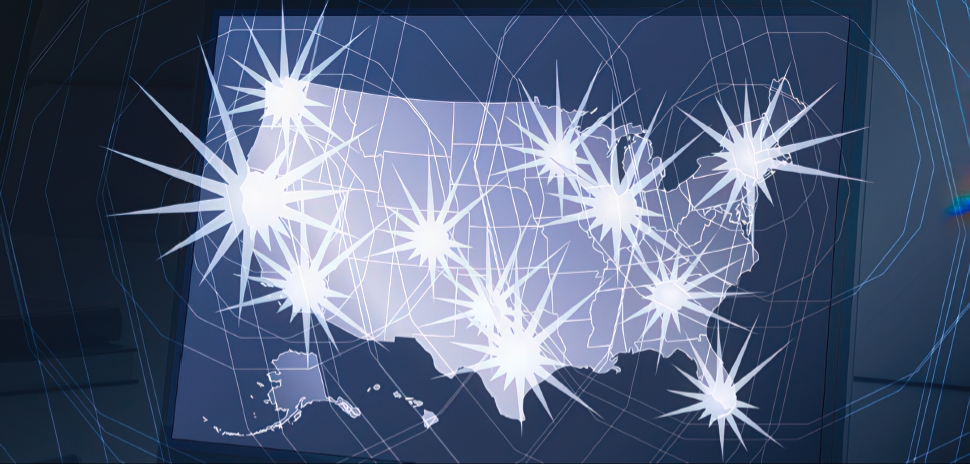
DFW also earned a place in the report’s top tier of “AI Star Hubs,” a group of 28 metros that combine top-ranked talent, innovation, and business adoption. Two metros, San Francisco and San Jose, were singled out as “Superstars” for their unusually dense concentrations of AI activity.
Together, the 30 metros are driving the bulk of the country’s AI growth, according to the Washington, D.C.–based think tank. They account for 67% of AI-related job postings across the metros studied.
In Dallas-Fort Worth, that translated to 22,043 postings in 2024.
What does it mean to be “ready” for AI?
Some metros are better equipped than others.
Brookings’ July study, “Mapping the AI Economy: Which Regions Are Ready for the Next Technological Leap?,” analyzed 387 U.S. metro areas and grouped them into six tiers based on AI “readiness.”
The researchers note that activity is still heavily concentrated in the Bay Area—the “Superstars”—but the geography of AI has broadened with the rise of generative and agentic systems.
Star Hubs represent what Brookings called “an echelon of uniformly strong AI ecosystems,” balancing talent, research, and enterprise uptake. These metros scored in the top 25% across all three pillars.
Dallas-Fort Worth earned its place by showing strength across the board, rather than excelling in only one area.
That balance didn’t happen overnight. Between 2021 and 2025, DFW’s AI footprint expanded. Compared to Brookings’ 2021 benchmark chart, the 2025 profile shows notable gains, especially in business adoption.
Metrics such as cloud readiness, job postings, and exposure to generative AI all surged, with exposure now reaching 36% of local jobs.
![Dallas–Fort Worth ranks among the nation’s top AI metros, according to Brookings’ 2025 analysis. This chart maps AI capacity for the Dallas–Fort Worth–Arlington metro area—the official U.S. Census MSA—highlighting strengths in cloud readiness, generative AI exposure, and workforce depth. [Image: Brookings Metro]](https://s24806.pcdn.co/wp-content/uploads/2025/08/DFW-Brooking-Metro-AI-Report-2025-Radar-Chart-970-e1754271309253.jpeg)
Dallas–Fort Worth ranks among the nation’s top AI metros, according to Brookings’ 2025 analysis. This chart maps AI capacity for the Dallas-Fort Worth-Arlington metro area—the official U.S. Census MSA—highlighting strengths in cloud readiness, generative AI exposure, and workforce depth. [Image: Brookings Metro]
Dallas-Fort Worth’s AI arsenal
Brookings’ data shows Dallas-Fort Worth stacking up across three pillars—talent, innovation infrastructure, and business adoption.
The talent engine:
- 530,550 graduates in computer science, engineering, and mathematics
- 2,093 Ph.D. students in related programs
- 7,838 workers with AI skills in online profiles
Innovation infrastructure:
- 49 AI research papers published at top conferences
- 816 AI-related patents granted
- 5 federal R&D contracts focused on AI
- 9.9 million NSF ACCESS credits for high-performance computing
Business adoption:
- 22,043 job postings seeking AI skills
- 344 startups creating AI-driven products
- 137 venture capital deals for AI companies
- 36% of local jobs exposed to generative AI
- 31% of firms with files in digital format
- 26% of firms using cloud tech
The nation’s general readiness to benefit from AI is critical. “One of the clearest indicators,” wrote report authors Mark Muro and Shriya Methkupally, “is the rising share of businesses reporting current or anticipated use of AI technologies.”
Even so, the study found that adoption still lags the infrastructure. In Dallas-Fort Worth, only about 5% of firms actively use AI—a level the researchers said is typical even in top metros.
Readiness, they show, comes down to whether businesses are actually applying AI to produce goods or services. To track that, the U.S. Census Bureau has posed a straightforward survey question: “In the last two weeks, did this business use Artificial Intelligence (AI) in producing goods or services?”
Nationally, the answers point to change. Census data shows adoption rose from 4% in early 2023 to 8.7% by mid-2025, with another 11% of firms planning to adopt AI within six months.
AI inflection point, and a power shift
Brookings calls this moment “an inflection point for regional economic development.”
The Bay Area still leads, accounting for 13% of the study’s AI job postings while making up just 2.7% of U.S. metro employment. Anchored by OpenAI, Google, and Nvidia, the region also draws a disproportionate share of early-stage investment. One example: San Francisco–based Databricks raised $10 billion in 2024, the year’s largest AI deal.
But Brookings makes it clear other metros are gaining ground.
Star Hubs such as Dallas-Fort Worth are driving much of the nation’s growth in adoption and investment. “These metro areas are bridging the gap between the established Superstars and the rest of the country,” the researchers wrote. “Their presence and potential are significant.”
Collectively, Star Hubs generate more than half of U.S. AI job postings, nearly two-thirds of federal R&D contracts, over half of AI research publications, and 53% of venture capital deals for AI startups.
Texas leads all states with four Star Hubs: Dallas-Fort Worth, Austin, Houston, and San Antonio. Each of the latter three saw AI job growth above 250% from 2018 to 2025, making the Texas Triangle a statewide engine for AI innovation.
The full roster also includes heavyweights such as New York, Boston, and Los Angeles, as well as rising centers such as Gainesville, Florida, and Boulder, Colorado. (See the list here.)
Where other metros stand
Beyond the Superstars and Star Hubs, Brookings grouped the remaining 357 metro areas into four categories.
Emerging Centers show strength in two pillars but are still developing in a third—often business adoption. Detroit, Pittsburgh, Tampa, and Nashville fit here. Focused Movers concentrate in one area, such as research or talent, typically anchored by universities or industry clusters; Cleveland, Knoxville, and Albany are examples.
Most metros fall into the Nascent Adopters and Others buckets—regions still building digital infrastructure but lacking significant workforce, startup, or research activity.
Brookings sees potential across all tiers but warns that the economic benefits of AI will flow unevenly without targeted local and national strategies to close the gaps.
Proof on the ground in Dallas-Fort Worth
If Brookings provides the national map, a new Dallas Regional Chamber and Accenture report shows what that looks like up close. The Business of Artificial Intelligence points to what makes DFW different: a diverse economy where AI isn’t siloed in one sector but tested and scaled across many.
The report positions Dallas-Fort Worth as an incubator for applied AI, naming a cross section of companies across supply chain, life sciences, logistics, real estate, and cybersecurity, including:
o9 Solutions, a Dallas unicorn valued at $3.7 billion, built a “Digital Brain” platform to help global companies rethink supply chains and finance. In life sciences, Caris Life Sciences is expanding its AI-driven cancer diagnostics platform, now valued at more than $7 billion after its 2025 IPO; Lantern Pharma is using machine learning to speed oncology drug discovery; and Colossal Biosciences became Texas’ first decacorn by applying AI to de-extinction science and spinning off new ventures in health and research.
Beyond biotech, Island.io reached quad unicorn status with its enterprise browser that lets corporations deploy generative AI securely. Aurora Innovation is preparing the Dallas-to-Houston corridor for fully driverless freight from its southern Dallas County terminal. CBRE, the Dallas-based Fortune 500 real estate firm, has built an internal generative AI platform to safeguard client data, while Hillwood’s AllianceTexas Mobility Innovation Zone is serving as a proving ground for AI-powered logistics.
Taken together, the examples show how Dallas-Fort Worth’s diverse economy is already putting AI to work. And as Brookings notes, even metros with clear momentum must keep pressing forward to capture the full economic benefit.
AI readiness drives economic development
Brookings is blunt: AI readiness will shape regional growth across every industry. For Star Hubs like Dallas-Fort Worth, that means building on today’s momentum by investing in local AI clusters, widening access to affordable computing, and doubling down on tech education.
The think tank argues that national and regional strategies must also move in tandem: a strong U.S. platform for AI development, paired with region-by-region agendas tailored to local strengths.
“Leaders should move urgently to promote local development that will contribute to more evenly distributed and transformative AI growth from coast to coast,” the authors wrote.
The full Brookings report is available here.
Don’t miss what’s next. Subscribe to Dallas Innovates.
Track Dallas-Fort Worth’s business and innovation landscape with our curated news in your inbox Tuesday-Thursday.
R E A D N E X T
-
Dallas Innovates, in partnership with the Dallas Regional Chamber, once again is recognizing the most innovative leaders in AI in Dallas-Fort Worth. From visionaries and mavericks to transformers and academics, AI 75's class of 2025 are the AI pacesetters you need to know now.
-
Data scientist Anmolika Singh put Dallas on the global AI Tinkerers map. At the first meetup, more than 30 pros—founders to Fortune 500 technologists—showed up to trade ideas, projects, and solutions.
-
Dallas Innovates, the Dallas Regional Chamber, and Dallas AI have teamed up to launch the inaugural AI 75 list. The 2024 program honors the most significant people in AI in DFW in seven categories—the visionaries, creators, and influencers you need to know.