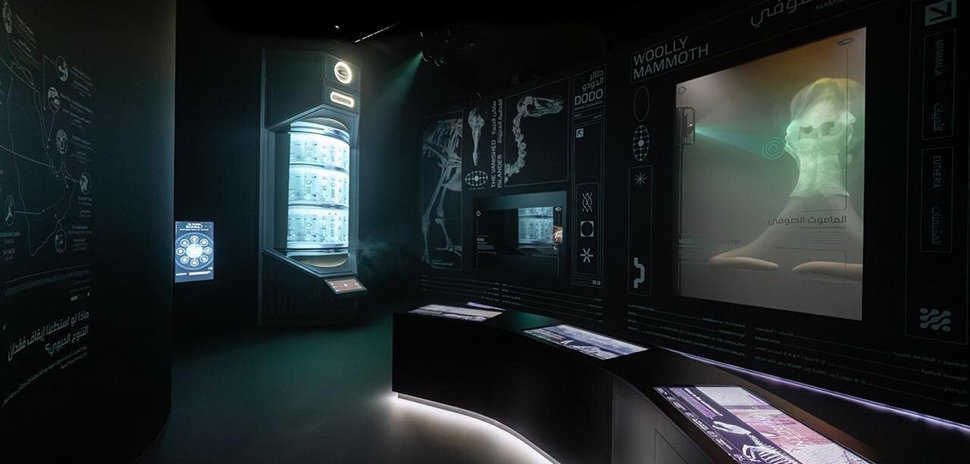
In the book of Genesis, Noah took pairs of all the world’s creatures onto an ark to save them from a great flood. Now Dallas-based Colossal Biosciences aims to create a 21st-century, high-tech repeat of that endeavor as a permanent feature of Dubai’s Museum of the Future.
The Colossal BioVault and World Preservation Lab was announced today by the United Arab Emirates as “a major initiative” to advance global conservation, biodiversity, and scientific research. The collaboration includes a $60 million investment in Colossal by the UAE, according to multiple reports, and will support pioneering work in environmental protection, de-extinction, and knowledge-driven solutions to safeguard life on Earth.
The UAE’s $60 million investment is part of an expansion of Colossal’s recent $200 million Series C funding round, marking a total raise of over $615 million to date.
Ultimately planned as a “nine-figure initiative,” the BioVault and Lab within the museum will serve as a hub for scientific research and the preservation of life—providing scientists, researchers, and innovators with a platform to explore cutting-edge technologies and ideas that address global challenges in biodiversity and conservation, Colossal said.
Aiming to house samples of more than 10K species
The Colossal BioVault plans to house millions of samples representing more than 10,000 species—with an initial focus on the 100 most imperiled species “not currently banked elsewhere,” Colossal said.
The tech involved in the project will include automated robotics, AI-powered monitoring, and proprietary cryopreservation and reanimation tools. The goal: Ensuring that samples are “tracked, accessed, and preserved with precision.”
The project aims to generate genomic data and projections that inform long-term biodiversity planning, create reference genomes, and advance conservation research and long-term biodiversity planning worldwide, Colossal added.
Creating ‘a modern-day Noah’s Ark’
By 2050, nearly half of Earth’s species could face extinction—threatening biodiversity, human well-being, and global economic stability, Colossal noted. The BioVault and preservation lab aim to address this crisis by creating “a secure, collaborative, and scalable backup system to preserve life on Earth.”
“We’re losing species at an alarming rate, and the world urgently needs a distributed network of global BioVaults—a true backup plan for life on Earth,” Ben Lamm, co-Founder and CEO of Colossal, said in a statement.
“Today’s biobanking efforts are underfunded, fragmented, and often inaccessible, lacking the collaboration and international support that this crisis demands,” Lamm added. “Thanks to the visionary leadership of the UAE, Colossal is now creating the world’s first Colossal BioVault: an unprecedented global resource, a modern-day Noah’s Ark for protecting and restoring life on our planet.”
Lamm said the project in Dubai will work to find “bold new solutions to safeguard biodiversity for generations to come.”
The museum is a center for innovation and knowledge in Dubai, it will further serve as a hub for scientific research and the preservation of life, providing scientists, researchers, and innovators with a platform to explore cutting-edge technologies and ideas that address global challenges in biodiversity and conservation.
Expanding into a critical region
Lauding the UAE’s “deep commitment to innovation, conservation, and technological advancement,” Lamm said the partnership gives his company the opportunity to expand into a critical region “and advance our mission on a global scale.”
Museum of the Future’s executive director, Majed Al Mansoori, said he believes the future belongs to “those who harness technology and innovation to address our greatest challenges.”
“By working with Colossal Biosciences, leaders in synthetic biology and conservation, we’re taking a bold step to advance science that safeguards our planet, restores ecosystems, and builds a sustainable legacy for future generations,” Al Mansoori added in a statement.
In its first year, the project will prioritize fieldwork and DNA research across species, laying the scientific groundwork for future biodiversity protection and conservation, Al Mansoori noted, reinforcing the museum’s role in “advancing scientific progress and shaping the future of life on Earth.”
Planning a ‘global network’ of Colossal BioVaults
Per Colossal, the BioVault in Dubai will eventually be part of “a global network of Colossal BioVaults” across multiple countries, safeguarding endangered and keystone species worldwide.
The BioVault in Dubai will pursue genetic diversity mapping, by collecting multiple samples from species to capture population-wide variation.
Other initiatives include advance genomic research—building high-quality reference genomes for understudied species—and the eventual rollout of a “redundant backup system,” with secure storage in backup sites around the world.
To advance the mission, the Colossal BioVault will invite visitors to take part in the mission, becoming co-custodians of biodiversity, citizen scientists, and advocates for its future.
A live-action part of the Museum of the Future
Launched in 2022, Dubai’s Museum of the Future is a global center for innovation and technology, aiming to tackle the world’s most pressing challenges.
The addition of the Colossal BioVault and World Preservation Lab will allow visitors to engage directly with the living process of preservation, Colossal said. Visitors will witness scientists working in real time, receiving tissue samples from the field, sequencing DNA ,and cryopreserving cell lines to help build a bank of the world’s most threatened species.
As a fully operational research environment, the BioVault “will activate citizen scientists through immersive experiences, offering accessible scientific learning and direct interaction with live laboratories and robotic systems that connect visitors to real, ongoing research.” Colossal said.
R E A D N E X T
-
![The South Island giant moa towered over New Zealand's forests for millions of years before becoming extinct within a century of Polynesian settlement around 1400 CE. Colossal Biosciences plans to resurrect the 500-pound birds using ancient DNA extracted from cave deposits and artificial egg technology. [Source image: Colossal Biosciences]](https://s24806.pcdn.co/wp-content/uploads/2025/07/Colossal-Moa.jpg)
The Dallas decacorn is scaling its de-extinction pipeline with indigenous leadership, a New Zealand subsidiary, and economic models for species preservation, including ecotourism opportunities. Filmmaker Sir Peter Jackson helped connect the collaborators, Colossal CEO Ben Lamm says.
-
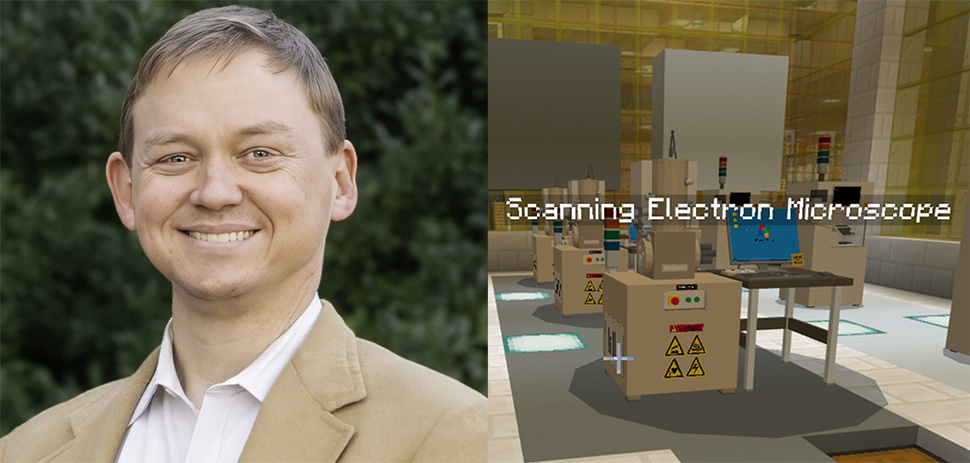
UT Dallas researcher Dr. Walter Voit transformed Minecraft’s 170-million-player universe into an advanced virtual training ground—for students and for AI agents tested by DARPA. His team’s Polycraft World uses gameplay to turn classroom theory into real-world expertise, covering topics from synthetic organic chemistry to nuclear plants to semiconductor facilities. Their new startup company, Pedegree Studios, has licensed the core technologies from the university to create a scalable digital pipeline for education and workforce development.
-
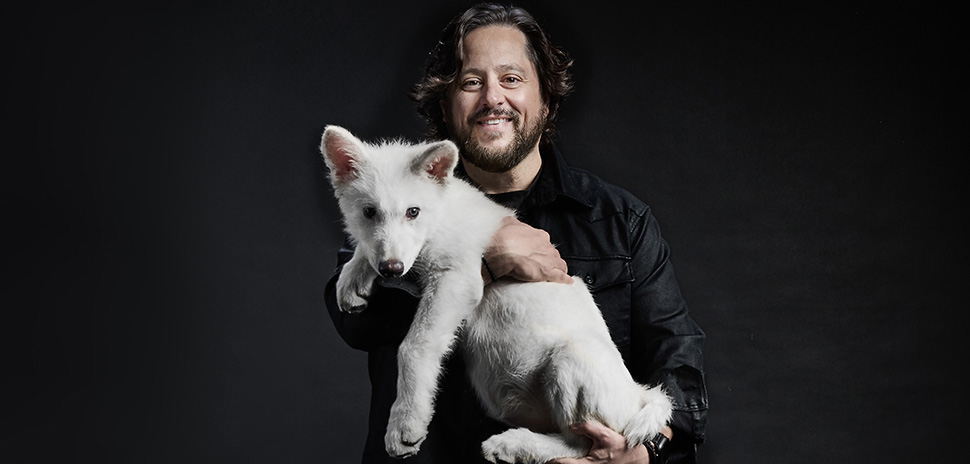
In one of his first deep interviews since Colossal's dire wolf debut made global noise, Ben Lamm joins the TechStuff podcast to talk mammoths, backlash, and why he's not here to play it safe.
-
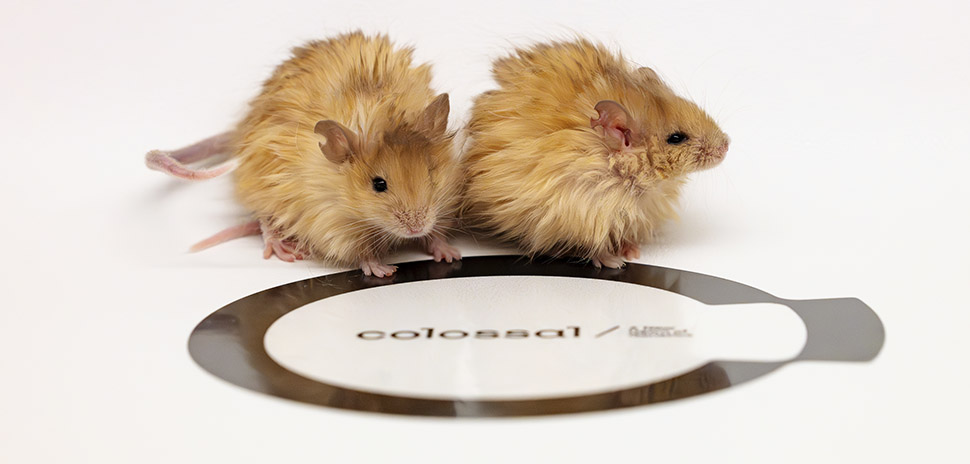
Before Colossal Biosciences can "de-extinct" the woolly mammoth, some small steps are in order. They've now been taken by the Colossal Woolly Mouse—a gene-edited creation with "dramatically altered coat color, texture, and thickness reminiscent of the woolly mammoth’s core phenotypes."
-
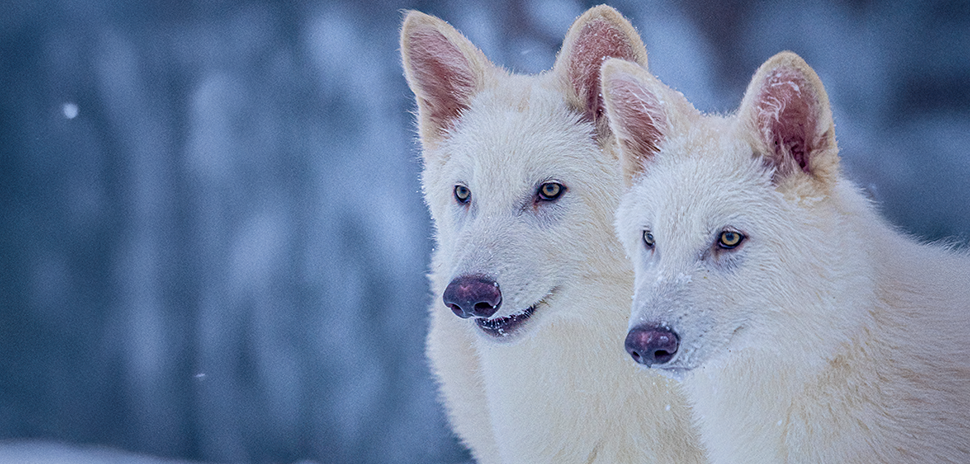
“Game of Thrones” made them famous, but the prehistoric dire wolves were real—and, according to Colossal Biosciences, have now returned after 12,500 years in what it calls the world’s first successful de-extinction. The work goes beyond headlines: It could change how we save endangered species. Meet Romulus, Remus, and Khaleesi in a video—and hear dire wolf howls for the first time in more than 12 millennia.