Las Colinas-based Targeted Convergence Corp. is an IT company focused on set-based concurrent engineering tools and processes, helping companies move from ideation to validated design decisions with greater speed and confidence. Now the team is putting its skills to work for NASA—exploring new ways mission teams can solve “some of the most complex design and modeling challenges in aerospace engineering.”
NASA has awarded a competitive SBIR research contract to TCC, reflecting what the company calls a growing industry recognition of its Success Assured software, which aims to accelerate early-stage mission and product design efforts. Terms of the contract, including its amount, were not disclosed.
Phase I research under the contract is slated for completion by March 27, 2026. If all goes well, NASA may pursue a Phase II effort to expand the work and apply it more widely across mission development programs, TCC said.
Addressing NASA’s ‘cross-cutting modeling challenges’
NASA identified a series of critical “cross-cutting modeling challenges” for upcoming missions, TCC said, which the company will now seek to address. The challenges as described by NASA include “greater modeling breadth (e.g., cost/schedule), depth (scalability), variable fidelity (precision/accuracy vs. computation time), trade space exploration (how to evaluate large numbers of options), and processes that link them together.”
It doesn’t take a rocket scientist to see that NASA’s mission developments involve countless layers of decision-making and analysis—with key factors and focuses shifting over time.
“The disparity between the creativity in the early phases and the detail-oriented focus in later phases has created phase transition boundaries,” NASA said, “where missions not only change teams, but tools and methods as well.”
That’s where TCC’s skill sets have seemed to attract NASA’s attention.
TCC said its work under the contract will demonstrate how the company’s technology “can bring new efficiency and clarity to these early mission phases, where decisions have long-lasting impact.”
The company also aims to show how the set-based concurrent engineering enabled by its Success Assured software can bridge those phase transition boundaries, which tend to plague complex development efforts.
Exploring options earlier to reach decisions faster
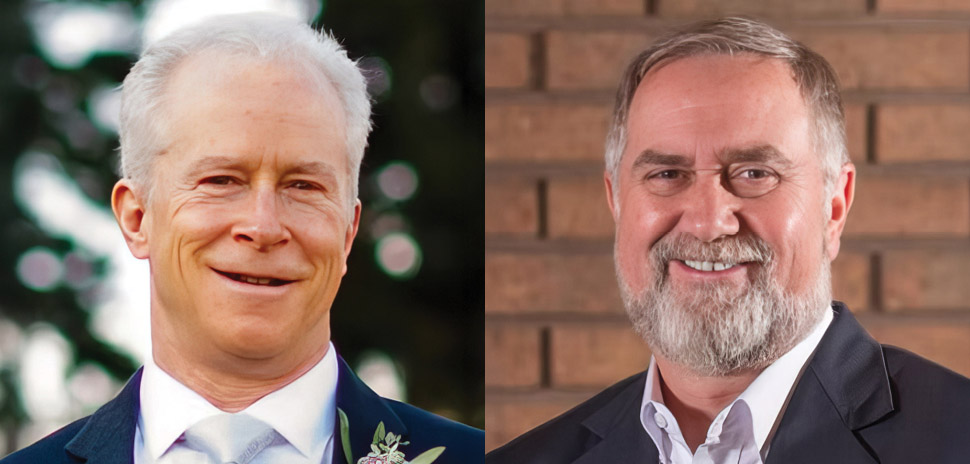
Brian Kennedy, TCC’s co-founder and chief technical officer, is the principal investigator for the project.
“Our technology is designed specifically for the kind of complex engineering work NASA highlighted in this contract,” Kennedy said in a statement. “Traditional tools tend to encourage teams to jump to decisions prematurely; and then when later phases show those decisions to be wrong, the resulting rework results in tremendous inefficiency and project delays.”
Kennedy says Success Assured “gives engineers the ability to explore more options earlier, collaborate more effectively, and reach validated decisions far faster than legacy tools allow.”
“Were excited to show NASA exactly what this approach can do,” he added.
From aerospace to energy, healthcare, and beyond
What NASA aims to solve is a challenge faced by a wide range of organizations, Kennedy noted.
“These same challenges appear across industries including aerospace, automotive, energy, medical devices, and advanced manufacturing,” he said. “So, the outcome of this project may influence engineering practices well beyond NASA.”
Co-founded in 2004 by Kennedy and his father, Brian Kennedy, TCC was headquartered in Carrollton for 10 years before relocating to Las Colinas. Brian Kennedy, the company’s founding CEO, died in February 2024. According to the company’s website, Brian Kennedy’s career had begun at Texas Instruments’ Defense Systems Group, where he spent 31 years in various leadership roles, including overseeing the product development process that earned TI the Malcolm Baldrige award for quality.
Advancing a process started by the Wright Brothers
TCC says it based its software tools and processes on the “set-based” and “success is assured” behaviors seen in the early aircraft industry, starting with the Wright Brothers. That approach was further refined in the highly productive Toyota Product Development System, TCC says. Inspired by those advancements, TCC says it has developed “an optimized set of software tools and processes that together enable fundamental changes to numerous critical business processes.”
Don’t miss what’s next. Subscribe to Dallas Innovates.
Track Dallas-Fort Worth’s business and innovation landscape with our curated news in your inbox Tuesday-Thursday.
R E A D N E X T
-

The grant was awarded by the Texas Higher Education Coordinating Board and will provide essential skills and improve patient care in and around Tarrant County, especially to those living in underserved areas.
-
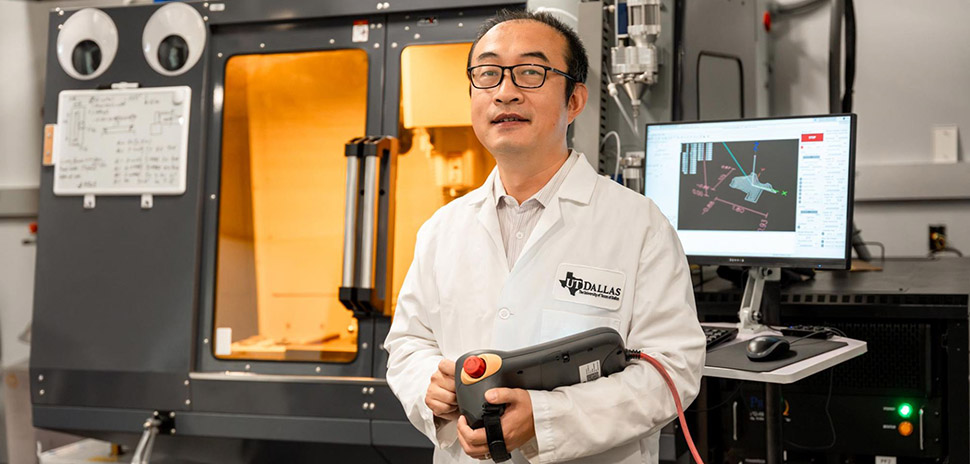
With a $750,000 innovation grant from NASA, UT Dallas assistant professor Wei Li is rethinking how to weld metal in space for off-world construction—and keep astronauts safe in the process.
-
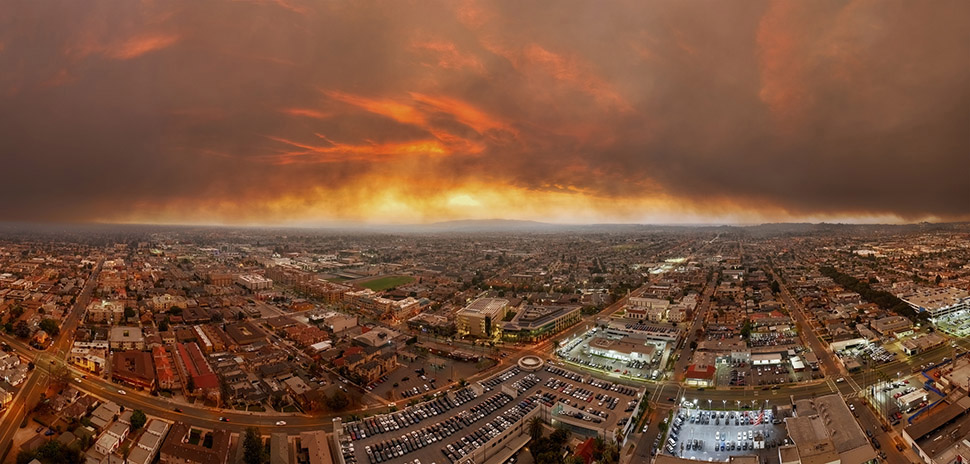
In 2025, wildfires across Texas have burned over 1 million acres as of May 16. With support from a NASA grant, a UTA professor is working to develop an early-warning system that can alert the public to wildfire smoke dangers—even hundreds of miles away from a fire.
-
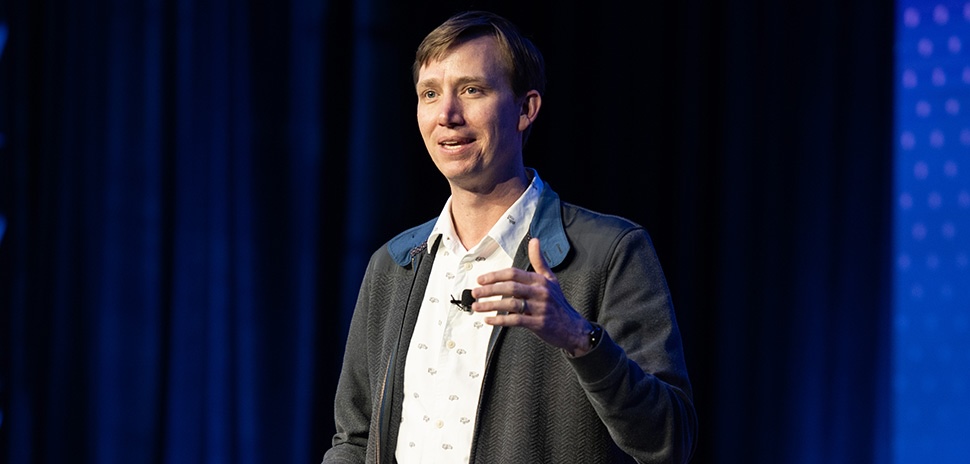
The challenge above was addressed by Google Public Sector's Chris Hein to the opening-day audience at the Convergence AI Dallas conference, hosted April 30-May 1 by the Dallas Regional Chamber. Held for the second year at the Irving Convention Center, the event featured 75 expert speakers and attracted more than 750 innovators, leaders, builders, and advocates from the Dallas-Fort Worth AI ecosystem.
-

Set for April 30–May 1, the expanded 2025 conference—backed by Google and Accenture—will focus on applied AI, feature top corporate leaders, and unveil the second annual AI75 list of innovators.